Samantha Duan
In 2013, on my first trip away from everything familiar, I learned that travel begins with a strange kind of quiet panic.
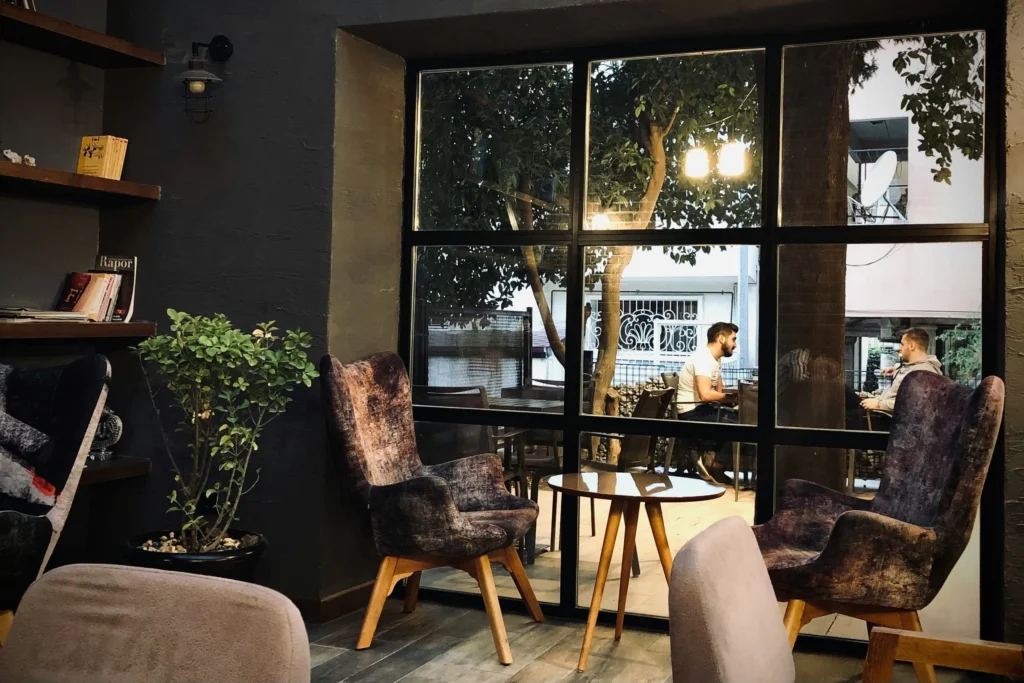
The city was Paris, though I was still too overwhelmed to let that word feel real. Late afternoon rain had just passed, leaving the pavement silvered and slick, the café awnings dripping above narrow streets. I stopped at a small corner café because my feet hurt, because my map had folded itself into nonsense, and because the smell of coffee and warm butter seemed kinder than the weather.
Inside, sunlight moved through the dust in thin gold lines. Porcelain clinked behind the counter. The radio murmured under the street noise. I sat with my suitcase pressed against my ankle, feeling both brave and very young.
I noticed the woman at the next table before I knew why I was noticing her.
She was small, elegant, and composed in a way that did not ask to be admired. A dark scarf rested neatly at her throat. One gloved hand circled the handle of her coffee cup, while the other held a folded napkin marked with a tiny sketch of a bird. She looked around the room with a softness that made everything seem briefly important: the waiter polishing glasses, the rainwater on the window, the old man counting coins near the door.
Her perfume reached me faintly, powdery and floral, mixed with the bitterness of espresso.
At first, recognition came as a feeling, not a fact. A face from an old film I had watched alone before the trip. The trembling brightness of Casablanca. The woman at Rick’s who had sung with tears in her eyes, carrying loss and defiance in the same breath.
I looked again, carefully, almost afraid to be wrong. Madeleine Lebeau turned toward me when my postcard slipped from the table and landed beside her shoe.
“You are losing Paris already,” she said, picking it up with a small smile.
“I think Paris is losing me,” I answered, embarrassed. “It’s my first time traveling. I’m not very good at it yet.”
“No one is good at leaving,” she said, handing the postcard back. “Some people only dress better for it.”
I laughed, and the nervousness in me loosened. The waiter came by, and she asked, in French, for another coffee. Then she looked at me. “You will have one too?” I nodded, because I did not trust myself to say anything graceful. We spoke lightly at first. She asked where I was from, where I was going, whether I had written home. I told her I had bought three postcards and written nothing on any of them.
“That is normal,” she said. “The first journey fills the hand before it fills the page.”
The coffee arrived in white cups with thin blue rims. It was sharp and bitter, and I drank it too quickly. Outside, a taxi splashed through a puddle. Inside, the radio crackled and played a song I did not know. I wanted to ask her about Casablanca, about timing and goodbyes, about what it felt like to be remembered by strangers for a moment of sorrow so luminous it had outlived the room it was filmed in. But the question felt too large for the table.
Instead, I said, “Do you ever get tired of people remembering you from somewhere else?”
She looked at me for a long second.
“No,” she said gently. “Sometimes being remembered is another country. You visit, but you do not live there.”
That sentence stayed with me.
My happiness came quietly, almost physically. Warmth gathered in my chest. My shoulders softened. I felt an unguarded smile rise before I could hide it. It was not the loud happiness of sightseeing or arrival photos or saying, I was here. It was more intimate than that.
I was a young woman alone on her first journey, terrified of ordering wrong, walking wrong, becoming lost beyond rescue. And across from me sat someone who seemed to understand that all travel, like all cinema, depends on timing. We meet people at the wrong hour, the right corner, the briefest table. We carry them afterward without proof.
When she stood to leave, she slid the napkin toward me. The little bird, drawn in blue ink, tilted upward as if listening. “For your postcard,” she said.
Then she stepped into the clearing light, scarf tucked close, and disappeared into the afternoon crowd. I stayed until my coffee cooled. The cup still steamed faintly. The radio hummed. Outside, Paris continued as if nothing impossible had happened, which may be the most Parisian thing of all.