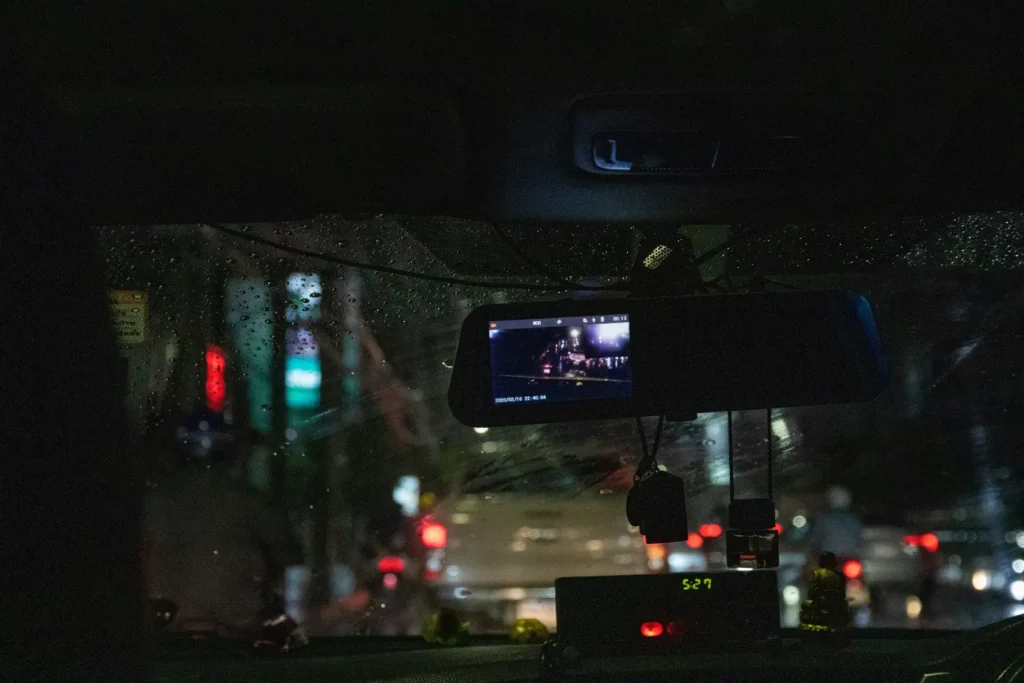
The flight had landed late, and Bangkok received me the way it always does in the wet season: warm, dripping, alive. I slid into the back of a taxi outside the terminal, my shirt clinging to my spine, my phone at four percent. Rain hammered the roof. The wipers dragged across the windshield in slow, tired arcs. Neon from a noodle stall bled red and gold across the glass. The seat smelled faintly of jasmine air freshener and old upholstery. I was exhausted in that particular way where the body is heavy but the mind is sharp and mean. I gave the address and stared out the window, counting the minutes I didn’t have.
Traffic stopped us almost immediately. The meter beeped, ticked, beeped again. The driver took a turn I didn’t recognize, and something in me snapped loose.
“This is the wrong way,” I said, sharper than I meant. “Why are you going here? Just use the main road. I’m not paying for you to drive in circles.”
He didn’t answer right away. The radio murmured something soft and Thai under the engine. I felt the words leave my mouth and wished, instantly, that I could pull them back in. But I didn’t apologize. I just looked away, jaw tight, ashamed and too proud to say so.
After a long moment, he spoke. His voice was calm, unhurried, like he’d already forgiven me before I’d finished being cruel.
“The main road is flooded tonight,” he said. “I take you the dry way. Slower, but you get home.” He glanced at me in the mirror, kind, not wounded. “It’s okay. You are tired. I drive many people. Some happy, some angry, some crying. All the same to me.”
I started to mumble something, but he went on, gently.
“You know, I think everybody has a heavy day sometimes. A bad day, it comes, it goes. But it doesn’t follow you forever. A storm is not the sky.” He laughed quietly. “People say sorry to me a lot, in this seat. I tell them, one bad minute, that’s not the whole person. I look at you, I don’t see a rude lady. I see someone far from her bed.”
The wipers kept their rhythm. The meter beeped.
“We are not the worst thing we do,” he said. “We are not even the best thing. We are just trying, most days. That’s enough.“
I sat with that, my face hot in the dark. The shame was real, but it had loosened into something gentler; relief, maybe, that he hadn’t agreed with the worst version of me. I had snapped at a stranger doing his job, and instead of mirroring me, he’d handed me a door. I kept confusing what I’d done with who I was, as though one impatient sentence could be the whole verdict. But he’d separated them so easily, the way you’d untangle two threads. Kindness, I realized, wasn’t a thing he had. It was a thing he practiced, ride after ride, even with passengers who didn’t deserve it. Especially them.
When we reached my building, I paid, and added too much, and finally said sorry. He waved it away like it was nothing, like it had already dissolved into the rain.
I stepped into the humid night and stood there a moment, watching his taillights blur, carrying his words like something cupped in both hands.
A storm passes, but the sky remains.