The rain in Kyoto does not just fall; it paints. It transforms the city into a watercolor painting, blurring the sharp edges of reality into something softer, more dreamlike. I was standing near the entrance of Nanzen-ji Temple, watching the sky bruise into a deep, melancholic grey. The air was thick with the scent of wet pine and ancient wood, that specific, earthy perfume that only Japan seems to release when it storms. It started as a whisper, a light mist that clung to my eyelashes, but within minutes, the heavens opened up with a ferocity that sent tourists scattering like startled birds. I huddled under the eaves of the massive wooden Sanmon gate, shivering slightly, realizing too late that my ambition to see the gardens had outpaced my preparation. I had no umbrella.
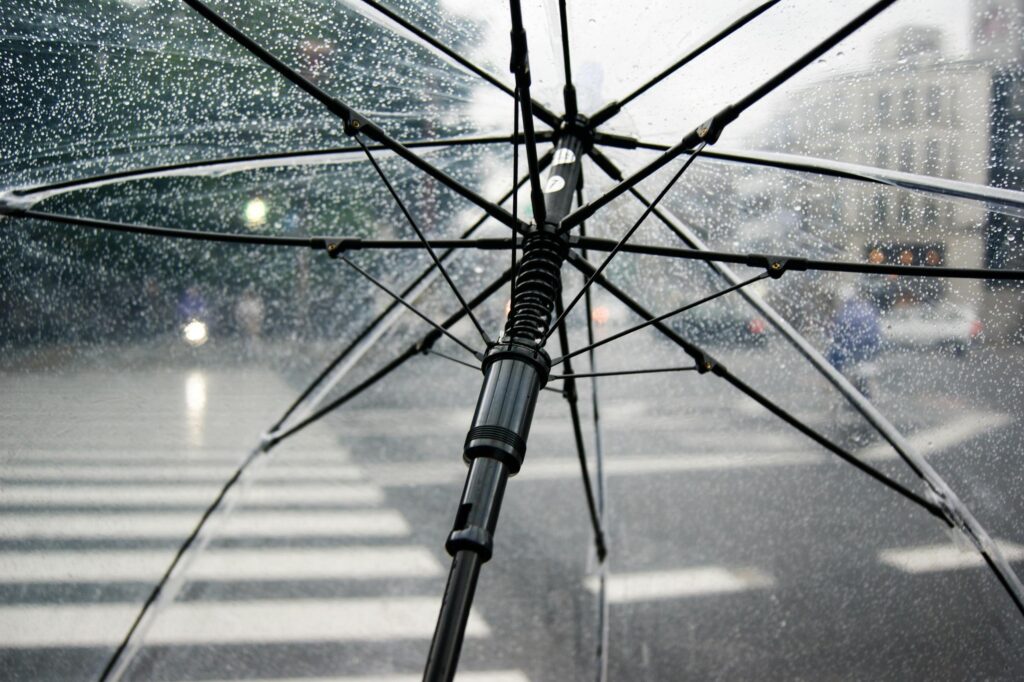
That was when he appeared. He did not rush for cover like the rest of us. He walked with a calm, deliberate pace, holding a clear plastic umbrella that seemed almost fragile against the deluge. He stopped near where I was standing, shaking the water off his umbrella with a sharp, rhythmic snap. He was young, perhaps my age, dressed in a simple dark coat that looked tailored and expensive. He looked at the sky, then at the sheet of rain walling us in, and finally, he looked at me. His eyes were dark and serious, but there was a flicker of something softer in them when he saw me hugging my arms against the chill.
He said something in Japanese, his voice low and barely audible over the roar of the rain. I shook my head, offering a helpless, apologetic smile. “I’m sorry,” I said, my voice feeling too loud in the quiet intimacy of the storm. “I don’t speak Japanese.”
He paused, studying me for a second longer. Then, without a word, he stepped closer and tilted his umbrella toward me. It was a simple gesture, fluid and unhesitating. He gestured toward the path leading away from the temple, toward the main road where taxis might be waiting. The invitation was clear.
We walked into the rain together. The world shrank down to the small, dry circle beneath that plastic dome. The sound of the rain hammering against the vinyl was deafening, a chaotic drumbeat that encased us in our own private universe. I was hyper-aware of everything. The warmth of his arm brushing against mine as we navigated the puddles. The way he adjusted the umbrella constantly to ensure I stayed dry, sacrificing his own left shoulder to the downpour. The scent of him: clean laundry, rain, and faint tobacco smoke.
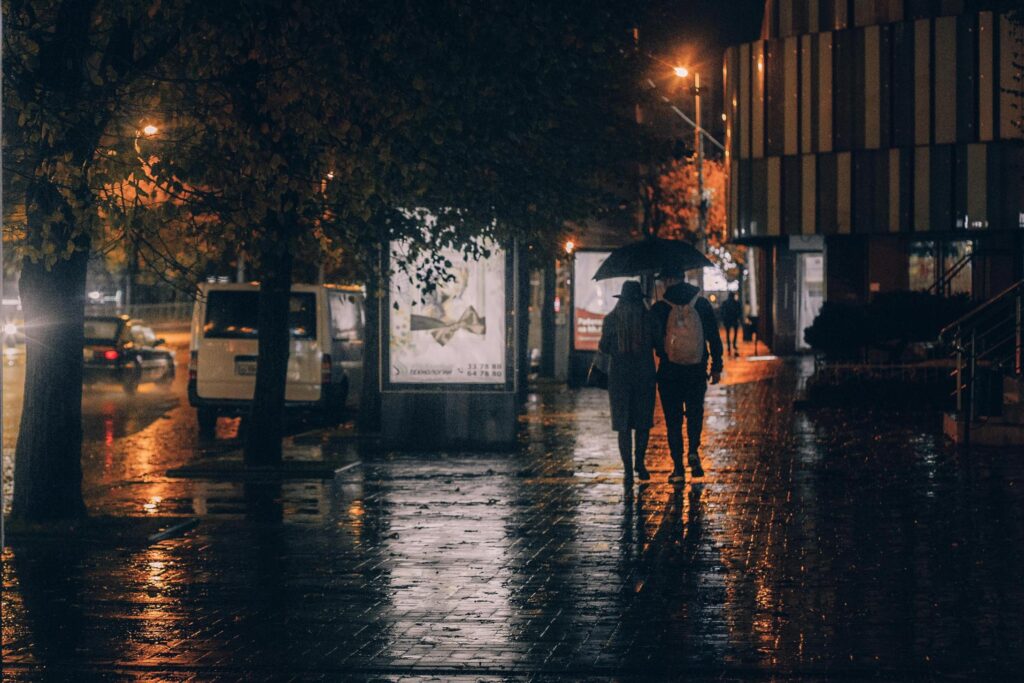
We did not speak. What could we say? The language barrier was a wall, but in that moment, it felt less like an obstacle and more like a filter, stripping away the need for small talk and leaving only the essential, electric current of human presence. We walked past stone lanterns slick with moss, past maple trees whose leaves were heavy and weeping with water. Every few steps, our eyes would meet, and a small, shy smile would pass between us. It was an acknowledgment of the absurdity and the beauty of the situation. Two strangers, tethered together by a storm and a piece of plastic.
I found myself wishing the walk would take longer. I wanted to ask him who he was, what he did, what he was thinking as we walked through this grey, drowned world. I wanted to know if his heart was beating as fast as mine. There was a romantic tension in the silence, a “what if” hanging heavy in the humid air. It felt like a scene from a movie I had always wanted to star in, where the meet-cute leads to a lifetime. But reality has a different script.
We reached the main road too soon. A line of taxis waited, their red “vacant” signs glowing like embers in the gloom. He stopped and turned to me. The rain had slowed to a drizzle, but he didn’t lower the umbrella. He looked at me with an intensity that made my breath hitch. For a second, I thought he might say something, might ask for a number or a name. But he just bowed, a slight, graceful incline of his head.
“Thank you,” I breathed, bowing back.
He smiled then, a real smile that reached his eyes, and handed me the umbrella. I tried to push it back, insisting he keep it, but he shook his head firmly. He pointed to the taxi, then to me, and then stepped back into the rain. He turned and walked away, his dark coat swallowing him into the grey mist of the afternoon.
I stood there clutching the plastic handle, watching him disappear. A profound sense of loss washed over me, mixed with a strange, soaring gratitude. It was the ache of the road not taken. I got into the taxi, clutching the umbrella like a lifeline. As the car pulled away, splashing through the puddles we had just walked through, I realized that I would likely never see him again. And perhaps that was the point.
The encounter was perfect because it was finite. It was a bubble of connection that existed only as long as the storm lasted. If we had exchanged numbers, if we had tried to drag that delicate moment into the harsh light of the everyday, it might have shattered. It might have become awkward or mundane. Instead, it remains frozen in my memory as something flawless.
Travel is full of these ghosts. The people we meet for an hour, a minute, a heartbeat, and then lose to the currents of time. They are the romantic possibilities we leave scattered across the globe. That umbrella sits in the corner of my room now, a cheap plastic souvenir that is worth more to me than gold. Every time I look at it, I am back in Kyoto, under the grey sky, walking next to a stranger who saved me from the rain and taught me that the most beautiful connections are often the ones that wash away.