
Samantha Duan
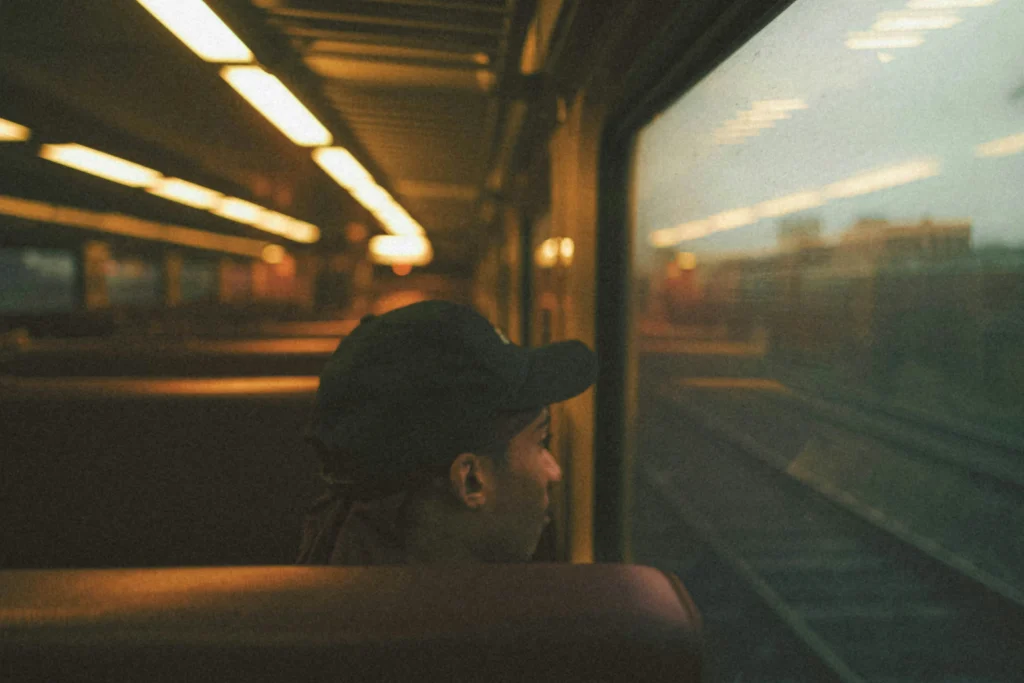
The rain against the window of the slow coastal train sounded like scattered applause. I leaned my head against the cool glass, watching the lush, saturated greens of central Vietnam blur into a continuous, watery ribbon. It had been exactly three weeks since the funeral.
Grief had settled into my bones as a heavy, dragging fatigue, a profound disconnect that made me feel entirely alone even on a carriage packed with chattering families and restless backpackers. I kept expecting to hear her bright, familiar laugh over the rhythmic clatter of the iron tracks, or to see her pull an absurdly large bag of snacks from her rucksack. Instead, there was just the empty seat beside me, heavy with her absence.
Across the narrow aisle sat an older woman with a woven basket resting on her knees. She wore a faded floral blouse and had a face mapped with deep, expressive lines. For the first two hours of the journey, we did not speak. We existed in a comfortable, shared silence, both of us simply watching the rain wash the world outside.
Somewhere near Da Nang, the carriage lurched violently, and a few small mandarin oranges spilled from her basket onto the floor. I knelt, gathering the bright, slightly bruised fruit from the linoleum, and placed them back gently into her lap.
She smiled, her eyes crinkling deeply at the corners. Reaching into the basket, she picked the brightest orange from the pile and held it out to me. “For you,” she said softly.
“Thank you,” I murmured, taking it. The skin was rough, cold, and intensely fragrant. I did not try to hide the tears that suddenly prickled my eyes, nor did I try to explain them. I didn’t need to. She simply nodded, patted her own chest lightly with an open palm, and turned her gaze back to the passing fields.
That small, quiet exchange shifted something tight within me. Grief isolates you. It builds a thick glass wall between you and the version of life that continues normally for everyone else. Yet, sitting there with the sharp scent of citrus blooming in the damp, crowded air, I realized that this deep, encompassing loneliness was not necessarily an enemy to be fought.
Sometimes, being lonely is completely okay. We spend so much energy trying to escape it, rushing to fill the empty silence with noise and distractions. But here, moving slowly through an unfamiliar landscape, I found a surprising, spacious peace in being entirely alone.
The quietness allowed me to simply exist with my sorrow, rather than performing recovery for a familiar crowd back home. Loneliness is the deep shadow that gives light its true shape. Experiencing this stark, quiet isolation illuminated just how precious and vivid true happiness really is. It made me realize that joy, when it eventually finds its way back, will feel profoundly earned.
The train began to slow, the brakes squealing softly over the wet tracks. I slowly peeled the orange, the bright, acidic mist cutting through the heavy smell of damp wool and diesel exhaust. Outside, the fog was lifting slightly, revealing a hazy, silver ocean horizon. I sat back, letting the gentle rocking of the carriage soothe the physical ache in my ribs. I was still lonely, and I still missed her terribly. But as the train rolled steadily forward through the mist, the quiet no longer felt like a void.
It felt like room to breathe.