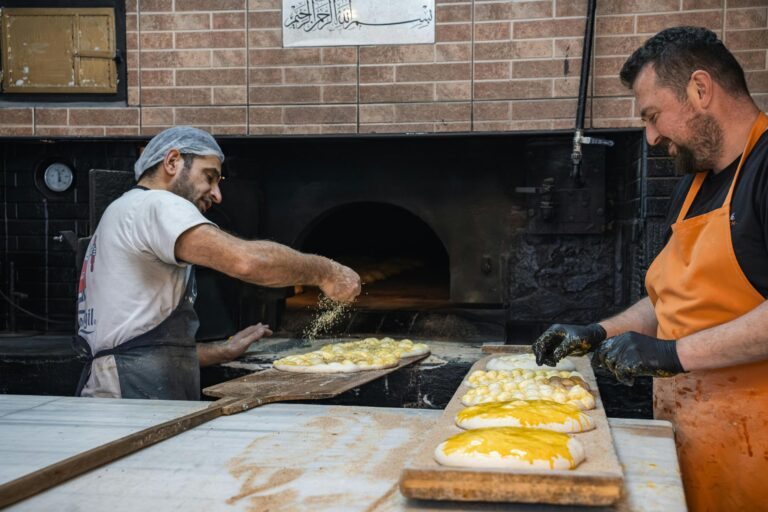
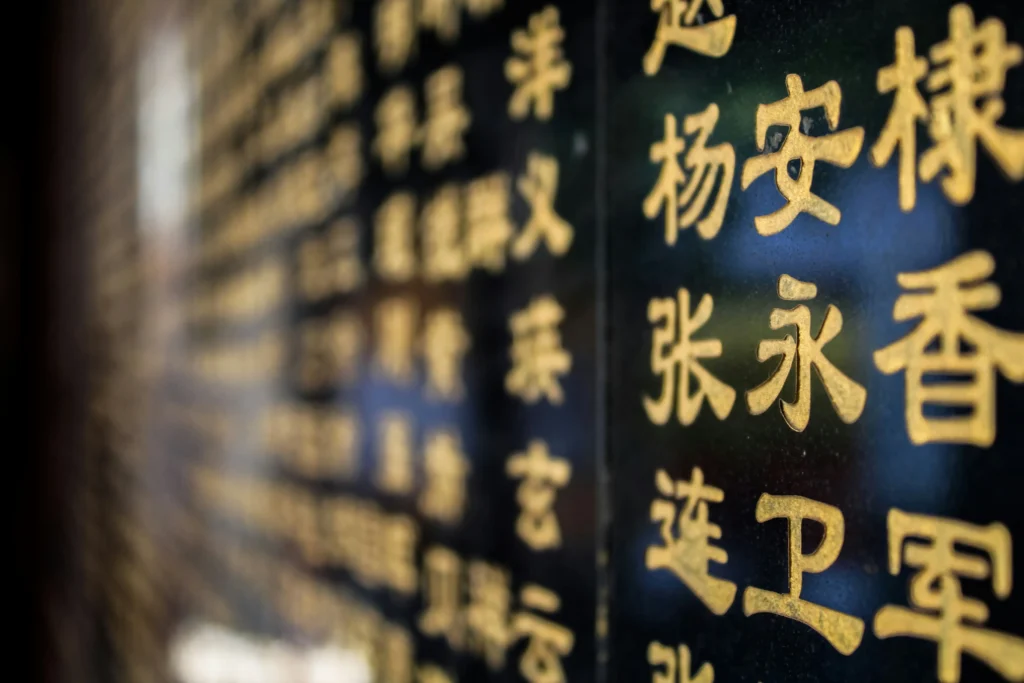
Picture this: you step into a bustling Chinese food spot tucked away in a Shanghai street. The air is warm and fragrant with the scent of star anise and sizzling garlic. The menu is a beautiful but indecipherable tapestry of Chinese characters, and the server approaches with a warm, expectant smile. This is the moment where a journey into food can become a journey into language, and a few simple phrases can transform you from a hesitant tourist into a confident diner.
Learning a bit of Chinese restaurant is less about perfect pronunciation and more about opening doors. It is a gesture of respect that is almost always met with warmth and a willingness to help. This guide will walk you through the essential phrases and cultural notes to navigate any Chinese restaurant has to offer, turning potential anxiety into a joyful connection and helping you discover the rich heritage of Chinese cuisine.
Whether you are visiting for lunch or dinner, understanding basic phrases can enhance your dining experience and help you choose from the array of signature dishes and dim sum that many restaurants proudly serve. With this knowledge, you can confidently cater to your palate and enjoy the fresh flavours that define Chinese food.
From ordering at the table to making reservations or asking about last seating times, these phrases will ensure you feel at home and ready for any occasion. So, prepare to impress your hosts and fellow guests with your newfound language skills and savor the perfect Chinese dining experience.
Part 1: Greetings and Getting Seated in a Chinese Restaurant
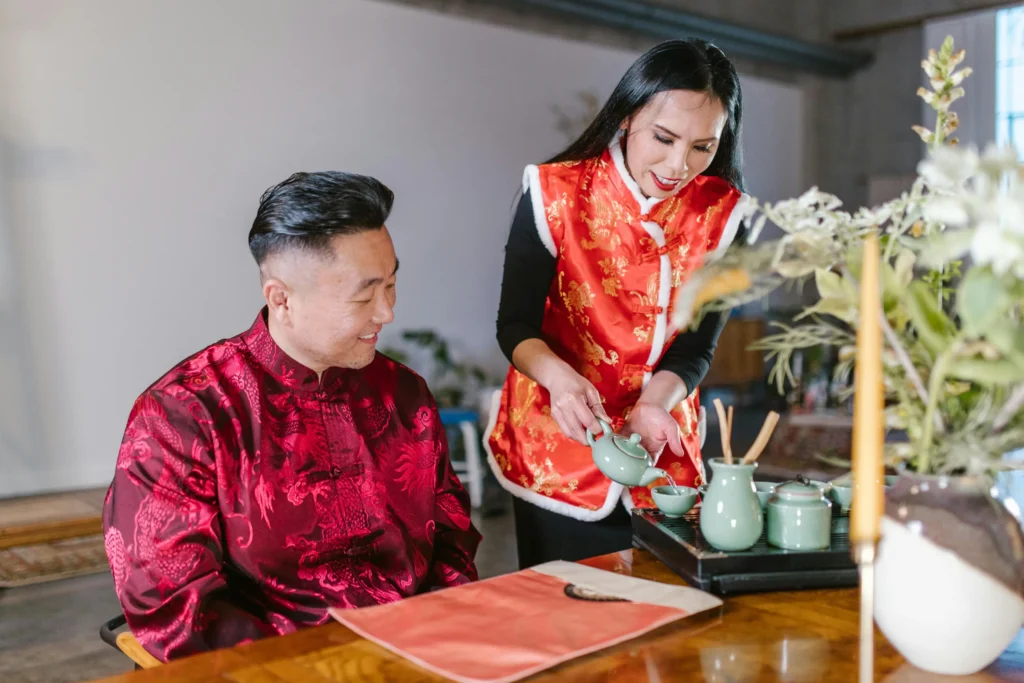
Your first interaction sets the tone. A simple greeting can make all the difference. When you walk in, make eye contact and offer a smile.
- Phrase: Nǐ hǎo (你好)
- Meaning: Hello
- Cultural Note: This is the universal greeting. It is simple, polite, and always appropriate.
- Phrase: Wǒmen yǒu [number] wèi (我们有 [number] 位)
- Meaning: We have [number] people. (e.g., liǎng wèi for two, sān wèi for three)
- Pronunciation Tip: The word for two people here is liǎng (两), not èr (二), which is used for counting.
Part 2: Understanding the Menu (Including the Set Menus)
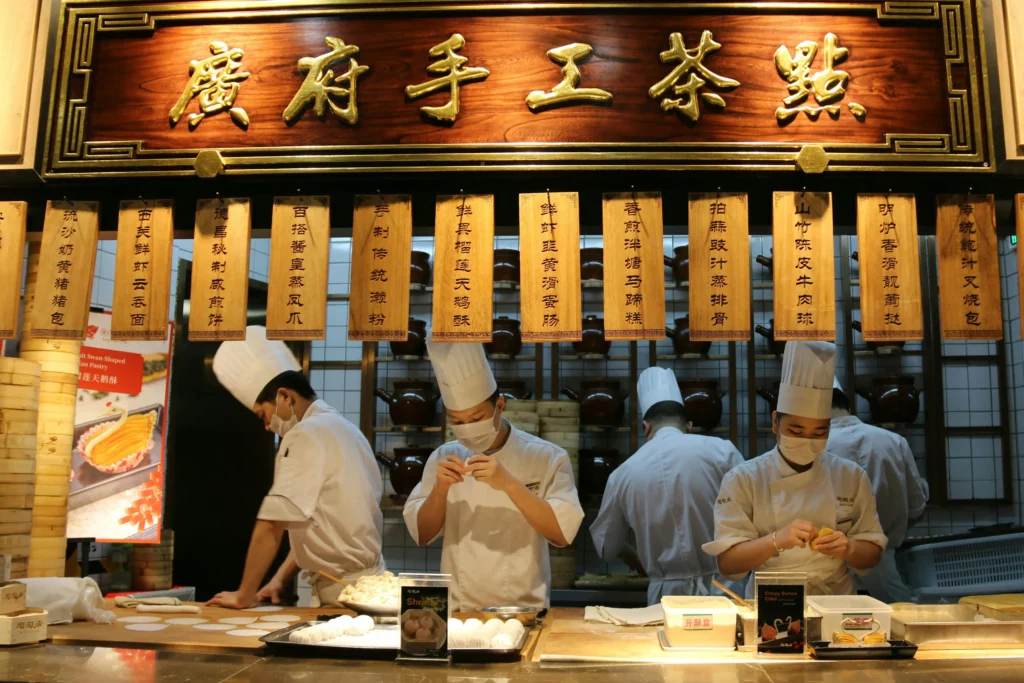
Once seated, the menu, or càidān (菜单), arrives. This is where things can get exciting. Even if you cannot read it, you can ask for help.
- Phrase: Yǒu méiyǒu túpiàn? (有没有图片?)
- Meaning: Do you have pictures?
- Phrase: Nǐ yǒu shé me tuījiàn? (你有什么推荐?)
- Meaning: What do you recommend?
- Cultural Note: Asking for a recommendation is a great way to discover the restaurant’s specialty. It shows trust and an adventurous spirit. Pointing to what others are eating and saying “wǒ yào nàge” (我要那个) meaning “I want that one” is also a perfectly acceptable strategy.
Part 3: Placing Your Order with Signature Dishes
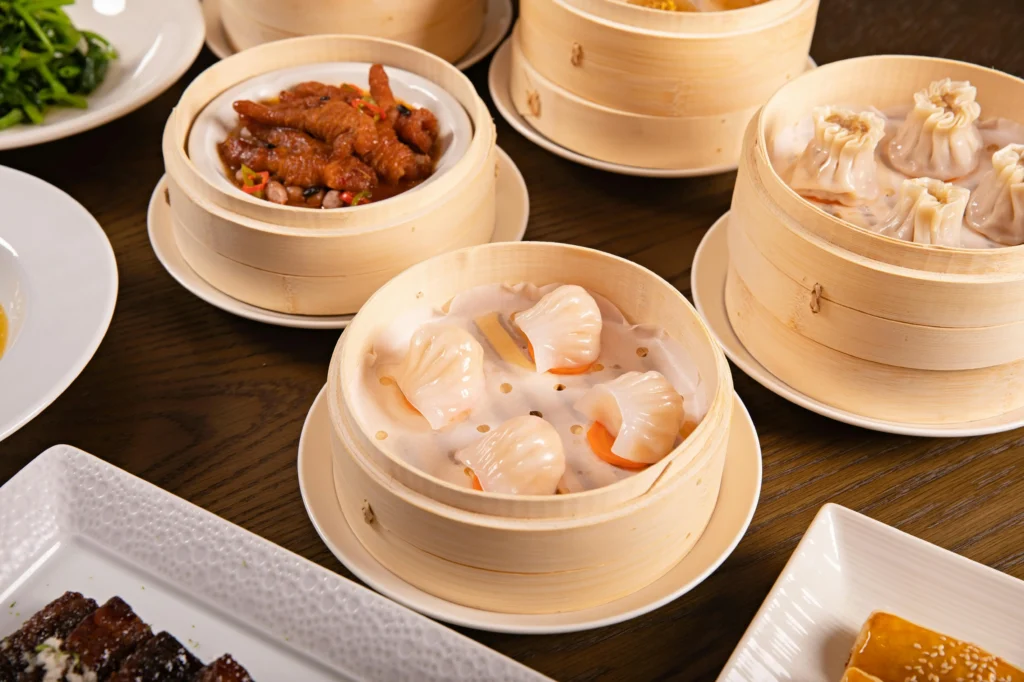
You have made your choices. Now it is time to order. Use this simple and effective phrase.
- Phrase: Wǒ yào yīgè zhège (我要一个这个)
- Meaning: I want one of this. (Point to the item on the menu as you say it).
- Pronunciation Tip: Zhège is pronounced “juh-guh.”
- Rice: mǐfàn (米饭)
- Noodles: miàntiáo (面条)
- Pork: zhūròu (猪肉)
- Beef: niúròu (牛肉)
- Chicken: jīròu (鸡肉)
- Vegetables: shūcài (蔬菜)
Part 4: Dietary Needs and Special Requests
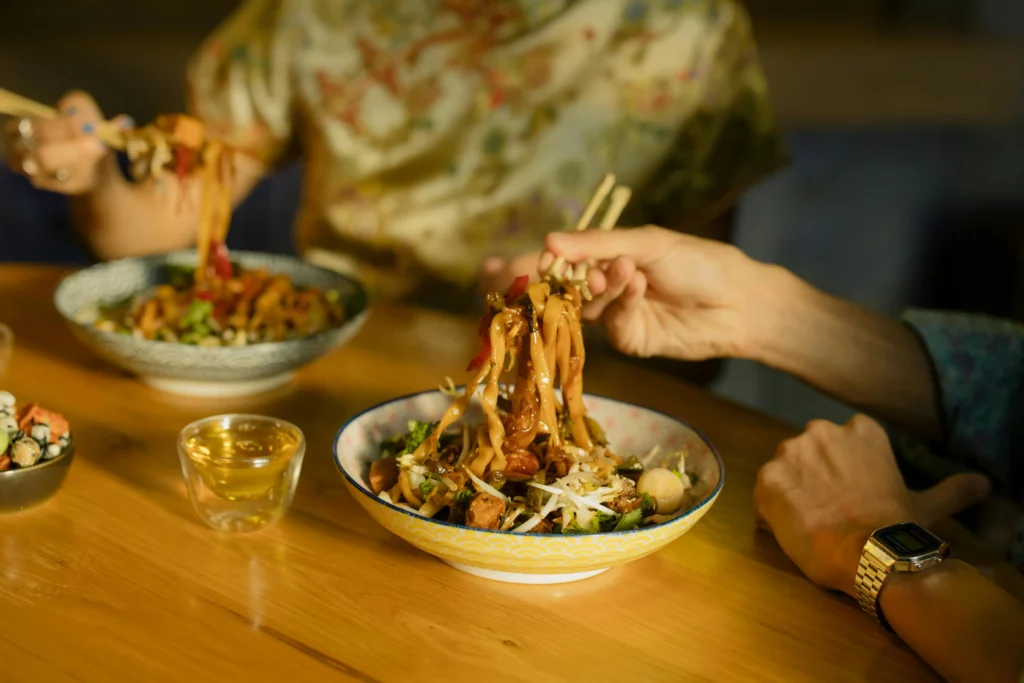
Communicating dietary restrictions is crucial. It is important to be clear and polite.
- Phrase: Wǒ chīsù (我吃素)
- Meaning: I am a vegetarian.
- Phrase: Wǒ bù chī… (我不吃…)
- Meaning: I don’t eat… (Followed by the food item, like làjiāo [辣椒] for spicy peppers).
- Phrase: Wǒ duì [food] guòmǐn (我对 [food] 过敏)
- Meaning: I am allergic to [food]. (e.g., huāshēng [花生] for peanuts).
- Cultural Note: Vegetarianism is understood, but veganism is less common. If you are vegan, it is helpful to specify “bùyào ròu, bùyào jīdàn, bùyào nǎizhìpǐn” (不要肉, 不要鸡蛋, 不要奶制品), meaning “no meat, no eggs, no dairy.”
Part 5: During the Meal and Paying the Bill
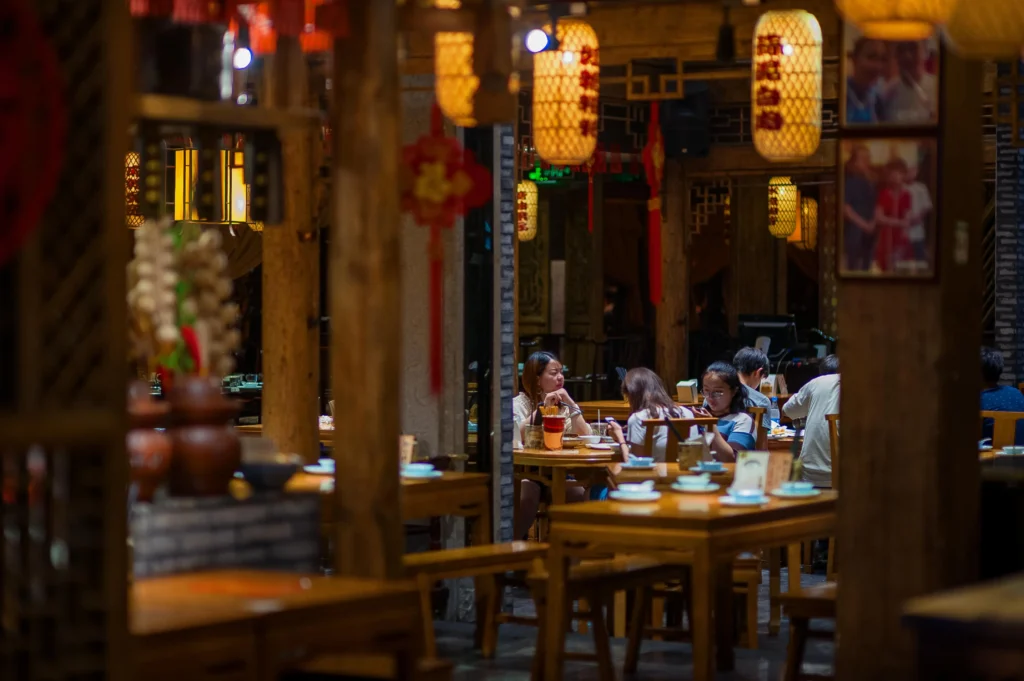
Chinese hospitality is generous. Your host or server may check on you. A simple compliment goes a long way.
- Phrase: Hǎo chī! (好吃!)
- Meaning: Delicious!
- Anecdote: During a trip to Xi’an, I stumbled into a tiny, family-run noodle shop. After slurping down a bowl of hand-pulled noodles, I looked at the chef and said, “hǎo chī!” His stern face broke into a huge grin, and he brought me a small plate of pickled cucumbers on the house. That single phrase built a small but meaningful bridge.
When you are ready to leave, getting the bill is straightforward. Catch the server’s eye and say:
- Phrase: Fúwùyuán, mǎidān! (服务员, 买单!)
- Meaning: Server, the bill!
- Cultural Note: Tipping is not customary in most parts of China. The price on the bill is the final price.
A Language of Connection
Navigating a Chinese restaurant menu for the first time can feel like a small adventure, but it is one worth taking. Each phrase you learn is a key that unlocks a deeper level of interaction with the rich heritage of Chinese cuisine. Locals do not expect perfection; they appreciate the effort. The smiles, the nods of understanding, and the shared plates of delicious food will become some of your most cherished travel memories.
Do not be afraid of making mistakes. Sometimes the mispronunciations lead to the most humorous and human moments. In the end, food is a universal language, and your attempts to speak the local tongue are simply the seasoning that makes the entire experience richer. Whether you are dining in private dining rooms or enjoying classic Cantonese classics, this guide will help you discover the perfect dishes for any occasion.
Especially if you find yourself in a Chinese restaurant alleyway on a Sunday, take the opportunity to explore the inspired menus and signature dishes that many Chinese restaurants offer. From crab meat delicacies to an array of dim sum, these experiences will delight your palate and leave you eager to return.