The light came first.
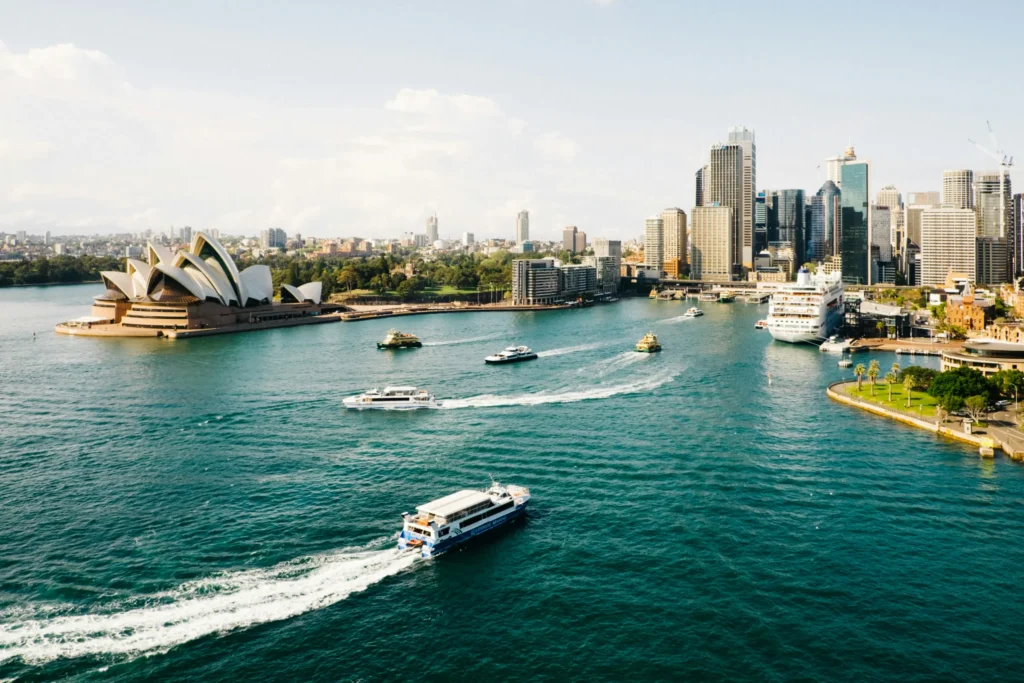
Before the ferries, before the coffee, before the city stretched and yawned itself awake, the sun laid itself flat across Sydney Harbour. Gold on the water. Gold on the sandstone. The kind of morning that asks you to slow down before you’ve even finished your first sip.
I stood near the water and watched the Sydney Harbour Bridge hold the sky, its steel warming in the early hour. Behind it, the sails of the Sydney Opera House caught the same soft glow, quiet for once, before the crowds. Salt hung in the air. A gull complained somewhere. A ferry pulled out, leaving a long white seam across the water that closed slowly behind it.
This is where you begin, in New South Wales. Sydney first. Then the sea.
Greater Sydney: A City Made of Water and Edges
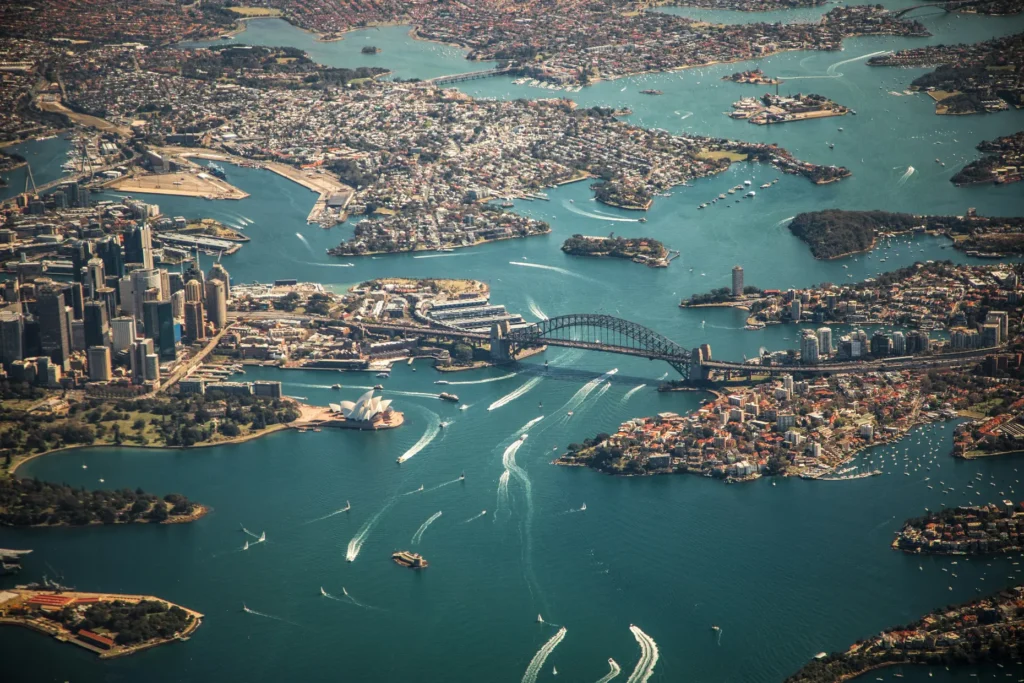
Sydney is the largest city in New South Wales, and it wears its water like a second skin. Greater Sydney sprawls outward in bays and inlets, its urban areas folding around the harbour so that the ocean is never really far. You feel it in the way people move here, unhurried near the water, brisk in the lanes between the public buildings and art galleries downtown, then soft again the moment the coast comes back into view.
Like many Australian states, New South Wales carries both the pulse of the present and the weight of its layered past, from old colonial ties to Van Diemen’s Land to the modern rhythm of a multicultural city where many residents were born overseas.
The Scale Behind the Shoreline
Sydney is the state capital, the heart of a populous state in southeastern Australia, where the state’s population lives largely along the coast and nearly a third of the country’s people feel, in some way, tied to its reach. The estimated population continues to shape the conversation around the NSW population, from housing and transport to food culture and public space. But what stays with me isn’t the scale. It’s the edges; the places where stone meets sea, where the built world gives way to something older.
The NSW government and state government may measure the city in plans, policies, and infrastructure, while ABC News might frame it through headlines about NSW economy, the state’s economy, the Labor Party, or a prime minister passing through for a speech. Yet from the water, New South Wales feels less like administration and more like atmosphere. More than two thirds of its story seems to gather around movement: ferries crossing the harbour, diners spilling into laneways, families heading toward beaches, and weekend travellers following the coastal regions north and south.
Beyond Sydney, the state begins to open in unexpected ways. Its natural features stretch from beaches and cliffs to forests, mountains, and islands that feel far removed from the city’s morning rush. Lord Howe Island sits like a secret in the Tasman Sea, while Norfolk Island, though separate in its own identity, often enters the wider imagination of Australian island escapes. Even sport has its own geography here, with rugby league woven deeply into local life and rugby union carrying its own traditions through schools, clubs, and stadium afternoons.
Following the Pacific Coast: Three Regions, Three Moods
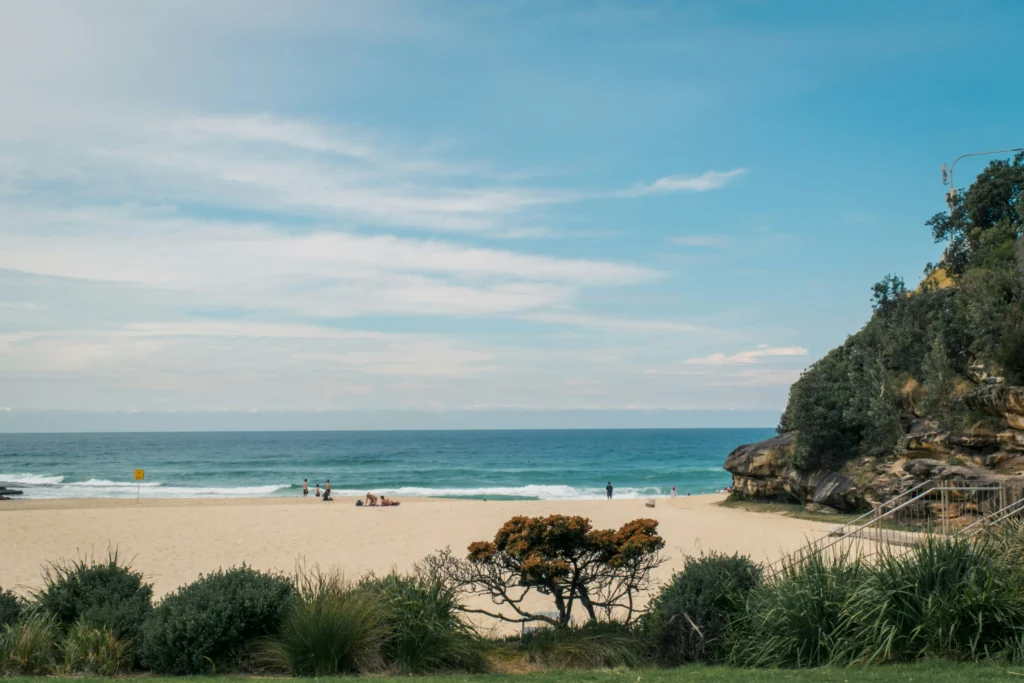
New South Wales lives along a narrow coastal strip, its eastern third pressed up against the Pacific Ocean. Drive it slowly and the coast changes its mood like weather. And from where I was sitting, it’s a must to go through the three regions and feel closer to the sea as much as I did in my trip.
The South Coast and Far South Coast
South of Sydney, the road unspools toward the south coast, and everything quietens. The coastal towns here move at their own pace. National parks tumble right down to the sand, and the Pacific Ocean turns a deep, cold blue that makes you catch your breath.
On the far south coast, near the Victorian border, the beaches grow emptier and the sky grows bigger. Take the long way. Stop where the sign looks interesting. Buy fish from someone who caught it that morning and eat it with your fingers, looking at the water. There’s a stillness down here that no itinerary can schedule. You just have to arrive and let it find you.
The Central Coast
Closer to home, the central coast is the easy exhale. It’s near enough for a day trip, but I’d argue against rushing it. Stay a night. Watch the tide go out over the flats at dusk, the light doing that thing again, turning everything to honey. This is the coast for reading a book badly because you keep looking up. For long, slow breakfasts. For letting the city drain out of your shoulders.
The North Coast
Then there’s the north coast, where the warmth creeps into the air and the beach towns loosen their collars. Behind the sand, the hinterland softens into green: rolling hills, small country towns, the kind of quiet that feels like a held breath. The nature here is generous. Give yourself over to it. Swim in the morning, wander in the afternoon, and let the evenings stretch long and salt-scented.
Three coasts. Three feelings. One long, unfolding shoreline.
Beyond the Shoreline: Mountains, Plains, and Country Towns
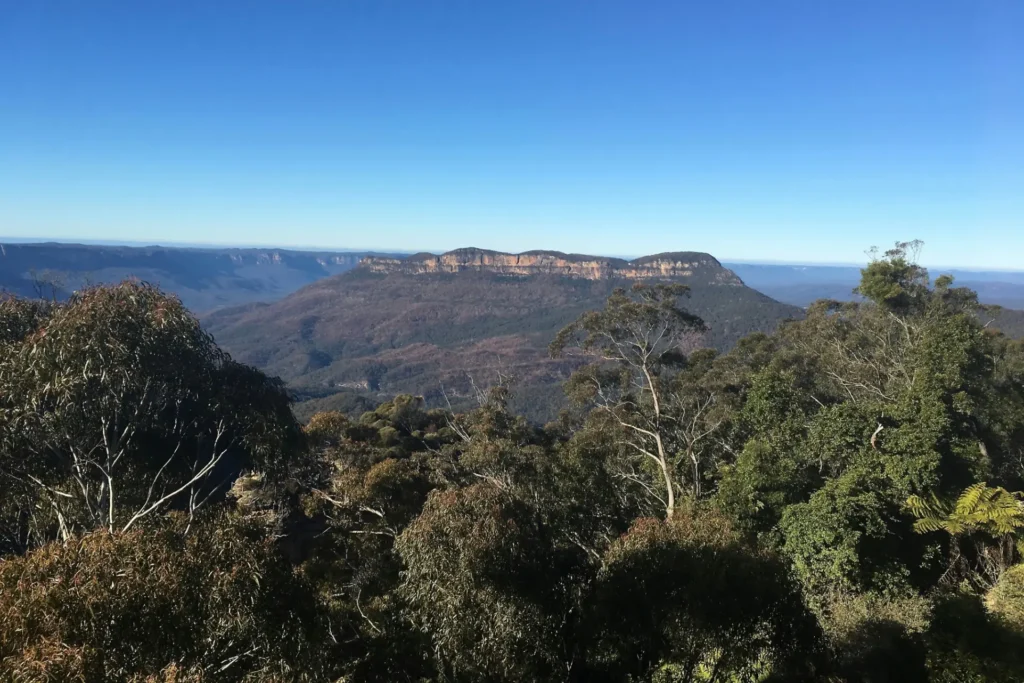
Turn your back to the sea for a while, and New South Wales opens up in a different way.
The Blue Mountains rise close to Sydney, part of the Great Dividing Range that runs like a spine down eastern Australia. The eucalyptus haze that gives them their name softens the whole horizon into blue on blue. Walk the tracks slowly. Let the scale of the valleys humble you a little.
Further south lie the Snowy Mountains and the Southern Tablelands, where winter brings snow and summer brings wildflowers, and the air smells clean and cold. The Hunter Valley, north of Sydney, is a gentler landscape: vines, long lunches, the hum of bees. New England, higher and cooler, carries its own quiet character.
And then the land flattens.
The western plains stretch out toward a horizon that keeps its distance. This is pastoral industry country, where smaller towns hold on and the sky does most of the talking. It feels like another world from the coast, and in a way, it is.
Inland Horizons and Big-Sky Stories
Keep going west and you reach Broken Hill. Out here, the red earth stretches wide and the light turns fierce and beautiful. It’s a long way from the Pacific Ocean, a long way from the ferries and the harbour. But there’s a truth to this landscape that the coast can’t offer: a sense of space that rearranges something inside you.
This country carries deep history. Long before European settlement, before British settlement reshaped the map, these lands were cared for by Aboriginal and Torres Strait Islander peoples whose connection to place runs older than anything we can name. Travel here with respect. Listen more than you speak. The Australian history you’ll feel underfoot did not begin with the arrival of ships.
Practical Notes, Woven In
A little planning lets you slow down properly.
Most travellers arrive on international flights into Sydney Airport, though regional airports open up the wider state if you want to skip the long drives. Within the city, Sydney trains carry you almost everywhere. To reach further, intercity trains and NSW TrainLink stretch out into the regional cities, while NSW TrainLink regional services and interstate services connect you across the broader country.
If you’d rather drive, the Hume Highway runs south toward the Australian Capital Territory and beyond. Planning a multi-state route through South Australia or across borders? Keep an eye on time zones: some regions run on Australian Central Standard Time, and a forgotten hour can undo a careful morning.
A gentle word on nature. New South Wales is wild in the best sense, and that includes the small things. The funnel web spider lives here, so shake out your shoes and don’t reach blindly into dark corners. It’s not cause for fear, just quiet care. Save the numbers for emergency services and community services before you set out, and you’ll travel easier for it.
The state itself is busy and modern: its economy hums along on everything from data centres to technical services, its major centres full of life. But that’s not why you came. You came for the light on the water and the space between the towns.
A Gentle Ending: New South, New Salt Air
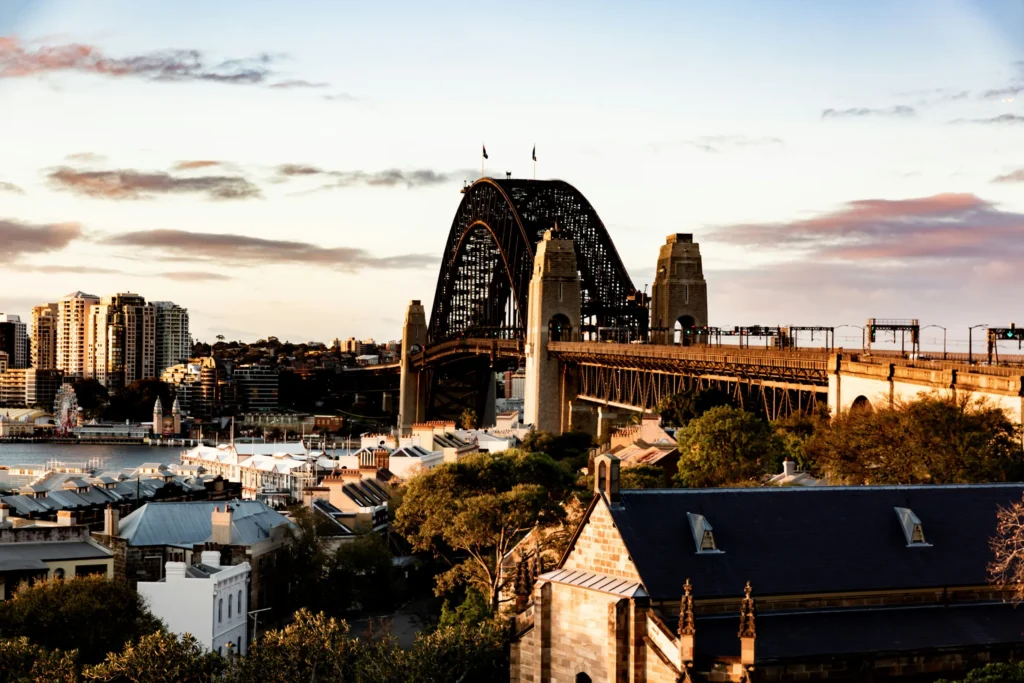
I keep coming back to that first morning. The gold on the harbour. The bridge holding up the sky.
Sydney is the beginning. But the sea is the long second act; the coasts and the mountains and the wide red plains, all of it unfolding at whatever pace you’re willing to give it.
“New South” is a name on a map. But it can also be a feeling. New light. New salt in the air. A new way of moving through the world, slower and more awake.
So begin in the city. Then follow the water out. We’ll save you a place by the sea.
For more guides from Bites and Travel, check out our article on the best chirashi don in Singapore!