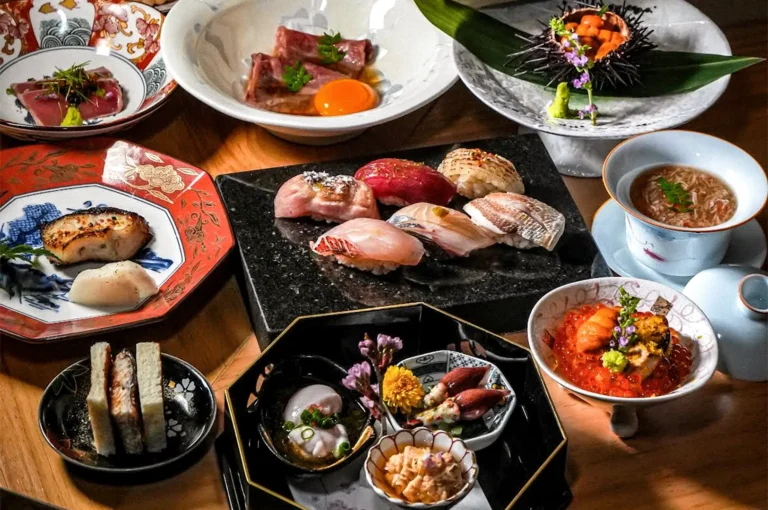
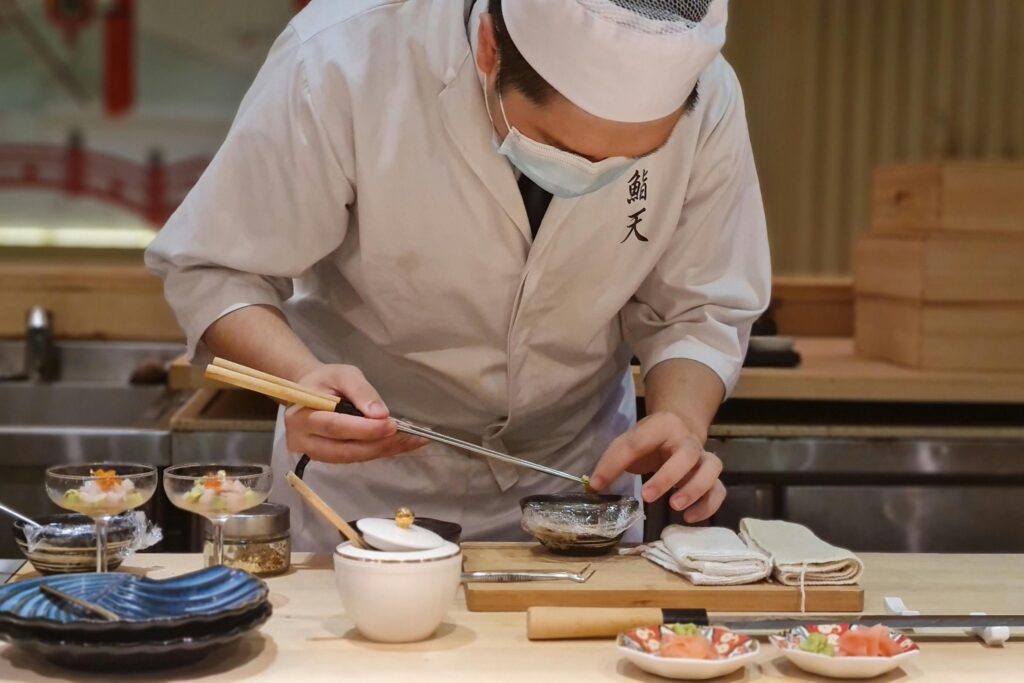
There is a moment in every truly great omakase meal that shifts your perspective. It isn’t always the fatty tuna belly or uni from Hokkaido. Often, it’s something quieter, something that teaches a lesson beyond taste.
I remember sitting at a hinoki counter in Tokyo, watching a chef prepare aji (horse mackerel). He sliced the fillets with surgical precision for nigiri, but instead of discarding the bones, he deep-fried them until golden and crisp, serving them as a snack alongside the sushi. “Nothing is wasted,” he said with a gentle nod. “The fish gave its life. We use everything.”
This simple act embodies the ottainai philosophy, a concept rooted in Japanese culture that teaches respect for life, ingredients, and effort. This philosophy applies not only to sushi but to sustainable dining practices everywhere.
Mottainai Philosophy: Beyond Words, Into Practice
The term mottainai is notoriously difficult to translate. Dictionaries may offer “wasteful,” but this barely scratches the surface. It is an exclamation, a feeling, and a cultural imperative all at once. When a Japanese person says “Mottainai!” they express regret that an object’s true value was not fully utilized.
Its roots lie in Buddhist philosophy and animistic beliefs, which hold that all objects, including plants, fish, and other animals, have a spirit. To waste something is to deny its purpose and disrespect both nature and human labor.
This philosophy extends from Japanese cuisine to daily life, from old kimonos repurposed into new products, to soy milk and tofu crafted from every part of the bean. It is a culture of mindful consumption, honoring life and respect in various ways.
Understanding the Ottainai Philosophy
The ottainai philosophy is much more than just a concept; it’s a heartfelt way of life that calls us to embrace gratitude, mindfulness, and deep respect for everything around us. Rooted in Japanese culture and shaped by Buddhist and Shinto beliefs, ottainai reminds us that nothing should ever be wasted.
This philosophy invites us to live intentionally, buying only what we truly need, resisting the lure of excess, and cherishing the effort and care behind every product. It inspires us to repair broken things, find creative ways to reuse materials, and thoughtfully manage our waste, all to protect our precious environment for generations to come.
You can see ottainai in action everywhere, from the delicate craftsmanship of traditional arts to the innovative use of technology in everyday life. For example, some convenience stores now use an AI system to carefully track stock and reduce over order, cutting down on food spoilage and waste. This blend of old wisdom and modern innovation perfectly captures the spirit of ottainai.
Food Waste Reimagined: Learning from Japanese Cuisine
While modern sustainability often focuses on the “Three Rs” (Reduce, Reuse, Recycle), mottainai adds another: Respect.
- Respect for nature: Acknowledging the plants and animals that provide our meals, ensuring that nothing is wasted and everything is eaten with gratitude.
- Respect for creators: Honoring local farmers, fishermen, and companies who supply ingredients with care and dedication.
- Respect for the object: Using every part of vegetables, fish, meat, and other food scraps to its fullest, transforming even the smallest remnants into sweet and savory delights.
In practice, this transforms sustainable dining from a concept into a lived experience. Chefs who follow the mottainai philosophy turn every dish into a lesson in reducing waste while creating flavorful dishes that celebrate the essence of Japanese cuisine.
Zero Waste in Action: The Omakase Counter as a Sustainability Stage
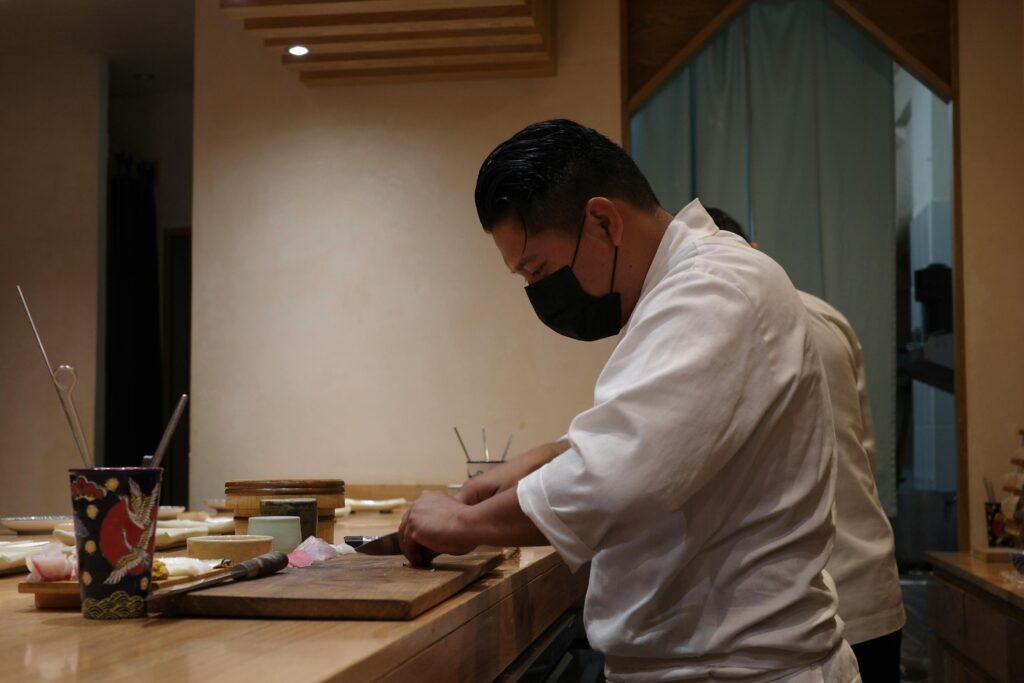
To the untrained eye, a sushi counter is a stage for performance. Look closer and you will see a lesson in zero waste.
Omakase, literally “I leave it up to you,” encourages diners to trust the chef, allowing the kitchen to cook with what is fresh, seasonal, and locally sourced. There is no need for overstocking ingredients just in case. This approach minimizes food waste while embracing seasonal ingredients at their peak freshness.Example: A chef might adjust course sizes based on the day’s catch or highlight abundant organic vegetables in a side dish. Unlike many Western dining systems that demand rigid consistency, omakase thrives on natural variation, creating dishes in harmony with nature.Whether you’re a seasoned omakase lover or just curious, Rubbish Eat Rubbish Grow offers a fresh perspective on enjoying sustainable and mindful dining experiences.From Ocean to Plate: Giving Every Ingredient New Life
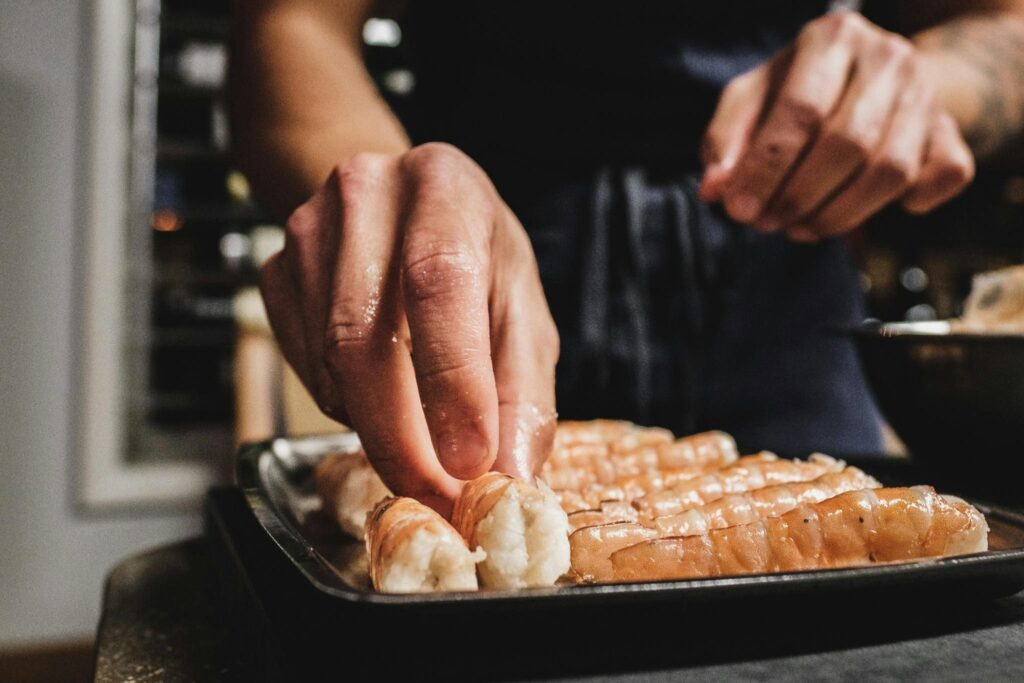
The essence of mottainai is in technical precision. A single shrimp (ebi), for example, can be utilized in multiple ways:- Meat: Served as nigiri or sashimi.
- Head: Deep-fried or boiled to enrich soup.
- Shell: Ground into seasoning for other dishes.
Global Trends: How Japan Inspires a World of Sustainable Dining
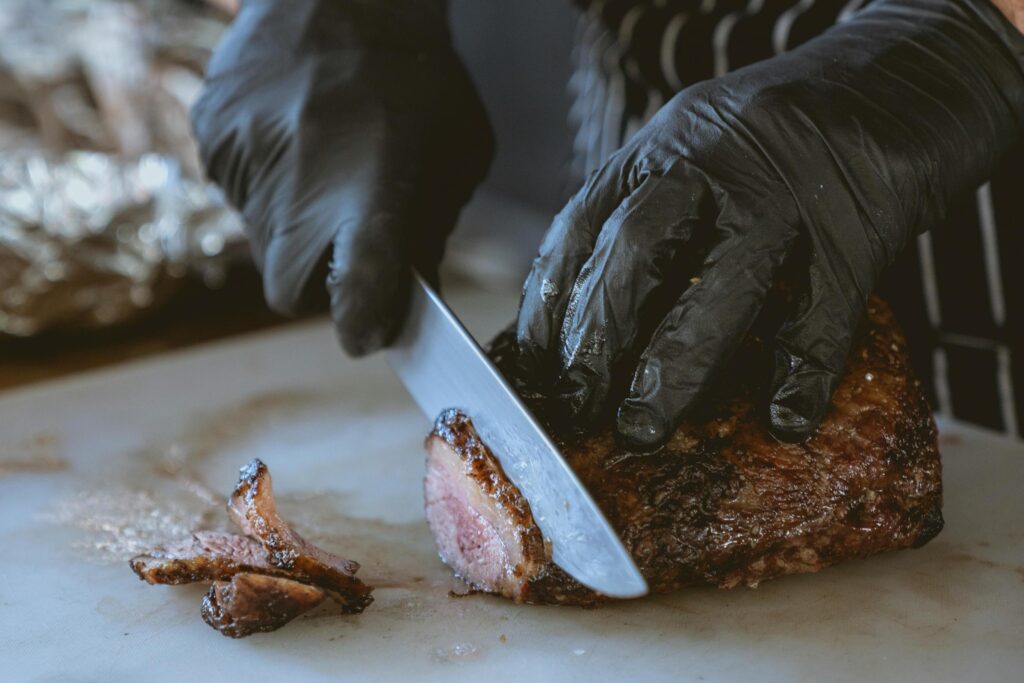
Across Japan, from convenience stores to high-end restaurants, mottainai inspires sustainable dining and reducing waste. Bruised fruits find homes in smoothies. Rice and leftovers are transformed into new meals. Even a single grain is treated with care.
Long distance transportation of ingredients, plastic packaging, and modern supply chains are under scrutiny. Concerned citizens and companies alike are exploring organic and locally sourced produce to reduce the environmental impact of food systems.From Shops to Kitchens: Mottainai in Daily Life
Mottainai is not reserved for chefs; it is a mindset for daily life:- Buy imperfect produce: Ugly carrots or bruised apples taste the same and cost less.
- Use whole vegetables: Beet greens, cauliflower leaves, and herb stems can all create soup, sauces, or flavorful dishes.
- Reframe leftovers: Rice becomes fried rice. Roasted meat turns into hearty soups or stews.
- Trust seasonal specials: When dining out, ask about daily life dishes that highlight seasonal ingredients while reducing waste.
Appreciating Enough: The True Luxury of Mottainai
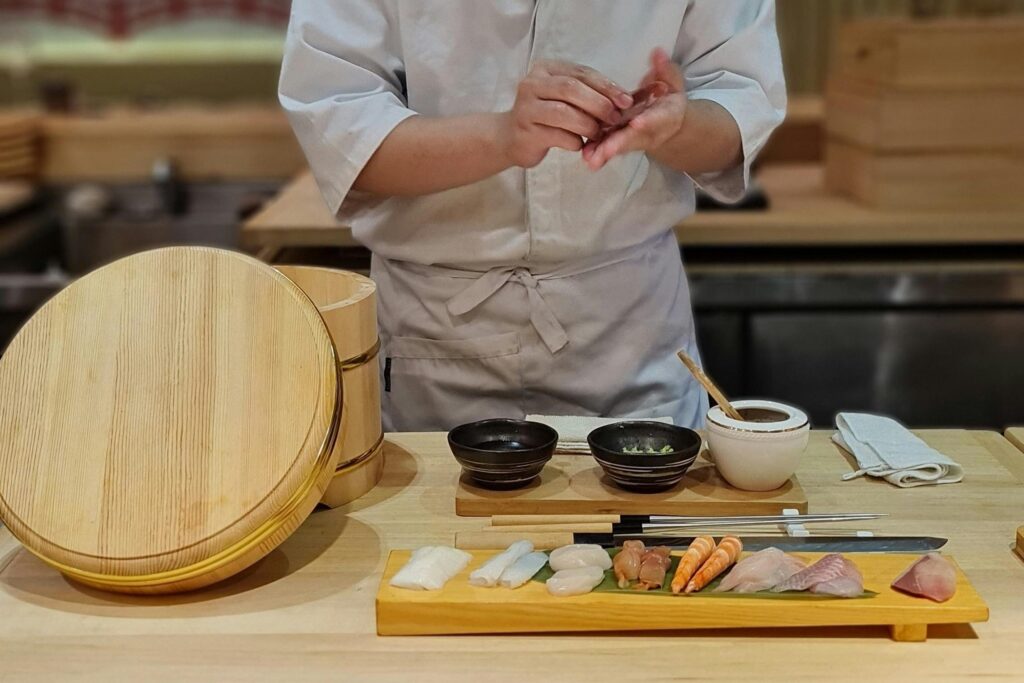
At its heart, mottainai teaches that sustainability and beauty are intertwined. Luxury is not about excess but about appreciating what you have. In omakase, every bowl, dish, and ingredient is intentional. Nothing is wasted. Everything has purpose.
This respect extends to how ingredients are used: from the delicate balance of soy sauce enhancing flavors to the careful use of sugar and other seasonings that bring out the natural sweetness of dishes. Traditional Japanese cuisine embraces the full potential of every component, ensuring nothing is wasted.Whether it’s a hearty pot simmering with broth made from fish bones or vegetable scraps, or a small side dish crafted from leftover food scraps, the mottainai philosophy transforms potential waste into flavorful dishes that nourish both body and soul. By adopting these mindful practices, we not only honor the past but also contribute to a sustainable future, preserving resources and respecting the environment for generations to come.For those interested in exploring more about Japan beyond its culinary traditions, check out this guide to Tokyo’s hidden neighborhoods beyond Shibuya and Shinjuku.