
Lorelai Sharma
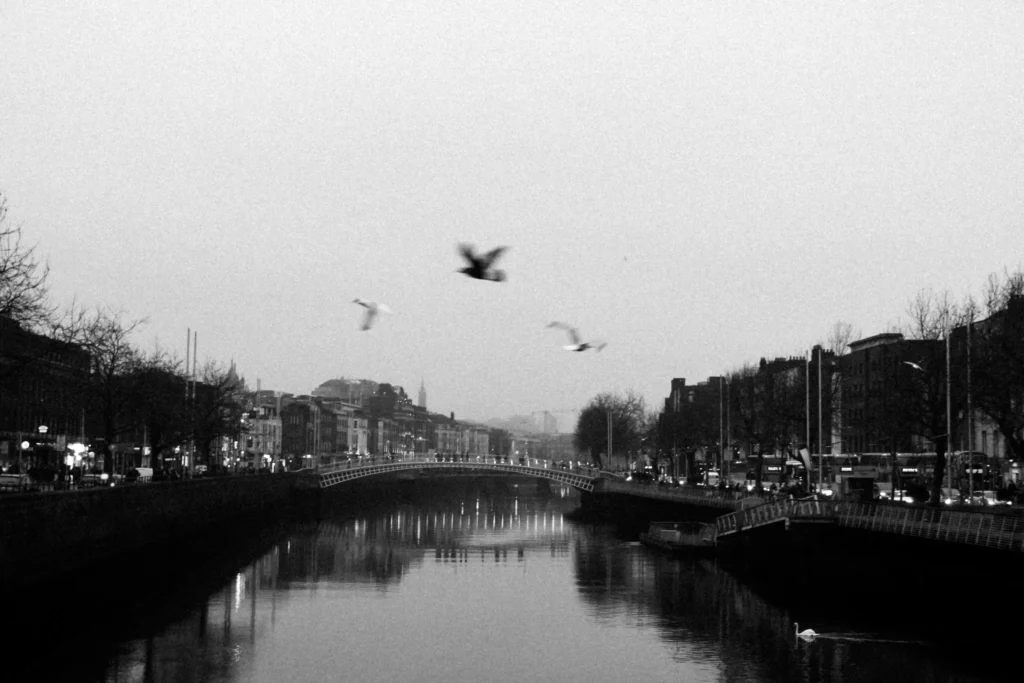
The wind off the River Liffey carries a biting, damp chill that settles deep into the bones. It is late afternoon in Dublin, and the city is bathed in a muted gray light. The cobblestones are still slick from a sudden rain shower, reflecting the warm, amber glow of nearby pub windows. The air smells heavily of wet stone, roasted coffee, and the faint, metallic tang of the street busker’s rusted guitar strings. I pull my coat tighter and stop near the corner of Suffolk Street, joining a loose circle of tourists gathered around the bronze statue of Molly Malone.
Molly stands frozen in the cold metal, her hands forever gripping the handles of her heavy fish cart. The bronze of her dress is dark and weathered, except in a few specific places. I stand near the back of the crowd and watch the relentless rhythm of the visitors. A group of laughing students poses beside her. A father holds up his phone, waving his hand to direct his children into the frame. “Squeeze in tight, right there,” he calls out over the noise of the street.
Everyone reaches out to touch her. They rest their hands on the rim of her wheelbarrow. They casually lean against her arm. Mostly, they rub the exposed bronze of her chest, polishing the metal to a bright, unnatural gold for a cheap laugh or a superstitious wish for good luck.
“Smile on three,” a woman says, leaning her shoulder into the statue. “One, two, three.”
I stand there for twenty minutes, listening to the chorus of camera shutters, the scuff of shoes against the wet stone, and the scattered fragments of conversation. In all that time, through dozens of photographs and hundreds of hands pressing against the cold metal, nobody actually speaks her name. They talk about the lighting. They talk about where to get a pint afterward. But Molly herself is entirely absent from the dialogue.
I look at her face, cast in a perpetual, tired gaze toward the pavement, and I feel a sudden, tender ache in my chest. Hello, Molly, I say quietly in my own mind, offering her the basic dignity of an introduction.
It is a strange and lonely thing to be turned into folklore. When a city elevates a person to a legend, it often strips away their humanity in the process. We remember the song, the wheelbarrow, and the tragic end, but we forget that there might have been a real girl underneath it all. She is no longer a daughter or a worker trying to survive the bitter Dublin winters. She is just a photo opportunity. Travel has a way of revealing the quiet cruelties of history, showing us exactly what a culture chooses to honor and what it conveniently forgets.
The crowd shifts again, making way for a new group of visitors carrying umbrellas and paper shopping bags. A busker a few yards away begins tuning his guitar, the sharp notes cutting through the damp air. I take a step back, leaving the circle of tourists behind. I walk away down the slick cobblestone street, carrying a quiet, unresolved question about what it truly means to be remembered, and hoping that wherever the real girl went, she finally found a place where she is known by her name.