The first time I saw it, I thought I’d imagined it, dazed and like in a dream.
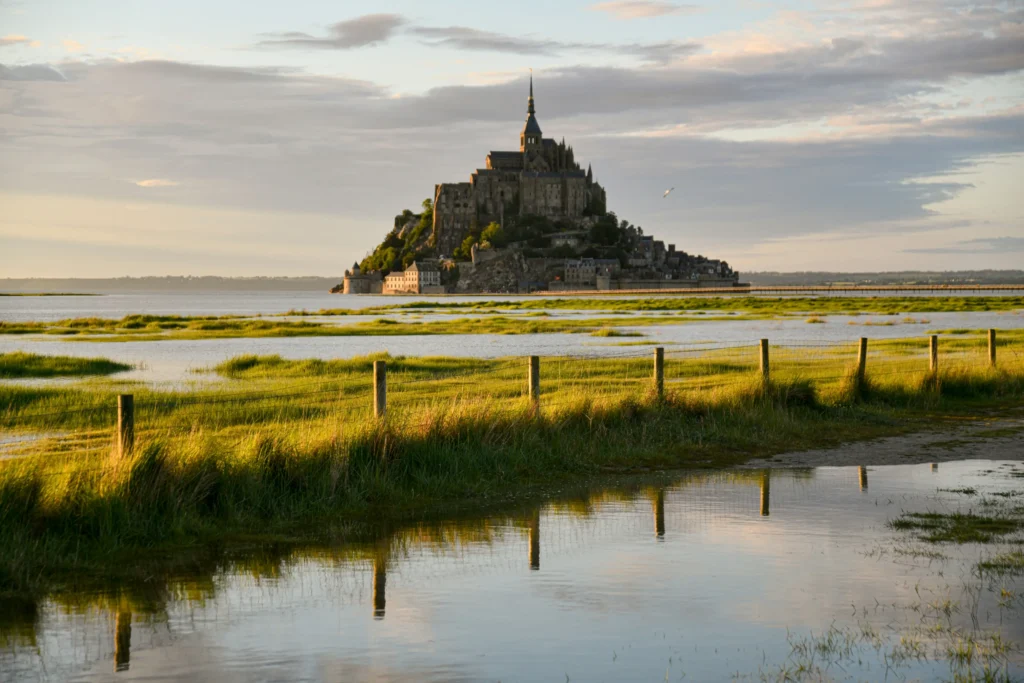
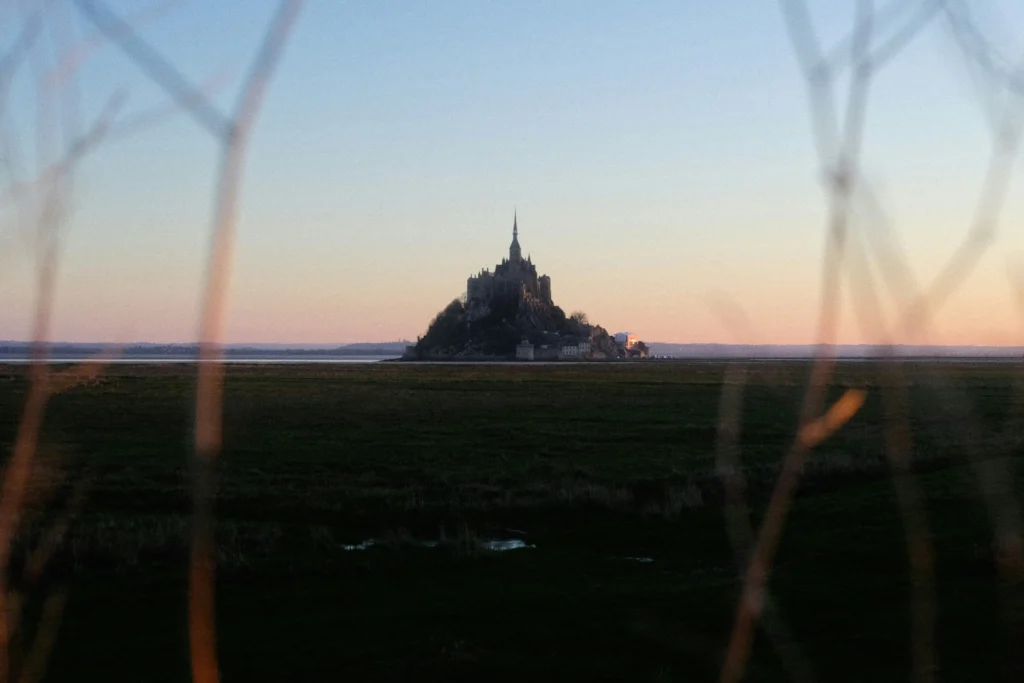
We were still far off, the car rolling through flat Normandy farmland, and there it was on the horizon, a shape that didn’t belong to the land. Pale, pointed, hovering. Not quite a building. Not quite a cloud. The salt flats stretched out around it in silver sheets, and the whole thing seemed to float just above the ground, the way heat shimmers above a road in summer.
I’ve seen photos of Mont-Saint-Michel my whole life. None of them prepared me for how it looks like something the tide left behind by accident.
Across the Salt and Silver
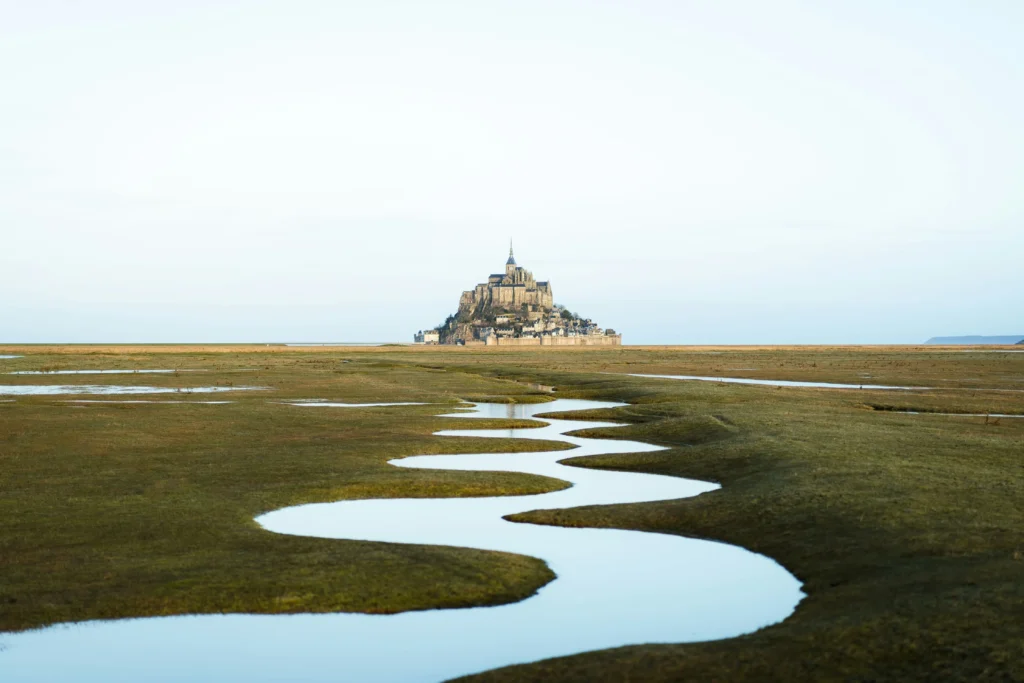
You don’t drive all the way in anymore. You park, you take a shuttle or you walk, and I chose to walk. Slowly, the way you’d approach something you weren’t sure was real.
The causeway runs straight across the flats. Wind came off the bay in long, salted gusts, tugging at my jacket, carrying the cries of gulls wheeling somewhere overhead. Underfoot, the path was firm, but on either side the sand glistened wet and mirrored, holding the grey of the sky.
A word about the tides, because they matter more here than anywhere I’ve been. This is one of the fastest tidal zones in Europe, and the water can rush in across those flats with frightening speed. People have been caught out on the sand before. Check the schedules. Respect them. The bay is not decoration, it’s the thing that makes this place what it is.
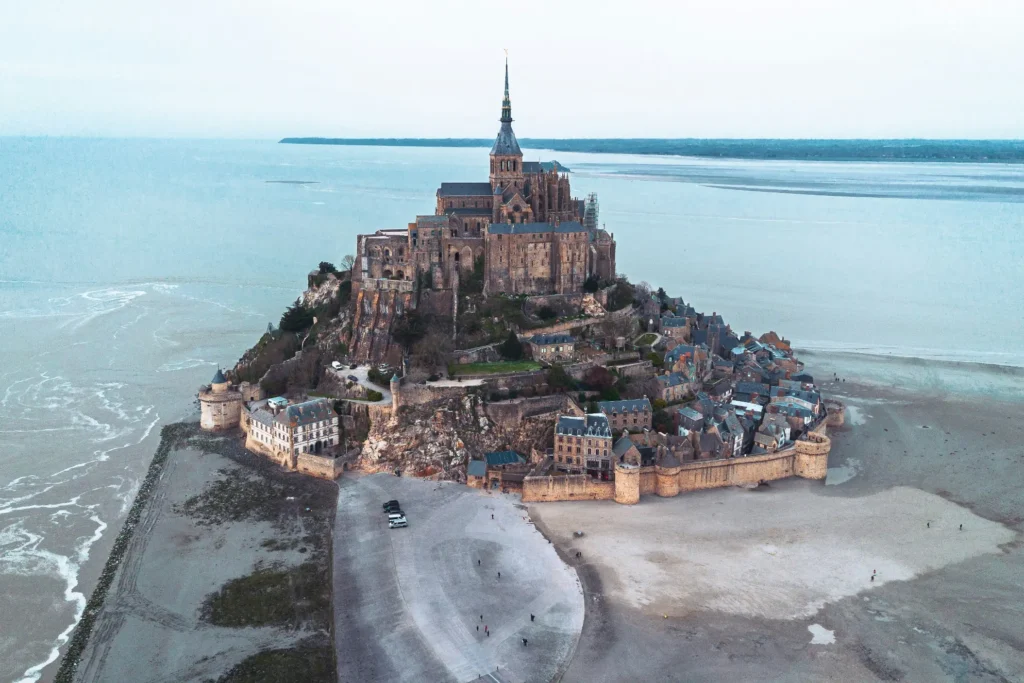
With every step, the abbey grew. What had been a mirage became stone: rampart walls, then rooftops, then the slim spire reaching up with a gilded figure at its very tip. The closer I came, the less it floated and the more it loomed. By the time I reached the gate, it stood over me completely, and I had to tip my head all the way back to find the top.
Behind the Medieval Gates
The spell broke a little at the entrance. It usually does.
The lower lanes are narrow and packed, shoulder to shoulder in places, lined with shops selling postcards and keyrings and overpriced galettes. Voices in a dozen languages bounced off the old stone. Somewhere a tour guide held an umbrella overhead like a small flag. For a moment I felt the familiar sink of arriving somewhere wonderful and finding it crowded.
But then I learned the trick, the same one that works in most old places. I went up.
A few flights of worn steps, a turn down a side stair, and the crowd thinned to almost nothing. The lanes here climbed steep and quiet between leaning houses. My footsteps echoed off the walls. A cat watched me from a windowsill. Through a gap between buildings, the whole bay opened up below, flats running out to the sea, the light moving across them in slow patches.
It struck me, standing there, how much this looked like a kingdom imagined rather than built. Children who grew up on a certain animated film about a girl with very long hair will recognize the shape of it; a walled island town climbing to a single bright tower, summoned out of water. But that’s a passing thought. This place is older and stranger than any story drawn around it.
Stairways Worn by Pilgrims
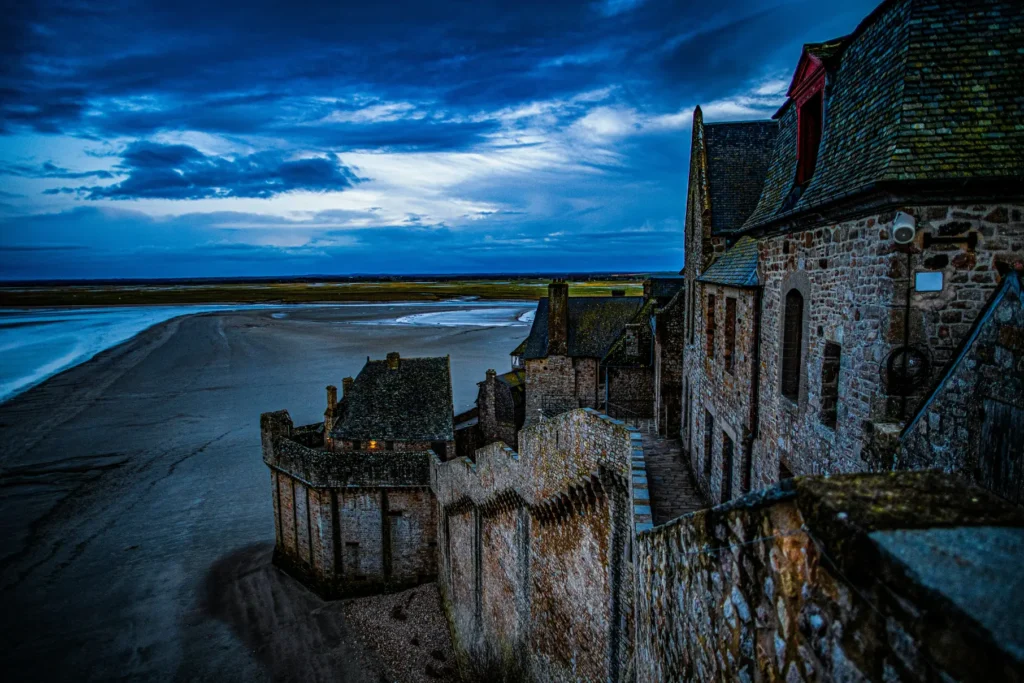
The abbey sits at the very top, and reaching it costs you something. The climb is long, the steps uneven and polished slick by centuries of feet. I went slowly, one hand trailing the cold wall, my breath shortening.
Monks have walked these stairs since the eighth century. You feel that weight in the worn hollows of each step, in the way the stone has been smoothed by so many hands and soles before yours. This was a place of pilgrimage long before it was a place of cameras. People crossed those dangerous sands on foot, barefoot sometimes, to pray here.
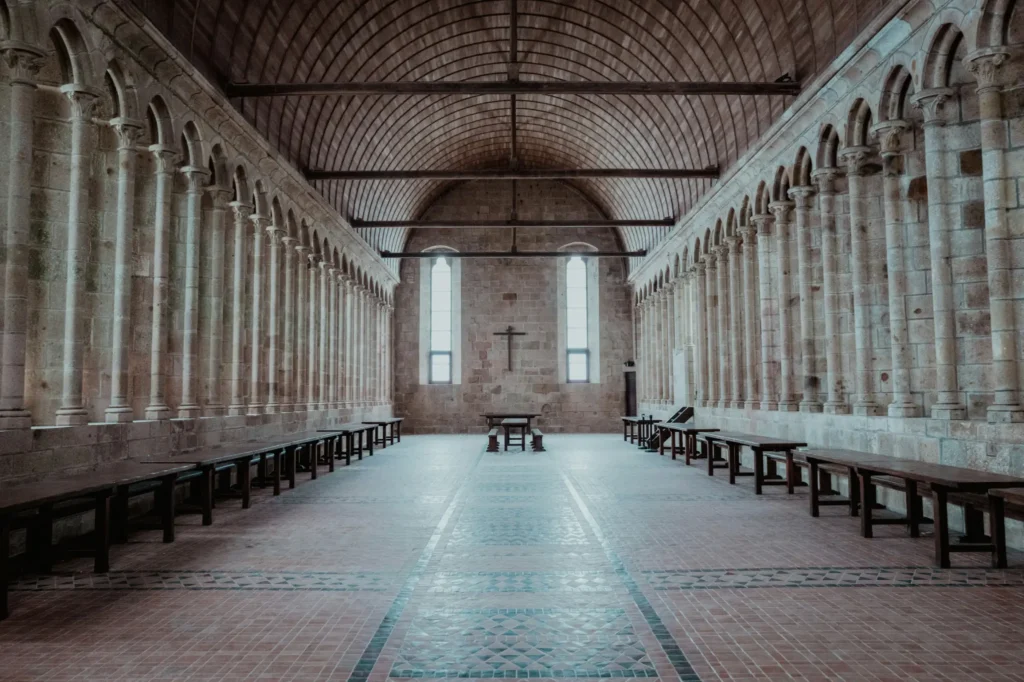
Inside the abbey, the air turned cool and hushed. Wind pressed against the high windows. The great hall held a kind of silence that asks you to lower your voice without anyone telling you to. From the terrace at the top, the view ran out forever: sand, sea, sky, the curve of the coast in the distance. The wind up there was fierce enough to lean into. I tasted salt on my lips.
It was worth every step. It usually is.
When the Island Exhales
Here is the thing I’d tell anyone planning to come: stay the night if you can.
The day-trippers leave in the late afternoon, funneling back toward the buses and the parking lots. And then something shifts. The lanes empty. The shops pull down their shutters. The island exhales.
I’d booked a small room inside the walls, and as dusk came on I walked the quiet streets almost alone. Windows began to glow amber, one by one, against the deepening blue. The crowds were gone, and what was left was the sound of wind, the distant water, my own feet on stone. The brine hung in the air. Far out on the flats, the tide was turning, the light going from gold to grey to that deep blue hour that makes old places ache.
I ate late, and simply. This region is known for a particular omelette, whipped until it’s more air than egg, cooked over an open fire until it puffs up tall and trembling. Mine arrived steaming, the buttery smell rising before the plate even touched the table. It was soft as a cloud and faintly savory, the kind of food that doesn’t need explaining. I ate it slowly by a window while the last light left the bay.
A fair warning: the famous version of this omelette can cost a small fortune, more than most full meals. You can find humbler ones nearby of course there are cheaper versions, and there are different options like how we’ve written an article on the variety of a dish at home). But there was something right about sitting there, full and quiet, while outside the sea crept back in around the rock.
The Fairytale the Tide Keeps Rewriting
I woke early the next morning and the bay had changed again. Where there had been sand, now there was water, silver and still, and the island sat in the middle of it like it had been set down overnight.
That’s the part the photos never capture. Mont-Saint-Michel is never the same place twice. It belongs to the tide more than to anyone who visits. It appears, it floats, it stands alone in a sheet of sea, then the water draws back and gives the sand to the gulls again. The fairytale here wasn’t written by anyone. It’s written, twice a day, by the moon and the water.
I came expecting a landmark from what Sammie said in her article. I left thinking about time, how this rock has watched the sea come and go for over a thousand years, and will keep doing it long after I’ve forgotten the taste of that omelette.
If you go, give it more than an afternoon. Wait for the crowds to thin. Stay until the windows glow. Watch the tide turn at least once.
Some places you visit. This one you wait for, and it comes to you.