
By the time my overnight flight landed in the United States, I was ready for somewhere quiet. I had spent much of the journey looking through the airplane window, watching distant lights appear and disappear beneath the clouds.
I was heading to the Ozarks, a region spanning Missouri and Arkansas, where I had booked a cabin near a river. After several busy weeks, I wanted a few days without a schedule, with mornings spent kayaking and afternoons left unplanned.
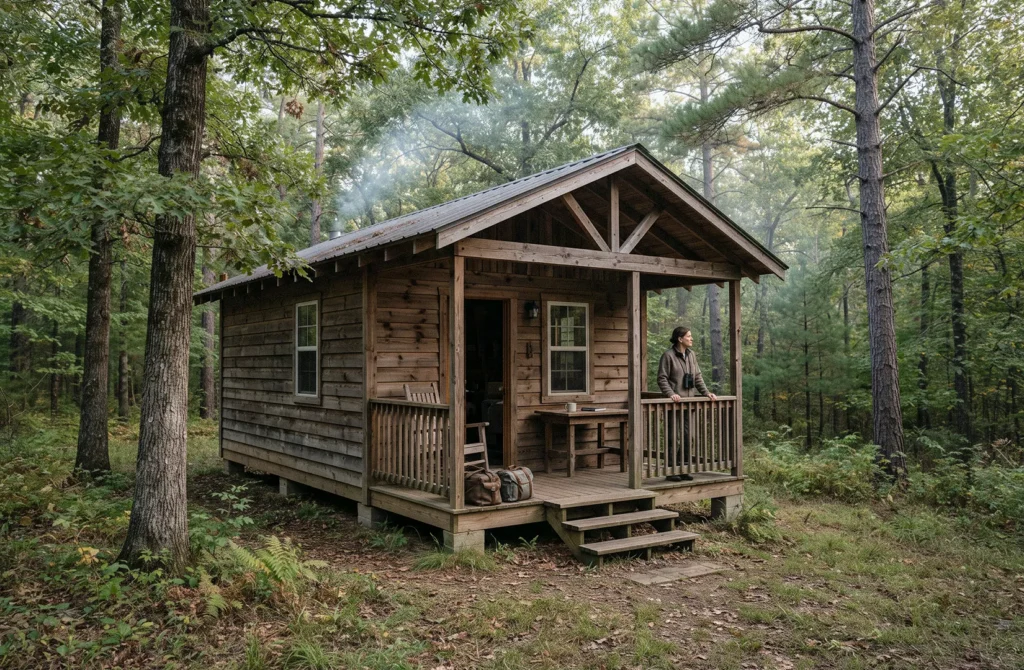
The cabin was surrounded by trees, with a small porch overlooking the woods. I could hear birds in the mornings and the occasional rustling of leaves outside my window. I had brought binoculars, hoping to spend some time observing wildlife.
On my second morning, I took a kayak onto the river.
The water moved gently around exposed stones and fallen branches. I paddled slowly, occasionally stopping to watch the reflections of trees shifting across the surface.
Near a bend, I noticed movement along the riverbank. I rested my paddle across the kayak and raised my binoculars, expecting to see a bird.
Instead, I spotted an older man standing beside a weathered green kayak.
He was bending beneath a wooden bench, reaching for something that kept rolling away. I watched briefly before lowering my binoculars, realizing I had accidentally been observing someone else’s small inconvenience.
As I approached the launch area, I saw that he was trying to retrieve a water bottle.
u201cLooks like that one’s determined to stay,u201d I said, bringing my kayak onto the bank.
He straightened up and joked that maybe his bottle prefers the river instead.
I laughed and picked up the bottle, which had rolled close to my feet.
u201cMaybe it needs a better holder.u201d I jokingly said.
u201cOr a more responsible owner,u201d he replied.
He thanked me, then noticed that I was struggling to pull my kayak onto the grass.
u201cWant a hand with that?u201d he asked.
I accepted, and together we moved the kayak farther onto the bank.
u201cFirst time out here?u201d he asked while helping me out.
u201cYes. I’m staying nearby for a few days.u201d I replied.
We stood looking toward the river. A small bird landed on a low branch before disappearing into the trees.
u201cDid you see that?u201d he asked.
u201cJust barely. I’ve been hoping to spot a few birds.u201d I said.
He glanced at the binoculars around my neck and said u201cThey’re easy to miss when you’re paddling.u201d
I asked whether he came here often.
u201cWhenever I can,u201d he answered. u201cSome days I paddle. Some days I just sit for a while.u201d
He adjusted his kayak strap, wished me a good afternoon, and walked toward the water.
Back at the cabin, I found myself remembering our conversation.
Through my binoculars, he had been another figure along the riverbank. Up close, he was someone with a troublesome water bottle, a quiet sense of humor, and a willingness to help.
I had come to the Ozarks hoping to enjoy solitude, and I still appreciated having time to myself. Yet this brief exchange had become one of the details I remembered most clearly.
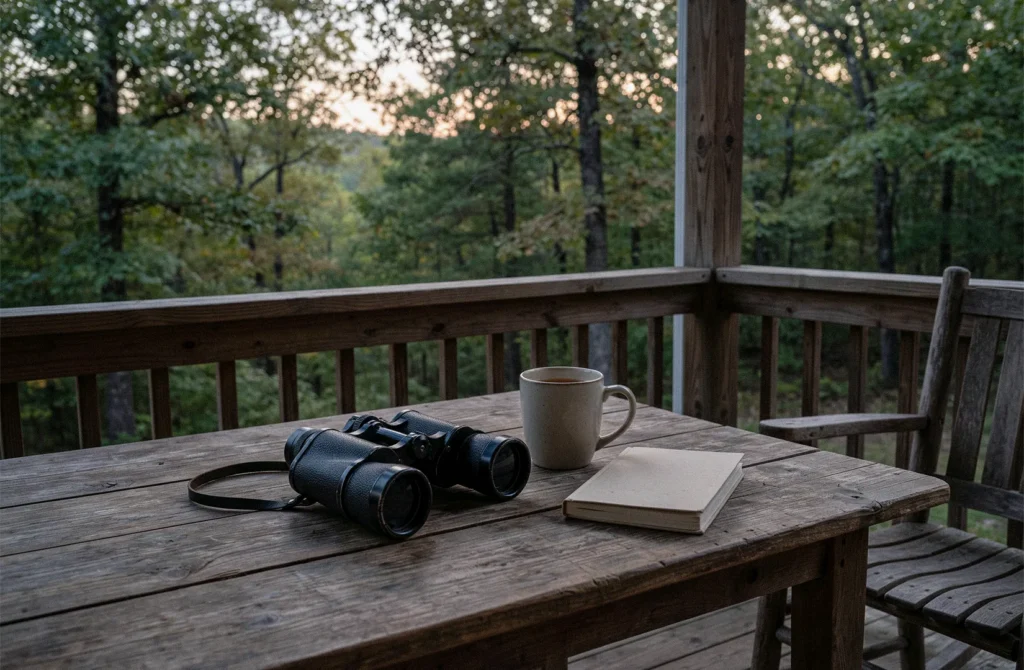
That evening, I left my binoculars on the porch table and watched the light fade between the trees.
Somewhere beyond the cabin, the river continued moving. I wondered whether the man had gone paddling again or had found somewhere comfortable to sit.