Snow falls quietly over Sapporo. Somewhere down a narrow street, a door slides open and a cloud of steam escapes into the cold, carrying the smell of miso, garlic, and something sizzling on a hot pan.
That is often how food in Hokkaido begins. It starts with warmth meeting the weather.
Japan’s northernmost main island eats according to its climate, its coastline, and its farmland. The result is food that feels generous and honest: bowls built to warm you, seafood pulled from cold northern waters, and milk so rich it turns a simple ice cream cone into a small event.
We’ve gathered five dishes that we think tell Hokkaido’s story well. This isn’t a ranking. It’s a starting point for a slow, hungry journey north.
What Makes Hokkaido Food Different
Hokkaido sits apart from the rest of Japan in more ways than geography. Winters are long and heavy with snow. Summers are cool and bright. That climate shapes almost everything on the table.
The surrounding seas are cold and rich, which is why crab, sea urchin, scallops, and salmon roe appear so often on menus. Inland, wide plains support dairy farming, potatoes, corn, and wheat. Hokkaido produces a large share of Japan’s milk, and you can taste that pride in its butter, cheese, and soft serve.
There is history here too. Large-scale settlement from other parts of Japan came during the Meiji era, and with it new farming methods and new dishes. Long before that, the Indigenous Ainu people lived from these lands and waters, and their relationship with salmon and wild plants remains part of the island’s culture.
What ties it all together is comfort. Much of Hokkaido food is designed to hold you through a cold night. Hearty broths. Hot grills. Butter melting into something warm.
Hokkaido Food Worth Savoring
These five dishes cover the sea, the farm, and the steam-filled kitchens in between.
1. Soup Curry at GARAKU – Tomamu’s Forest
Location: Hotalu Street, Hoshino Resorts TOMAMU, Shimukappu, Hokkaido
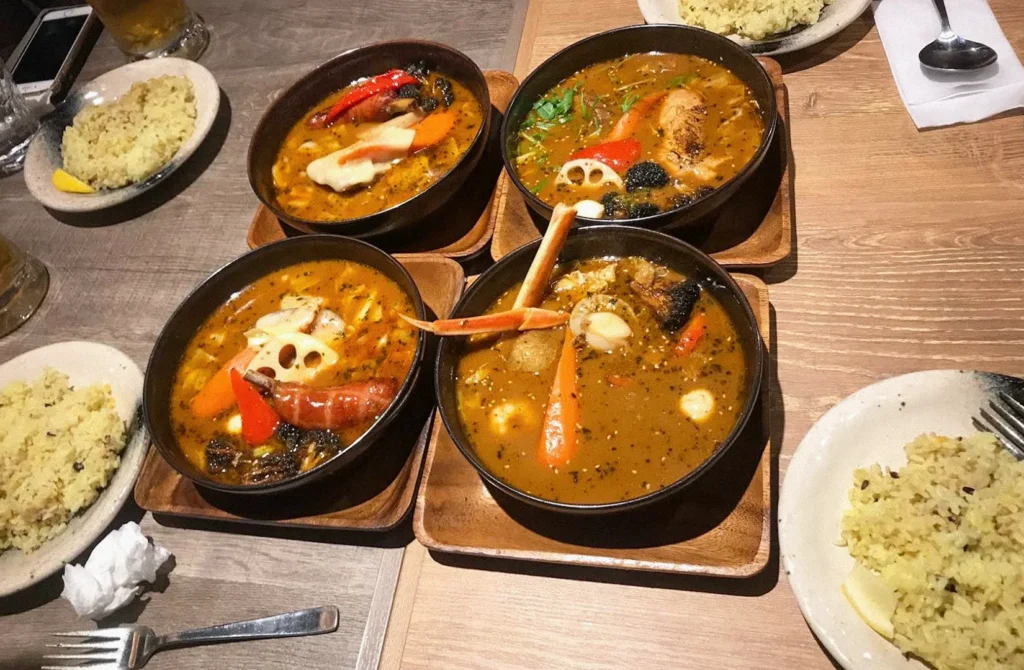
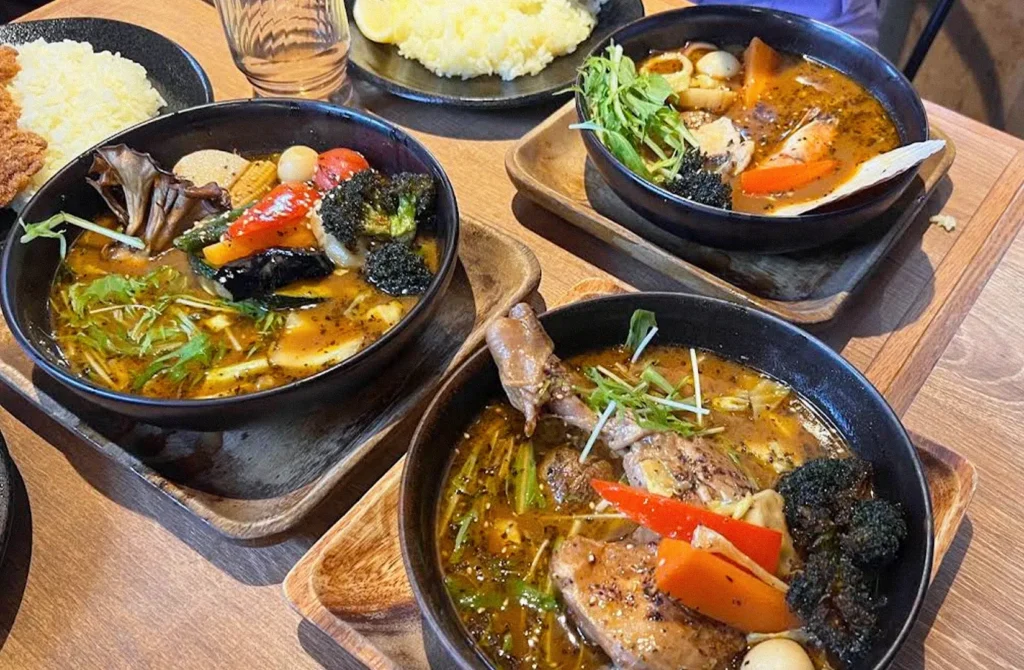
Soup curry is one of Sapporo’s signature dishes, known for its fragrant, spice-infused broth, tender meat, and generous portions of vegetables. Unlike traditional Japanese curry, which has a thick consistency, soup curry is lighter and more aromatic, with rice served separately.
For those staying at Hoshino Resorts TOMAMU, GARAKU – Tomamu’s Forest offers a convenient place to experience this Hokkaido specialty without traveling to Sapporo. Located along Hotalu Street, the restaurant is a collaboration with GARAKU, a popular Sapporo soup curry restaurant known for drawing long queues.
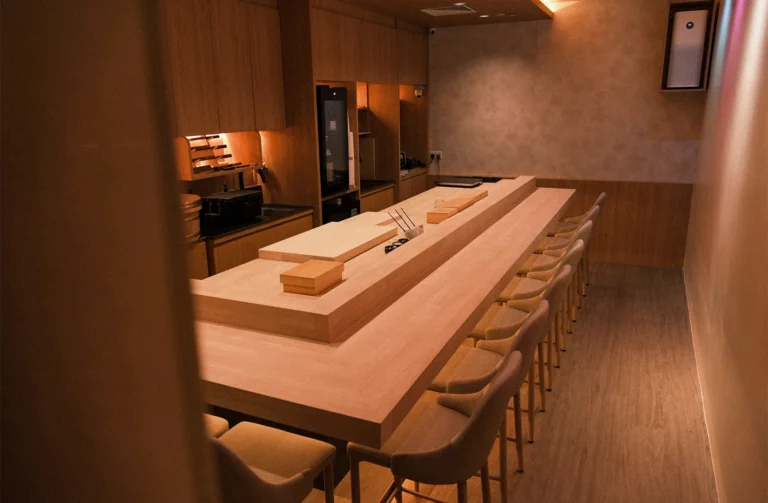
The Tomamu location takes inspiration from Hokkaido’s forests, bringing together GARAKU’s signature combination of Japanese-style broth, rich umami, and aromatic spices. The menu highlights regional ingredients, making it a fitting stop for visitors exploring Hokkaido’s local flavors. With just 35 seats, GARAKU offers a relatively intimate dining experience within the larger resort. If you enjoy smaller, more personal dining settings, you can also explore our guide to private dining rooms in Singapore for your next special gathering.
Dining tip: GARAKU – Tomamu’s Forest operates during TOMAMU’s winter season, with published hours of 11am to 10pm (last orders at 9:30pm). Expect to spend around JPY 2,500 for lunch or JPY 3,500 for dinner. Reservations are not accepted, so consider arriving outside peak dining hours to avoid a potentially long wait.
2. Jingisukan at Jingisukan Hokkaido (じんぎすかん北海道)
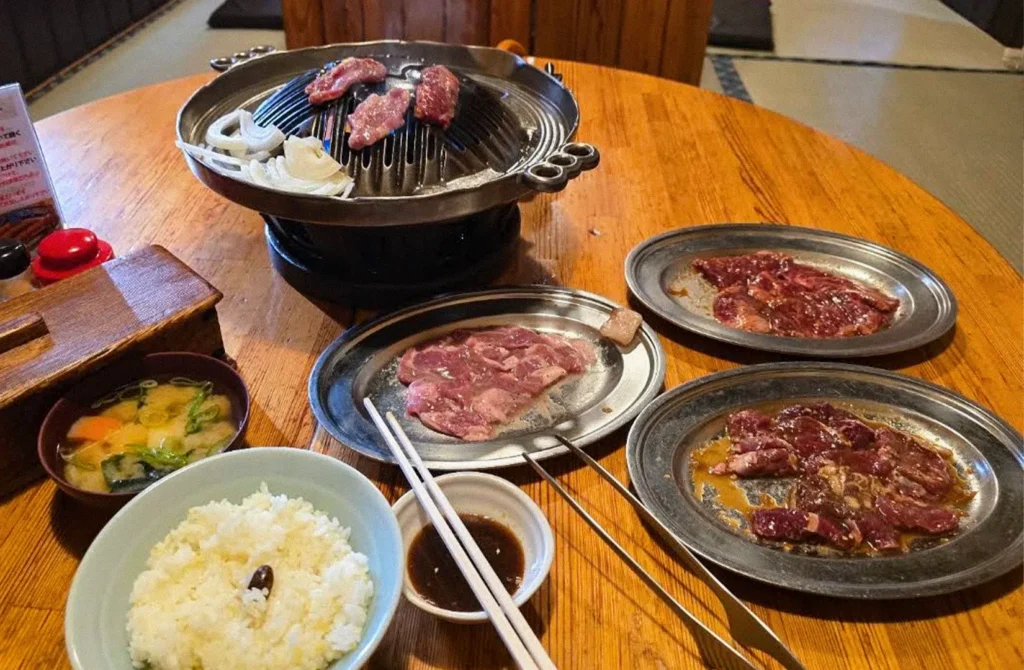
Location: Nishi 14-jo Minami 12-3-1, Obihiro, Hokkaido
Jingisukan is one of Hokkaido’s most recognizable local dishes, featuring lamb or mutton grilled over a distinctive dome-shaped iron skillet. The meat cooks at the center while vegetables such as onions, cabbage, and bean sprouts are arranged around the edges, absorbing the juices as they cook.
For an authentic jingisukan experience, Jingisukan Hokkaido is a long-established restaurant in Obihiro that has been serving grilled lamb and mutton since 1986. Located approximately seven to eight minutes by car from Obihiro Station, the restaurant specializes in this regional favorite and has become a popular dining spot among locals and visitors.
The menu focuses on different cuts of lamb and mutton, including its King Lamb and King Mutton selections, alongside grilled vegetables and other accompaniments. Diners can cook the meat to their preference, making the meal as much about the shared grilling experience as the food itself. The restaurant also provides multilingual menus, making ordering more accessible to international visitors.
Dining tip: Jingisukan Hokkaido is open Tuesday to Friday from 11am to 4pm and on weekends and public holidays from 11am to 9pm. It is generally closed on Mondays. Expect to spend around JPY 2,000 to 2,999 per person. Limited lunch reservations are available by phone, but dinner reservations are not accepted. The restaurant may close early when ingredients sell out, so check its operating hours before visiting.
3. Hokkaido Ramen at Sapporo Ramen Haruka
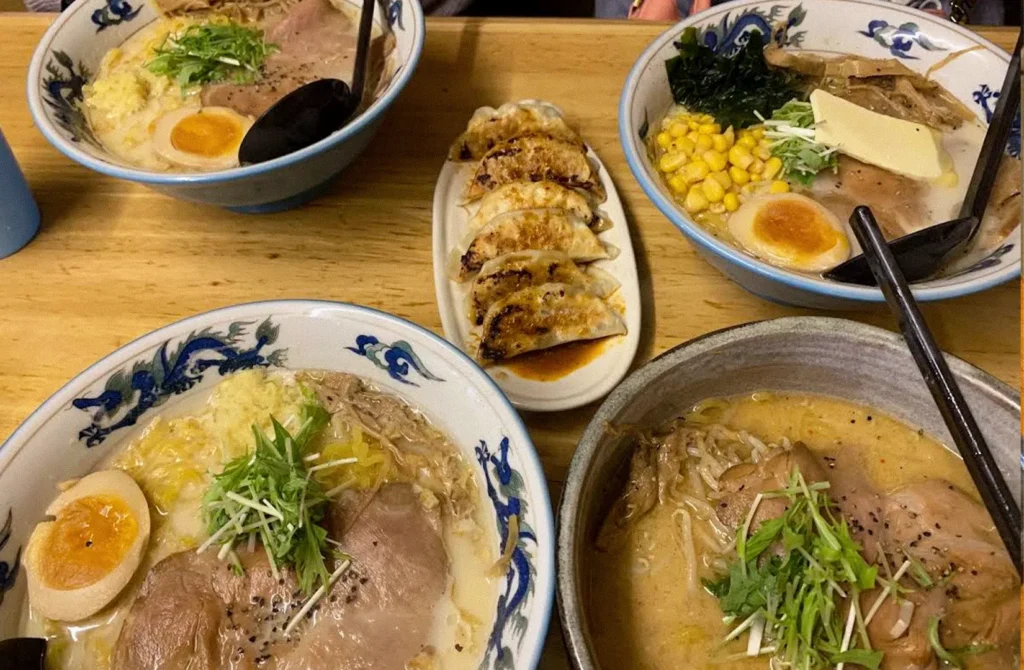
Location: 3-6 Minami 5-Jo Nishi, Chuo-ku, N Grande Bldg. 1F, Ganso Ramen Yokocho, Sapporo
Sapporo is known for miso ramen (味噌ラーメン, miso rāmen). The broth is rich and rounded, and the noodles are thick and springy, built to hold onto every drop. Toppings often lean local: sweet corn, a pat of butter slowly melting into the soup. On a cold evening, it feels made for the weather.
Sapporo Ramen Haruka sits inside Ganso Ramen Yokocho, a narrow ramen alley in Susukino, a short walk from Susukino Station. The menu stays close to its roots while leaving room to wander. There’s a classic Sapporo Miso Ramen, a Spicy Miso Ramen for those who like heat, and a Butter Corn Miso Ramen that leans into Hokkaido’s dairy and farmland. The shop describes its Miso Cheese Ramen as its most popular bowl.
The space is small, with roughly nine counter seats. That intimacy is part of it. You sit close, the broth arrives hot, and the alley carries on outside.
Dining tip: Haruka is open daily from 11am to 3pm and 5pm to 11pm. Queues form, especially before the evening opening, so arriving early helps.
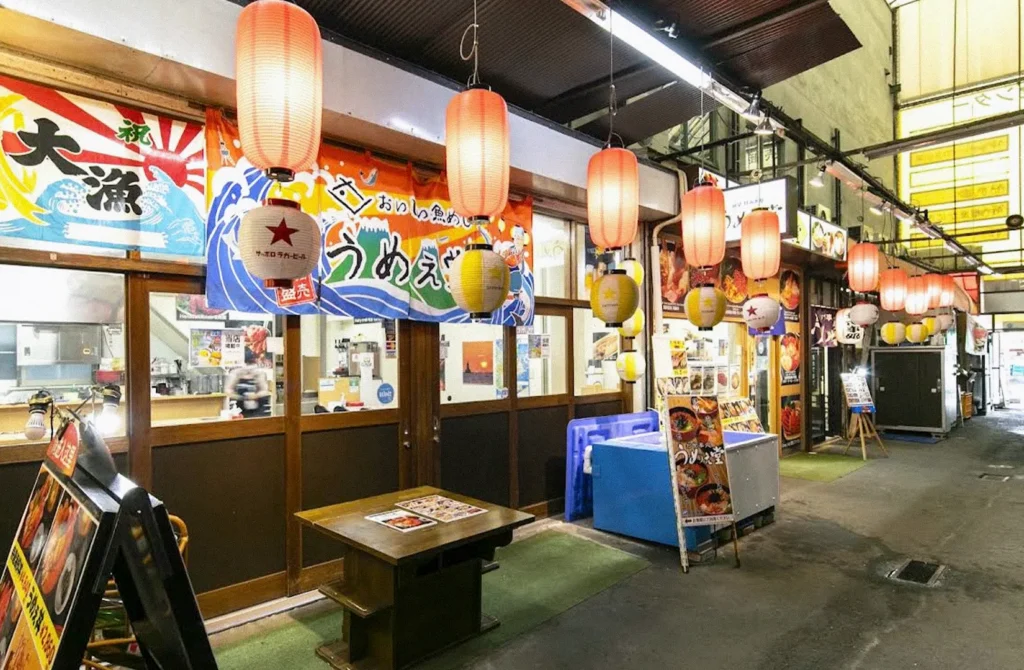
4. Kaisendon at Umee Do (うめぇ堂)
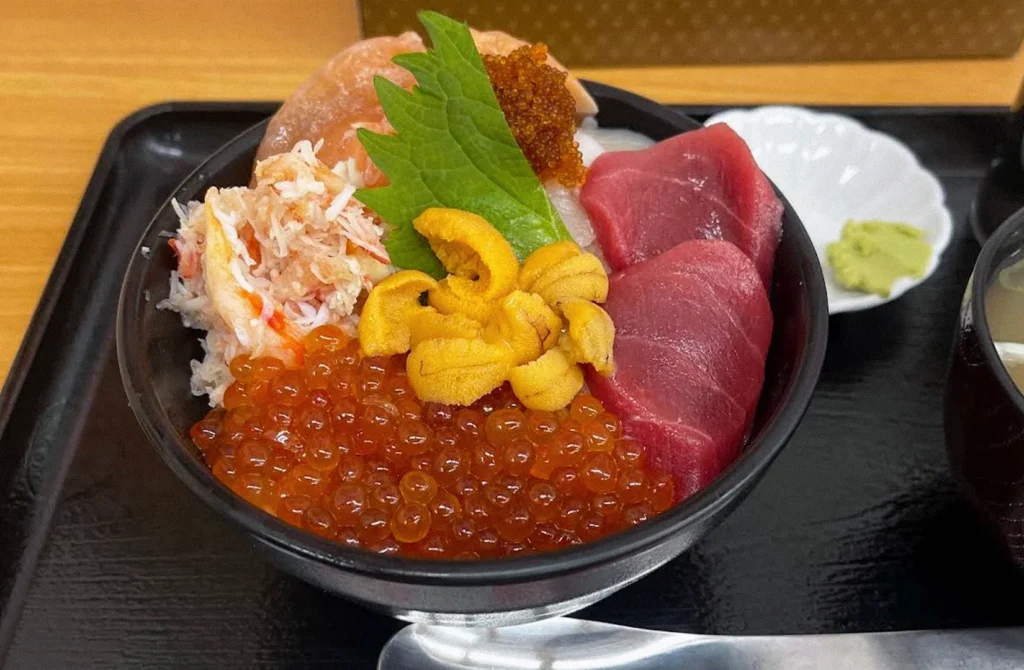
Location: Kita 11-jo Nishi 22-1-26, Chuo-ku, Sapporo (Sapporo Central Wholesale Market outer market)
A kaisendon (海鮮丼) is simple at heart: a bowl of rice topped with seafood. In Hokkaido, the seafood carries the dish. Sweet crab. Cool, almost buttery scallops. Each bite tastes of cold water and early mornings.
Umee Do is a crab specialty shop in the outer market beside Sapporo Central Wholesale Market. A tank of live crabs sits on site, and crab can be prepared to order. The shop will even grill half and boil the other half if you ask. Alongside its seafood bowls, the menu includes oysters, scallops, surf clams, and grilled fish. Each rice bowl set comes with a crab soup and a small side dish.
The shop says it has its own subcontracting factory in Nemuro, one of Japan’s major crab-catching areas, and has been in the crab business for about 50 years. Look for the orange tent if you happen to pass by this area.
Dining tip: Umee Do opens daily from 7am to 3pm, with last orders at 2:30pm. Expect to spend around JPY 2,000 to 2,999. Reservations are available by phone or the shop’s official LINE account, and groups of four or more are asked to call ahead. Free parking is available at the market.
5. Hokkaido Soft Serve at BARNES
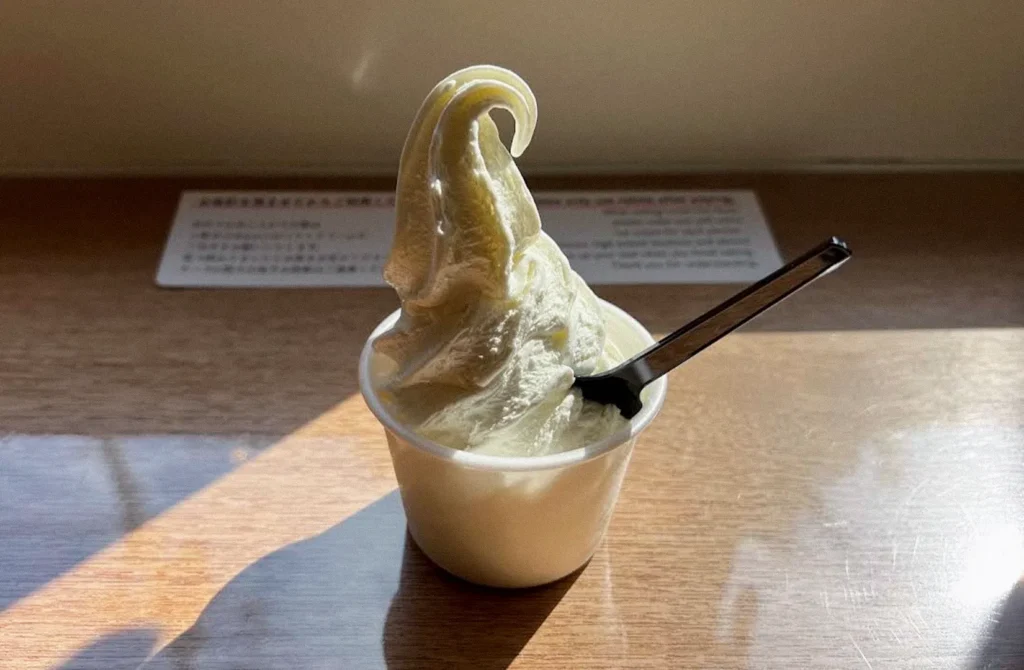
Location: 10 Chome-4-16 Miyanomori 4 Jo, Chuo Ward, Sapporo
It might seem odd to end with ice cream on an island known for snow. Yet soft serve (ソフトクリーム, sofuto kurīmu) is one of the quiet pleasures of food in Hokkaido. Made with local milk, it tends to taste clean and rich, with a creaminess that lingers.
BARNES is a modern soft serve shop in Sapporo’s Miyanomori area, serving creative, seasonal flavors alongside carefully sourced coffee. The menu rotates, with flavors such as rich milk and hazelnut appearing in recent seasons. The rich milk flavor is a good place to start if you want to taste the dairy itself.
The shop sits away from the city center and isn’t close to a subway line, so plan your route before setting out.
Dining tip: BARNES is open 10am to 6pm on Saturday through Wednesday and closed on Thursday and Friday. On weekends and public holidays, it’s standing room only, so be ready to eat your cone on your feet.
Finding Hokkaido Through Its Flavors
Taken together, these dishes trace the shape of the island. The sea in a bowl of kaisendon. The farmland in a cone of soft serve. The long winters in a steaming bowl of miso ramen or soup curry. The gatherings around a hot jingisukan grill.
None of them need fanfare. They’re everyday food, made by people who know their seasons and their ingredients well. Of course, there’s more to Hokkaido than its food. Between meals, explore the island’s beautiful landscapes, seasonal attractions, and cultural experiences. Our guide to Hokkaido activities can help you plan what to see and do beyond the dining table.
So if you find yourself heading north, let your appetite lead the way. Start early at a morning market. Follow the steam down a ramen alley at night. Stop for soft serve when the road gives you the chance. Then tell us which bowl stayed with you.