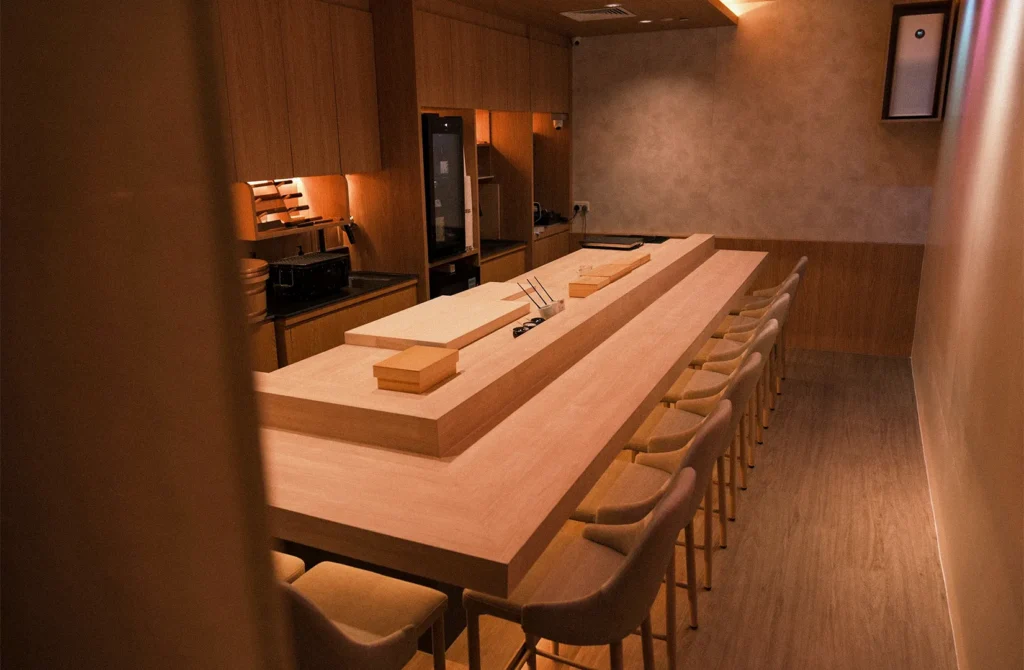
Eight seats. One counter. A chef’s hands, and a small mound of rice waiting to be shaped.
That is the picture I keep returning to when I think about Sushi Masa by Ki-setsu. It is not a scene I’ve lived through, but that is what I imagine whenever I think about that place. A palm cupped around rice. A slice of fish laid across it. A quiet pause before it is placed in front of someone.
So much of what happens at a sushi counter is older than the room it happens in. I find that thought strangely comforting. A single piece of nigiri can carry a long road behind it, across centuries and coastlines, and still arrive in a few seconds.
The road begins in Edo, the city now called Tokyo.
Edomae means “in front of Edo,” a nod to the bay that once fed the city. In the early nineteenth century, sushi there was a quick food, sold from street stalls to people who are on the go. It doesn’t need to be refrigerated that’s why cooks learned to care for fish with salt, vinegar, soy, and heat. They cured, marinated, and simmered. These were acts of preservation, but they shaped flavor too.
Omakase is a different thing. It is not a style of sushi but a way of eating. The word means something close to “I leave it to you.” The diner hands over the choices to someone else, and the chef decides what to feed the diners.
One is a tradition of craft. The other is a practice of trust. Over time, they have often found each other at the same counter.
Traditions rarely stay where they start. They travel with people, with appetite, with curiosity.
In Singapore, Japanese cooking found a city already fluent in many cuisines and a dining public used to paying close attention to food. Counters opened. Chefs arrived, or trained, or returned. If you follow that thread, you’ll find the sushi restaurants in Singapore worth knowing spread across neighborhoods, each holding the tradition a little differently.
From traditional Edomae techniques to modern interpretations, each sushi counter brings its own approach to the craft. Discover more about the artistry and traditions behind every bite in our Singapore sushi guide.
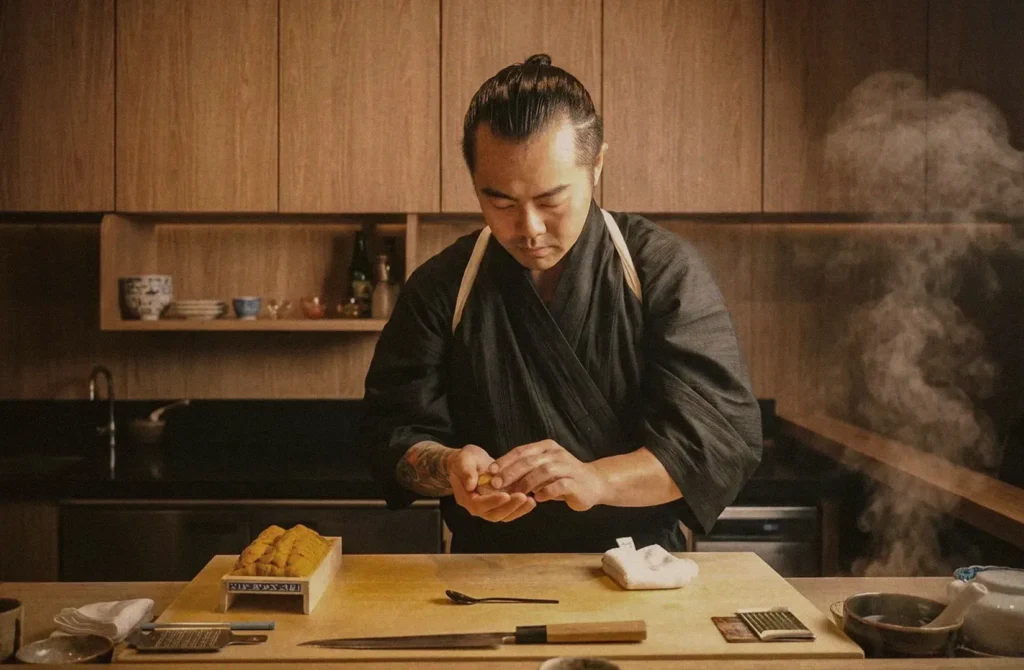
Today, Omakase Singapore can mean many things. Some counters keep close to old Tokyo habits. Others lean into new ideas, other ingredients, a looser hand. There isn’t one right version. There is just variety, and the question of what each place chooses to honor.
At Sushi Masa, the choice feels clear. Eight seats at Cuppage Plaza. Chef Masa behind the counter. A menu guided by the seasons rather than fixed in menu options. Eight seats is not many. It means the chef can see every face. It means each piece is made for someone specific, not for a room.
What lingers for me is the shape of that relationship.
The ingredient arrives with its season. The chef reads the current available ingredients and decides what to serve, while the diner waits and receives. Nobody is fully in control. The fish depends on the sea. The chef depends on the fish. The diner depends on the chef.
That is what omakase asks of us. It is not blind faith, instead it is attention and willingness to sit still and let someone else know a little more than we do, at least for the length of a meal.
I imagine the end of an evening at Sushi Masa. The last piece set down. The rice still faintly warm against cool fish. A small pause, the kind no one fills with words.
Somewhere far behind that moment is a bay that no longer looks the way it did, and a street stall that no longer stands.
And yet, here is the rice. Here are the hands.