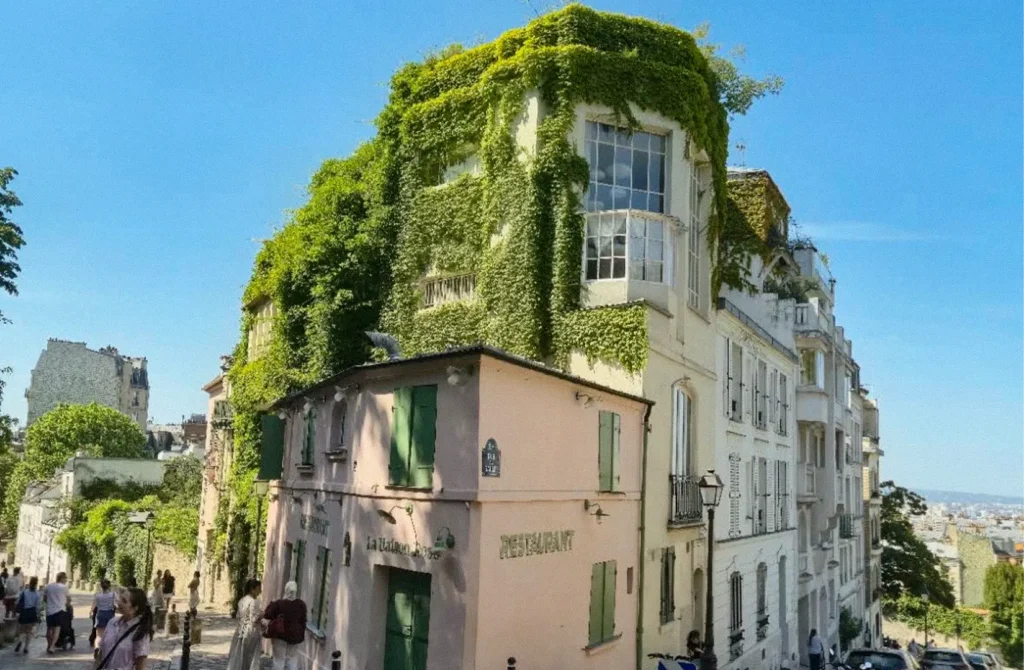
My calves noticed Montmartre before the rest of me did.
I had spent the morning climbing. Cobbles underfoot, uneven and polished smooth in the middle where so many feet had passed. Steps that kept promising to be the last and never were. Somewhere near the top, I stopped pretending I was pausing to admire the view and simply admitted I was out of breath.
Montmartre is wonderful for that kind of wandering. Every corner opens onto another corner. Every street tilts. I followed the slope wherever it pulled me, and by early afternoon it was pulling me down.
A Name That Asked a Question
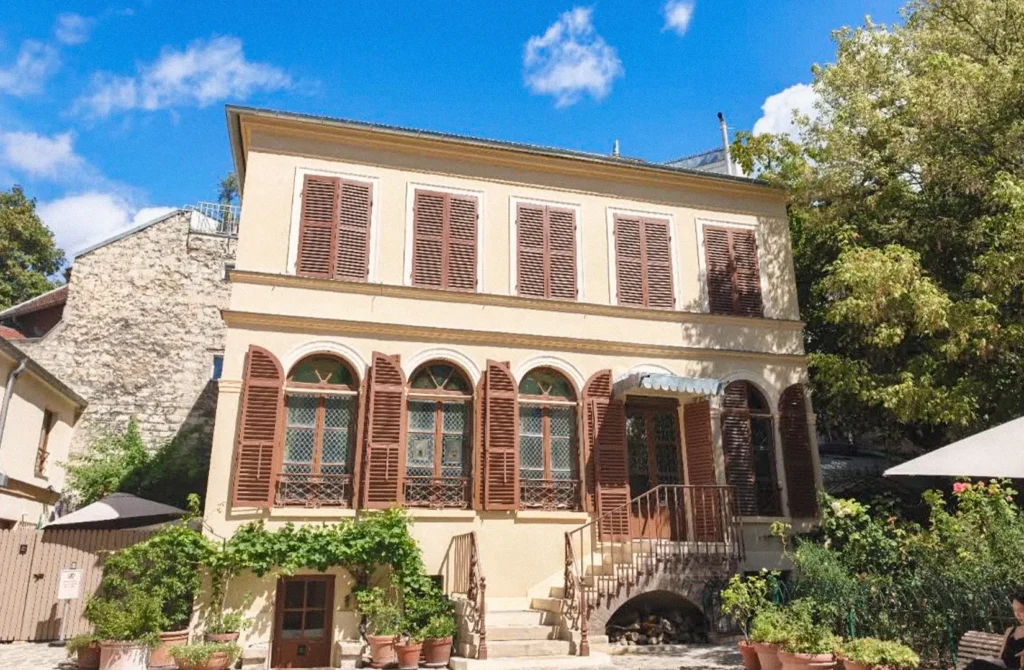
I had a museum name saved in my notes for no better reason than its sound. Musée de la Vie Romantique. The Museum of Romantic Life.
I read it twice. It sounded like a place that might gently judge my habit of turning a pleasant conversation with a stranger into a whole imagined subplot. I had to see it.
It isn’t in Montmartre. It sits just below, in the 9th arrondissement, in a neighborhood called Nouvelle Athènes. So I let gravity do the work. The streets widened a little as I came down past Pigalle. The tourist traffic thinned. The buildings grew calmer and more composed, like people who had stopped trying to impress anyone.
Paris has plenty of quieter corners like this that are easy to overlook when visiting its famous landmarks. If you enjoy discovering lesser-known places, explore these hidden Paris gems for more ideas beyond the usual tourist attractions.
If you’d rather not walk, the metro gets you close. Saint-Georges is on Line 12, Pigalle on Lines 2 and 12, and Blanche on Line 2. I walked, mostly because my legs had already committed to the descent and I didn’t want to break their momentum.
Arriving at 16 Rue Chaptal
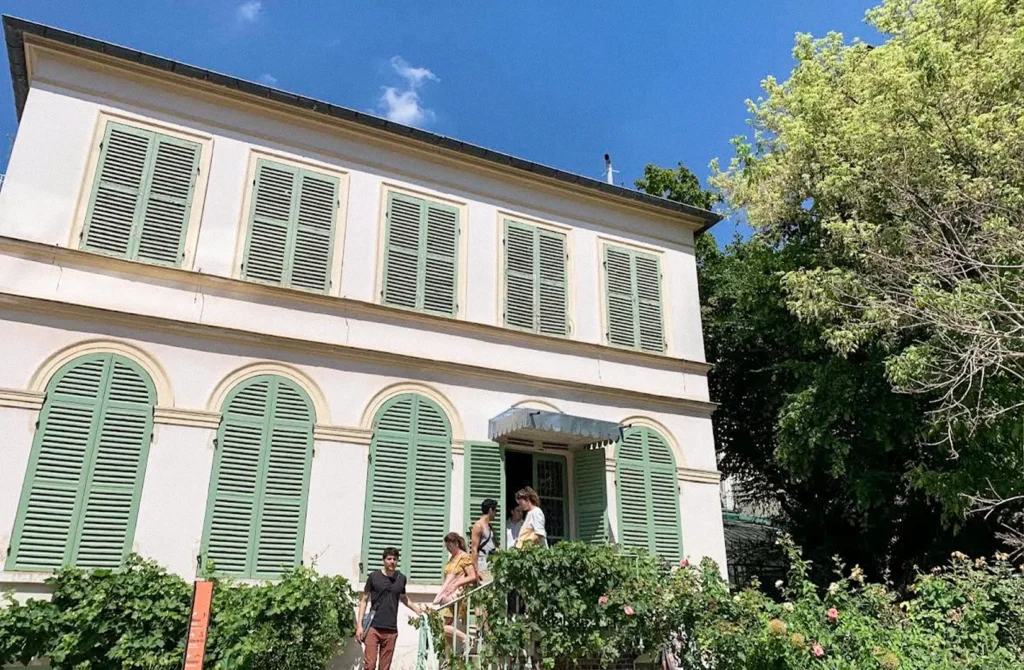
The address is 16 Rue Chaptal, and the house does not announce itself. It sits back from the street, reached by a short passage, with greenery gathered around it. After the noise up the hill, that quiet felt deliberate, like a breath held on purpose.
This was once the home of the painter Ary Scheffer, along with the studios where he worked and received guests. The building is known as the Hôtel Scheffer-Renan. In February 2026, the museum reopened after a renovation that began in late 2024, with the house restored and the visit refocused on Scheffer himself, its first occupant.
Admission to the permanent collection is free, with no booking needed. I liked that. No queue to negotiate, no ticket to fumble for. I simply stepped inside.
Romantic, but Not the Way I Thought
I should confess something. Part of me had arrived expecting love letters and pressed flowers. A whole museum of swooning.
That isn’t what Romanticism means here. The Romantic movement was a cultural and artistic current of the early nineteenth century. It valued feeling, imagination, and individual expression, and it shaped painting, music, and literature. Love was part of it, of course. But so were longing, solitude, nature, and the wild interior life of a person.
This house was a gathering place for that world. Delacroix came here. So did Chopin, George Sand, Rossini, Gounod, and even Charles Dickens. They came for Scheffer’s salons, for conversation and music and the company of other people trying to make something true.
Standing in the entrance, I tried to picture them all crowding through. Coats, voices, someone already arguing about a painting. The rooms were quiet now, but they didn’t feel empty.
The Ground Floor: George Sand
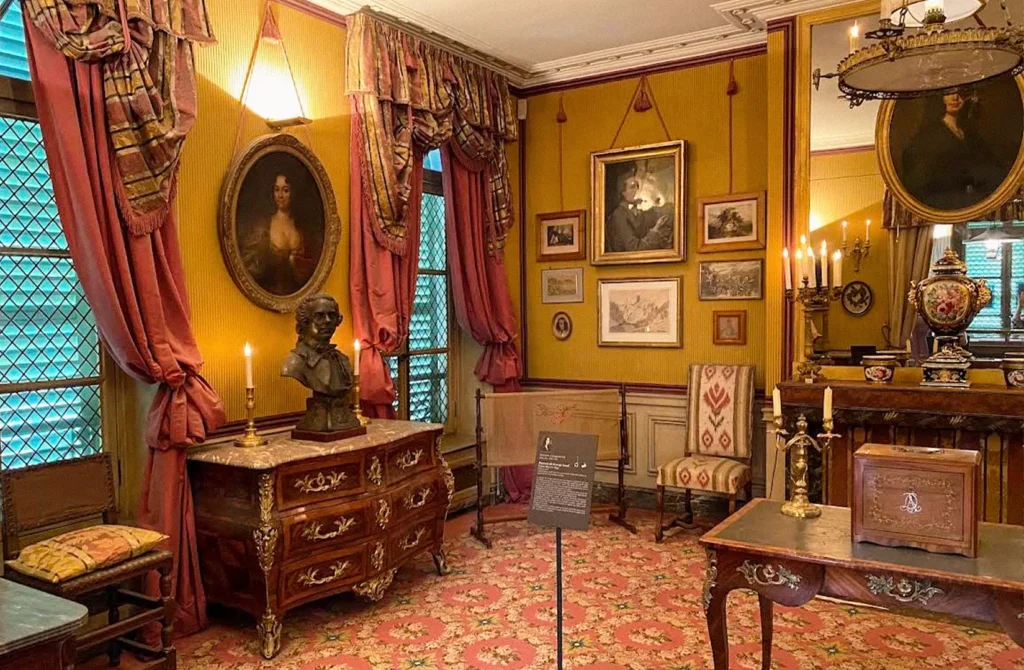
The ground floor is devoted to George Sand, the novelist who wrote under a man’s name and lived exactly as she chose. Portraits of her look out from the walls. There is furniture from her world, and there is jewelry.
I moved slowly. I read the labels dutifully, gathering dates I knew I would forget by dinner. I am a conscientious label reader and a terrible label rememberer. Both things are true.
Then a piece of her jewelry stopped me.
It wasn’t grand. It sat behind glass, small enough that I nearly walked past it. But it was something she had worn. Something that had rested against her skin, warmed to her body, been fastened and unfastened on ordinary mornings and late nights.
I went back to read its label again. Then I just stood there.
I had known George Sand as a name on book spines, a figure in other people’s biographies. Suddenly she was a woman who chose what to wear in the morning. Who perhaps had a favorite piece, or lost an earring once and searched the floor for it. Who had hands.
Portraits show you how someone wished to be seen. Belongings show you how they lived. A painting keeps a person at a respectful distance. A brooch or a ring closes the gap a little. You can’t stand in front of something so small and personal and keep thinking of its owner as history. She becomes, briefly, someone who simply lived here, in this city, getting dressed.
I didn’t have a grand thought about it. Just a quiet one. We are all leaving these small traces behind, the things we touch every day without noticing.
Upstairs with Ary Scheffer
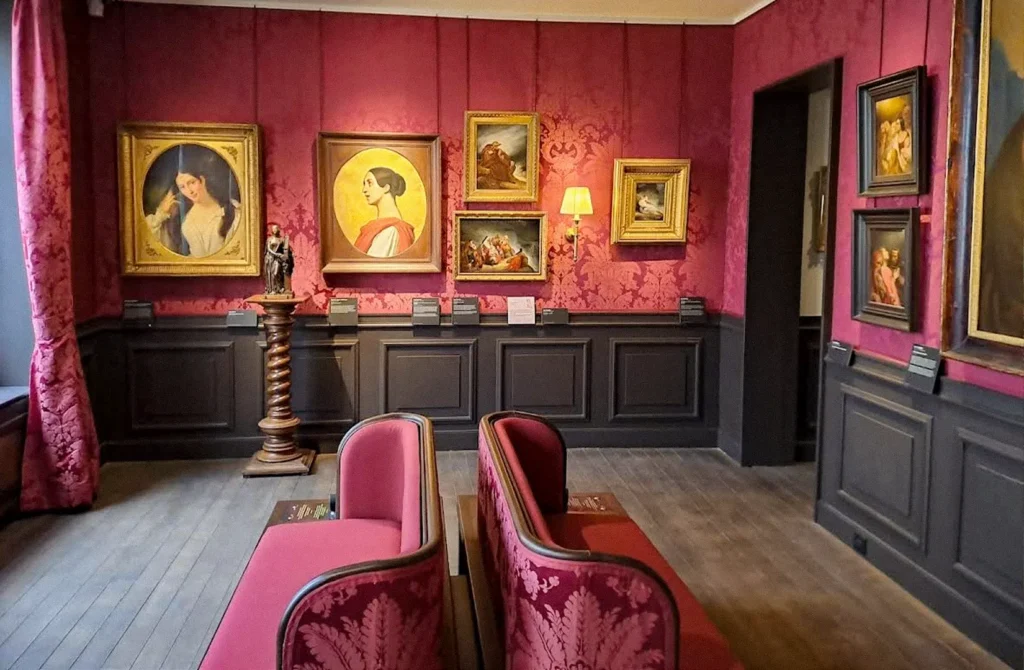
The upper floor belongs to Scheffer’s paintings, hung alongside works by his contemporaries. Here the house shifts from personal to professional, from a guest’s jewelry to a host’s life’s work.
It made sense to me that the renovation brought him back to the center. This was his home before it was anyone’s museum. These rooms held his easel and his ambitions. Seeing his canvases in the place where he made and shared them gave them a weight they might not carry in a larger, grander gallery.
I lingered longer than I meant to. That seems to be the house’s particular talent. It is small enough to see in an unhurried afternoon, and intimate enough that you don’t want to.
Before You Go
The museum is open Tuesday to Sunday, 10am to 6pm. It closes on Mondays and on major holidays, including January 1, May 1, and December 25. The permanent collection is free, and temporary exhibitions are priced separately.
My advice, as a friend: don’t rush it. Pair it with a slow walk down from Montmartre, and give yourself time to look at the small things. They are the ones that stay with you.
If you enjoy discovering places through personal travel experiences, you’ll find more destination guides and stories on Bites and Travel, covering memorable places to explore and experiences worth slowing down for.
Leaving the House
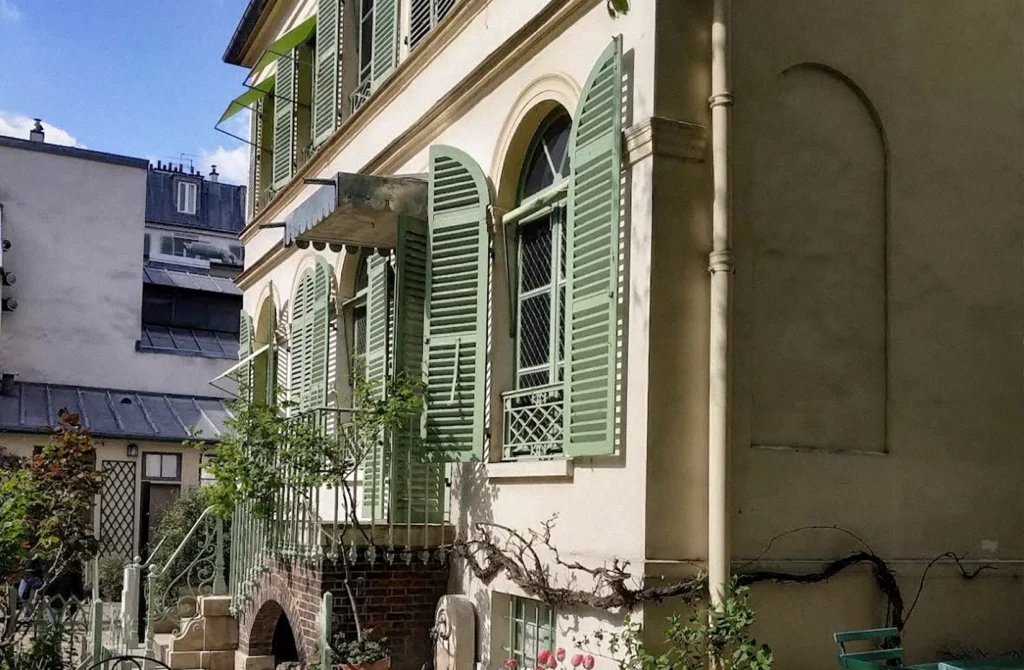
On my way out, I paused at the end of the passage, where the quiet of the house meets the street.
I looked down at my own hands. A ring I wear every day, one I barely notice anymore. I turned it once on my finger, the way I always do without thinking.
Then I stepped back onto Rue Chaptal, still turning it, and walked on.