
The tide had pulled back early that morning, leaving the sand smooth and dark at the edges. Small waves folded over themselves and slid out again. There were no voices. Only wind, the hiss of water on sand, and somewhere down the shore, the soft knock of a hull against its mooring.
This was what I had come for.
The main beaches near town had been full all week. Umbrellas in tight rows, music from three directions, vendors weaving between towels. I don’t mind crowds, generally. But I wanted one quiet morning.
So I did what I usually do. I read every account I could find of the smaller beaches along this stretch of coast. I checked the road, the walking distance from the bus stop, and the last reliable time to get a ride back. I packed water, sunscreen, and a charged phone. I chose this beach because nothing I read suggested a reason not to.
I felt prepared. I think, by most measures, I was.
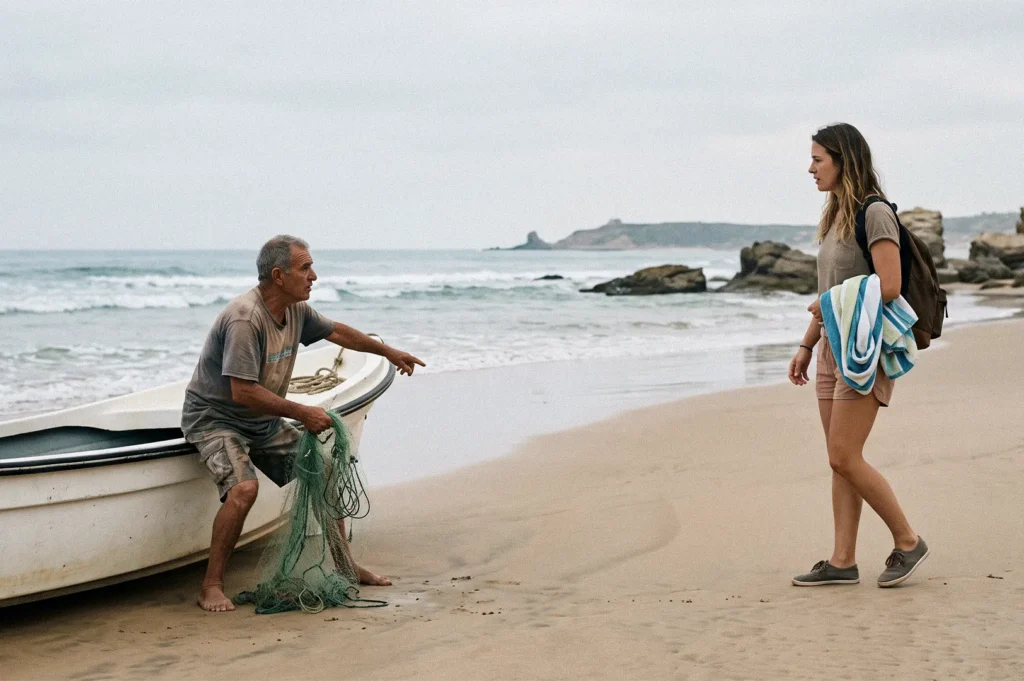
The fisherman was the only other person there. He was crouched beside a white boat pulled up on the sand, working knots out of a green net with steady, practiced fingers. I nodded as I passed. He nodded back.
I had spread my towel and was walking toward the water when he called out.
“¿Sola?”
Alone. I turned around and answered him. “Yes. Just me.”
He set the net down and stood, wiping his hands on his shorts. He looked at the water before he looked at me.
“Sometimes big fish come in here,” he said, in careful English. “Close. Where it’s shallow. Not every day. But sometimes.”
I waited. He didn’t seem to be trying to frighten me. He said it the way you might mention a loose step on a staircase.
“And here,” he went on, gesturing at the empty sand, “if something happens, nobody sees. Nobody comes.”
That second part landed harder than the first. And I realized how survival thriller movies like the “Jaws in the Shallows” started in a similar situation that I am in.
I then asked the fisherman “How would I know,” and followed up with “when it’s like that?”
I try to make it short and easy to understand because he is not fluent in English but still tries to warn me gently.
He shrugged a little. “You ask. Us. Every morning is different.” Then he pointed past the rocky point to the north. “There, more people. Families. Boats. Better.”
“Thank you,” I said. And he went back with his net after our conversation.
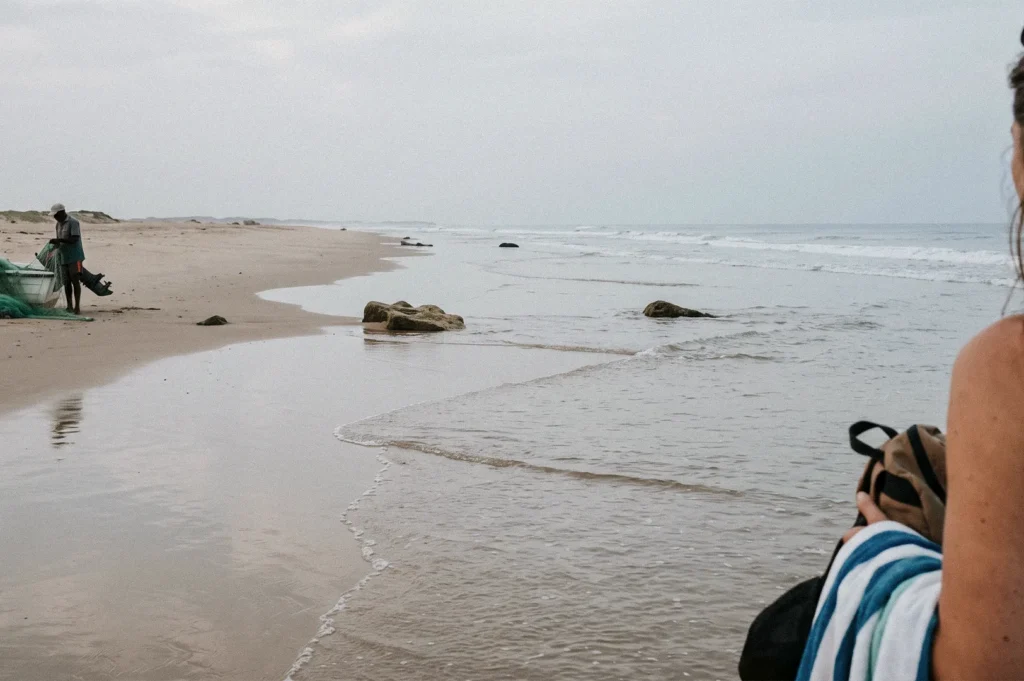
I stood at the waterline for a while. The beach looked exactly as it had ten minutes earlier. Same pale light on the water. Same clean, unbroken sand. Nothing had changed except what I understood about it.
The quiet I had found so restful now also felt like distance. From people. From help.
I had searched for warnings and found none. Somewhere along the way, I had let that stand in for safety. They are not the same thing. My research told me what others had written down. It could not tell me what the water was doing that morning, or what someone who works it every day might notice.
I didn’t go in.
I folded my towel, shook the sand from my sandals, and started walking north toward the point. It took about twenty minutes. By the time I rounded the rocks, I could hear children shouting and a radio playing somewhere behind the palms.
I still believe in research. I still want quiet places. But next time, I will ask someone local about the water that day. I will tell someone where I am going. And I will think about who might be nearby, not just who won’t be.
When I looked back from the point, the fisherman was a small figure beside his boat, lifting the net to the light, checking it for holes.