The chain clicked down into my lowest gear, and my legs still complained.
The road bent left, then left again, climbing through bamboo so tall it leaned over the asphalt like it was curious about me. Somewhere below, water was running. I could hear it but not see it. The air smelled of wet earth, woodsmoke, and something green and sharp, like crushed leaves.
I stood on the pedals. The bike swayed. I sat back down.
I had been warned that going Longji Rices Terraces would require me to bike on a uphill. However I had nodded in the way people nod when they think they understand.
And I underestimated the warning.
The First Look
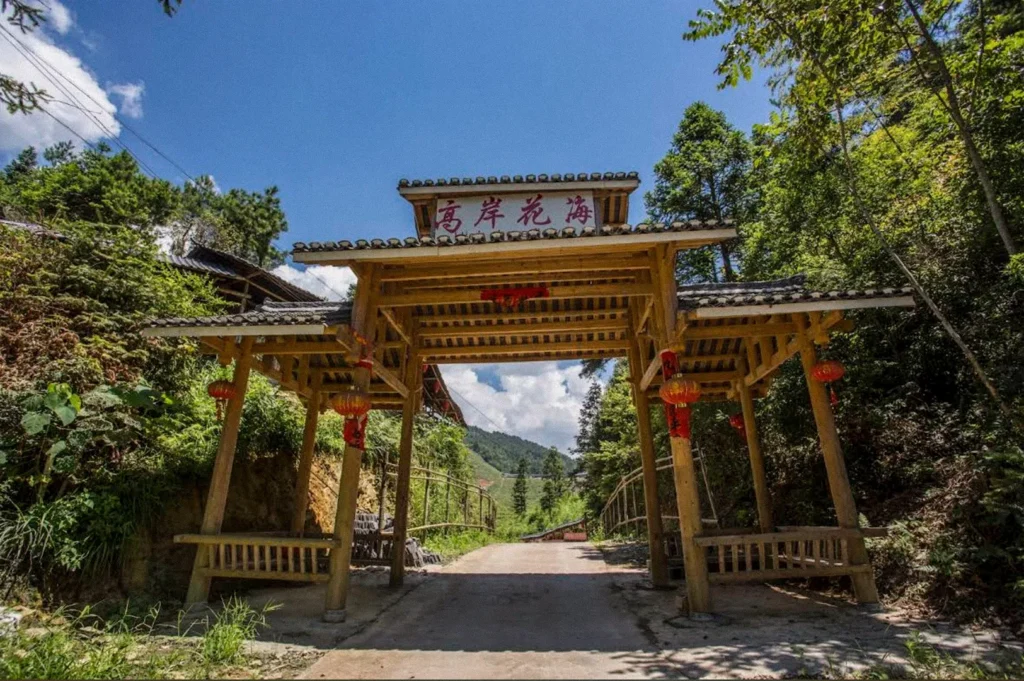
Then the bamboo opened, and the mountain stepped out.
I braked without meaning to. One foot came down onto the gravel , and I just stood there, breathing hard, sweat cooling on the back of my neck. Exhausted already.
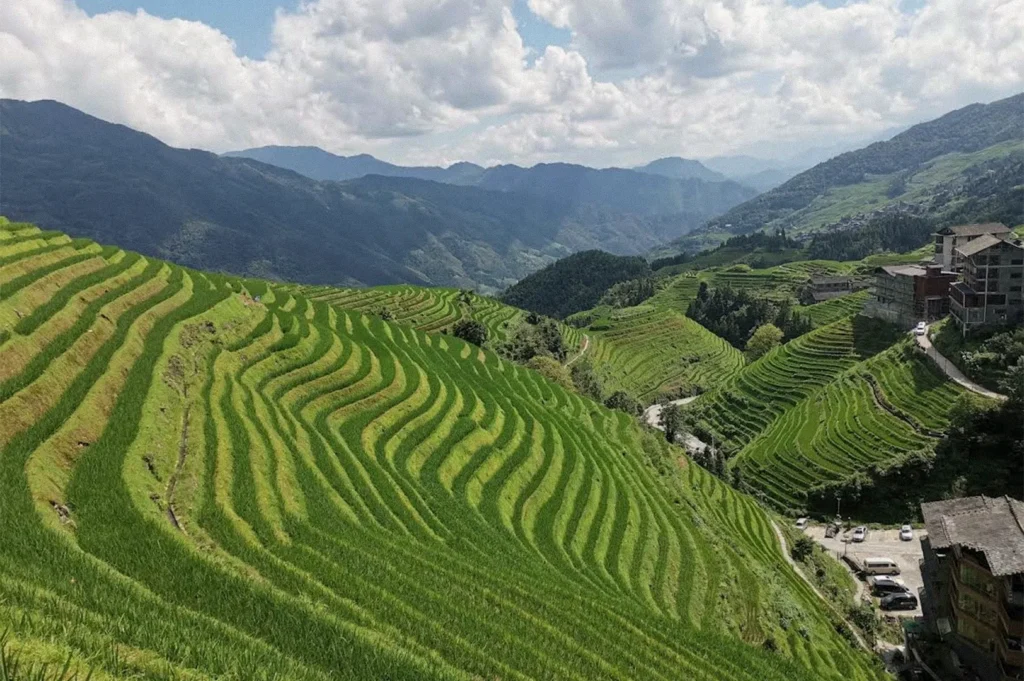
The slope across the valley was carved from its base nearly to its top. Terrace after terrace curved along the mountain’s shape, each one a thin ribbon of water and earth held up by a low wall. It was late spring, and the paddies were flooded, so every ledge held a strip of sky. Clouds moved across them. So did a small bird.
It did not look like a view. It looked like handwriting.
I didn’t take a photo for a long time. My hands were still shaking slightly on the grips, and I wanted to look before I tried to keep anything.
The Rhythm of the Climb
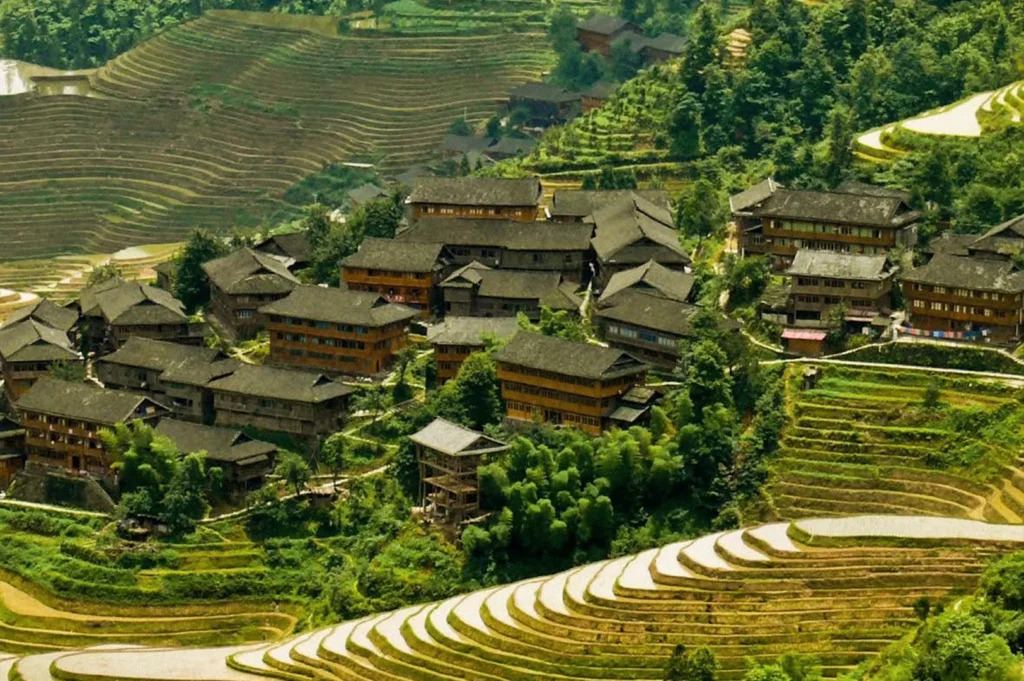
The road through the Longji area, in Longsheng County, winds upward in tight switchbacks. For someone who rides now and then, as I do, it is generally manageable in the lowest gears, but it is steady work. There are stretches where the surface turns uneven, patched and crumbling at the edges, and stretches where a delivery van or a tour bus fills the whole bend and you simply pull over and wait.
I walked the bike more than once. I am telling you this so you will feel free to do the same.
The rhythm became its own kind of quiet. Pedal, breathe, pedal. The tick of the freewheel on the downhill moments. A dog barking from a doorway. Water spilling from one terrace into the next through small cuts in the walls, a sound like someone pouring tea in another room.
The weather here changes quickly, and it changed on me twice. Bright sun on my forearms, then a cool breath of cloud rolling up the valley, then a fine rain that was less falling than hanging in the air. A light rain jacket and shoes with real grip turned out to matter. The bike stays on the road. Once you reach the villages, the paths become stone steps, and you go on foot.
The People Who Keep the Mountain
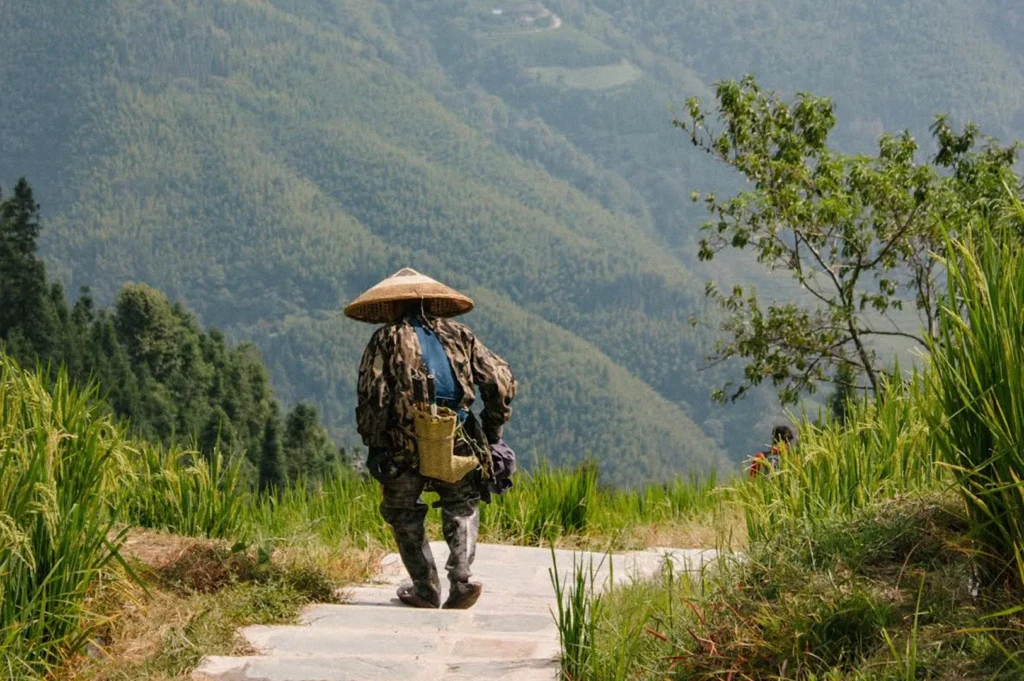
It is easy, standing at an overlook, to forget that none of this is wild.
The terraces were built by hand over several centuries, and they are still farmed by the communities who live among them. Ping’an, on one side, is a Zhuang village. Around Dazhai and the Jinkeng terraces, the villages are largely Yao. Their houses are wooden, raised on stilts, built of dark timber that creaks and darkens with the rain.
Walking up through the edge of a village, I passed a woman repairing a low terrace wall, pressing mud into a gap with the flat of her palm. She glanced up, nodded once, and went back to it. A man carried bundles of something leafy on a shoulder pole. A child sat on a step eating from a bowl, watching me the way you watch weather.
I was the one passing through. They were the ones keeping the mountain from slipping.
That sat with me. Every curve I’d admired from the road was a wall someone had built, and someone else repaired, and someone else would repair again after the next heavy rain. The beauty was real. So was the labor underneath it.
Bamboo, Smoke, and Something Warm
By early afternoon, my legs had gone soft and wobbly, and I found a small family-run place with a few wooden tables near the window.
The bamboo rice came first. A section of bamboo, charred black on the outside, split open to show rice pressed tight inside, fragrant and faintly sweet, with a grassy smell from the tube it had cooked in. I ate it with my fingers at first, then remembered the chopsticks.
There was a small cup of rice wine too, cloudy and gentle, warm in the throat. I only had a little. I still had a road to ride down.
I had also read about oil tea, a tradition in this part of northern Guangxi, where tea leaves are fried and simmered, often with ginger, and served with puffed rice or toasted grains on top. I didn’t know how to ask for it properly, so I pointed at a neighboring table. The bowl that arrived was bitter, savory, and grounding all at once.
Outside, rain dripped off the eaves. A fire ticked in the back. Nobody hurried me.
It was a different side of China from the bustling streets and nighttime attractions of Beijing, but one I was just as glad to experience.
I went in hungry and tired from the uphill that i climbed with my bike, and I came out full and recharged.
When the Mountain Disappeared
The turn came on the ride back, near a bend I had admired that morning.
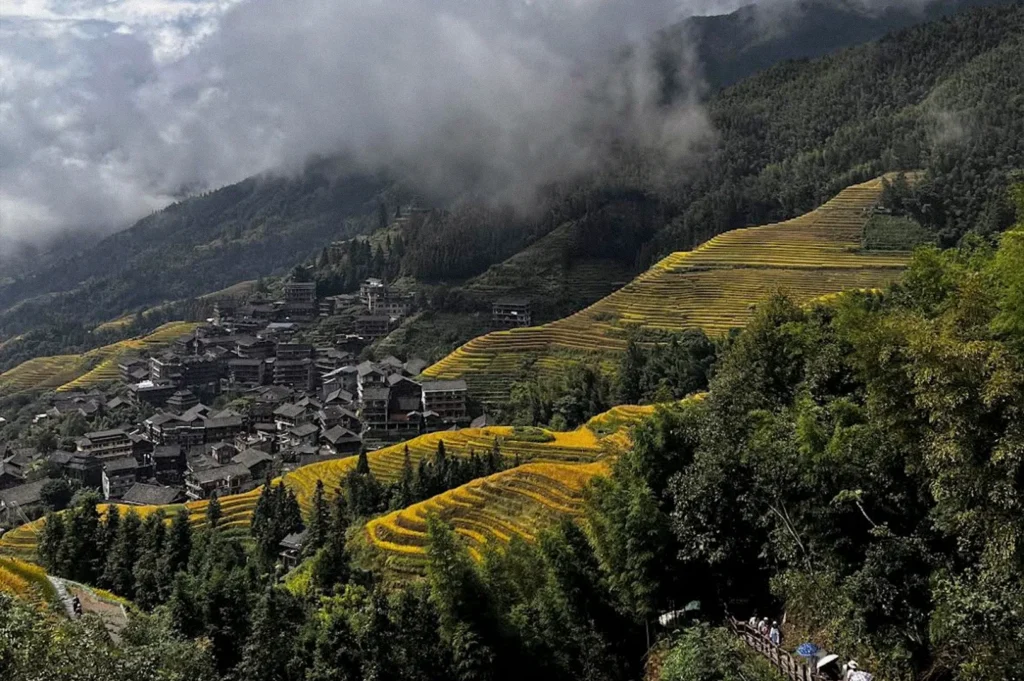
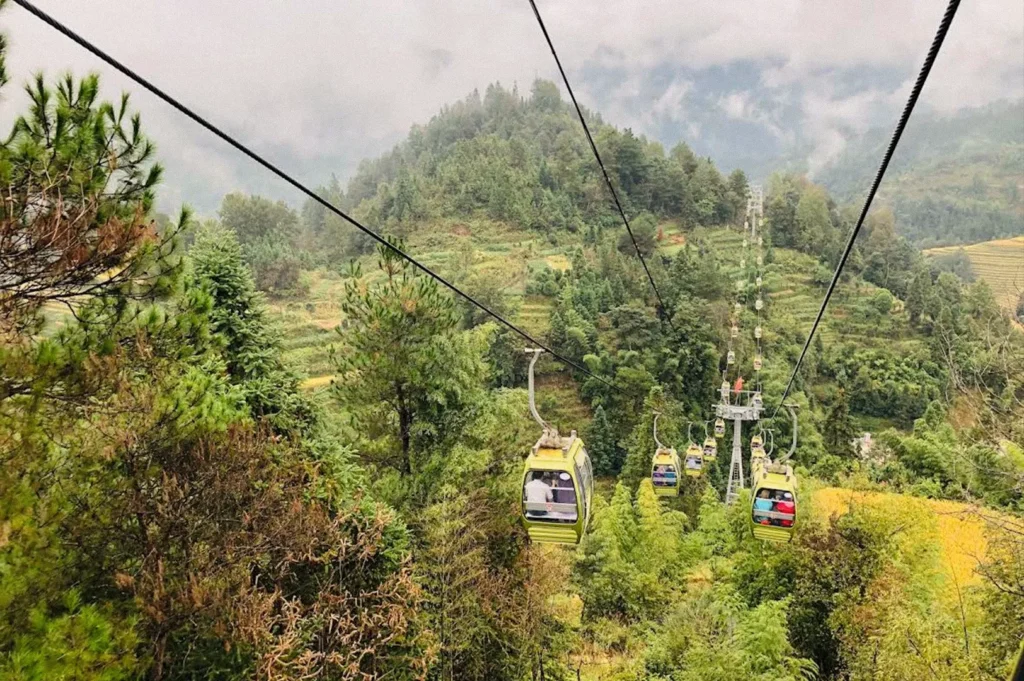
The cloud rolled up so fast I didn’t see it coming. One moment, the terraces stretched across the whole slope. The next, there was only white. The far side of the valley was gone. So was the village. So was most of the road.
I stopped and put both feet down. I could see perhaps the next few terraces below me, just their edges, silver water against grey mist, and nothing beyond.
My first feeling was disappointment. I had wanted the admire the beautiful sceneru one more time.
Then I watched the nearest wall. Mud, stone, a tuft of grass growing from a crack. Water slipping over its lip into the terrace below. Just one wall. Then the next.
I thought about how this whole mountain had been made: not all at once, not from far away, but one ledge at a time, by people who could only ever work on the part in front of them. Season after season. Generation after generation.
My legs hurt. My jacket was soaked at the shoulders. I stood in that white silence longer than I meant to.
Leaving
The descent was slow, brakes squeezed, mist beading on my eyelashes. Somewhere below the cloud line, the valley came back in pieces: a rooftop, a strip of green, a river the color of milky jade.
If you come, spring brings the flooded mirrors, early autumn turns the slopes gold with harvest, and mornings often bring mist. Give yourself more time than you think you need. Many travelers come from Guilin, a few hours away by road. Ride what you can. Walk the rest.
There is something about traveling slowly that stays with you, whether you’re cycling through these mountains or taking a road trip across Western NSW. You notice things you might otherwise pass without a second thought.
I still think about the effort it took to build that beautiful scenery.
Not the view. Just the wall, and the water spilling quietly over it, into a terrace I couldn’t see.