The light came in through the lattice first.
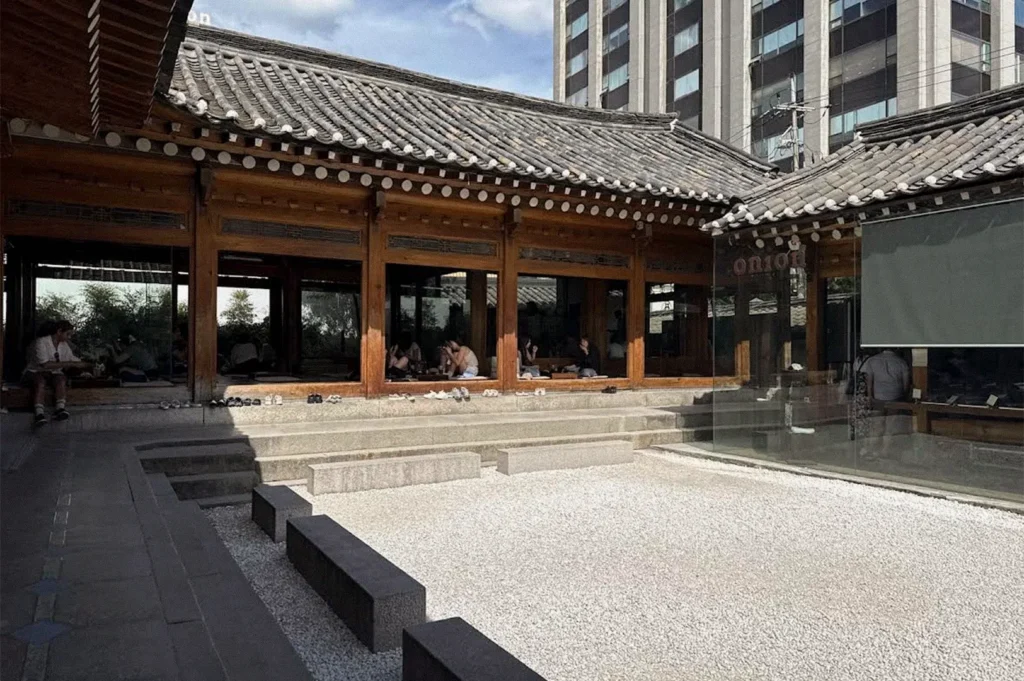
It fell across the wooden floor in small, even squares, the way it has fallen through hanok windows for a very long time. I was sitting on a low cushion near the courtyard edge, coat folded beside me, a ceramic cup warming my hands. Somewhere behind the counter, a cup met a saucer with a soft, clean note.
A barista set down a plate in front of the woman across from me. A tall, golden pandoro, dusted so heavily with powdered sugar that it looked like the roof tiles outside after a light frost. She didn’t reach for her phone. She just looked at it for a moment, then tore off a piece.
In the corner, a student had already claimed a table. Laptop open, highlighter uncapped, a glass of iced americano sweating onto a paper napkin. It was 9:40 in the morning.
I had come to Seoul with a list of cafés that looked beautiful in pictures. By the end of the day, I understood that the photographs had missed most of the story.
Korean cafés are beautiful by design, but their real value lies in what happens inside them: ritual, craft, community, and rest.
Morning Quiet in Anguk
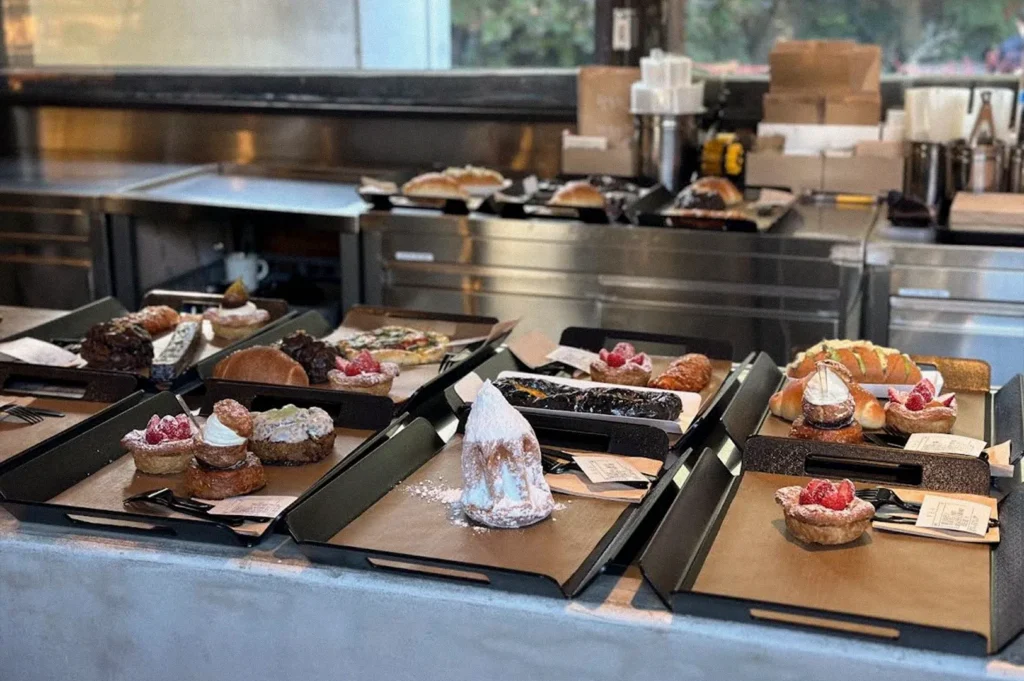
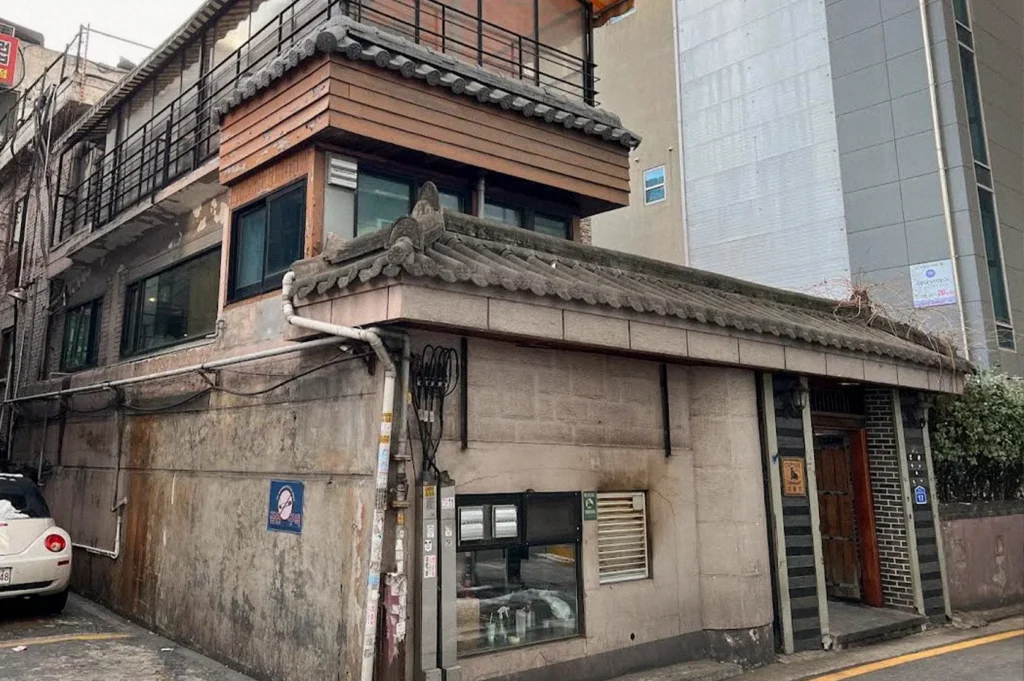
Onion Anguk sits inside a restored hanok a short walk from Anguk Station, Exit 3. The building keeps its old bones: dark timber beams, a tiled roof, a courtyard open to the sky. Inside, the counter is lined with breads and pastries, and you carry your tray to wherever feels right. A raised wooden floor. A stone step. A bench under the eaves.
It is worth noting to arrive before noon makes a real difference. By early afternoon, the line often stretches toward the gate, and the courtyard fills with conversation. In the morning, you can still hear the wind move across the roof.
Hanok cafés like this one carry a kind of double life. The architecture belongs to the Joseon era. The menu belongs to now. Nobody here seems to see a contradiction in that. The old house was kept, cleaned, and opened up. Then someone put an espresso machine in it.
The pandoro was soft and faintly buttery, with a sweetness that stayed light. I ate it slowly, mostly because the room asked me to.
The People Who Stay
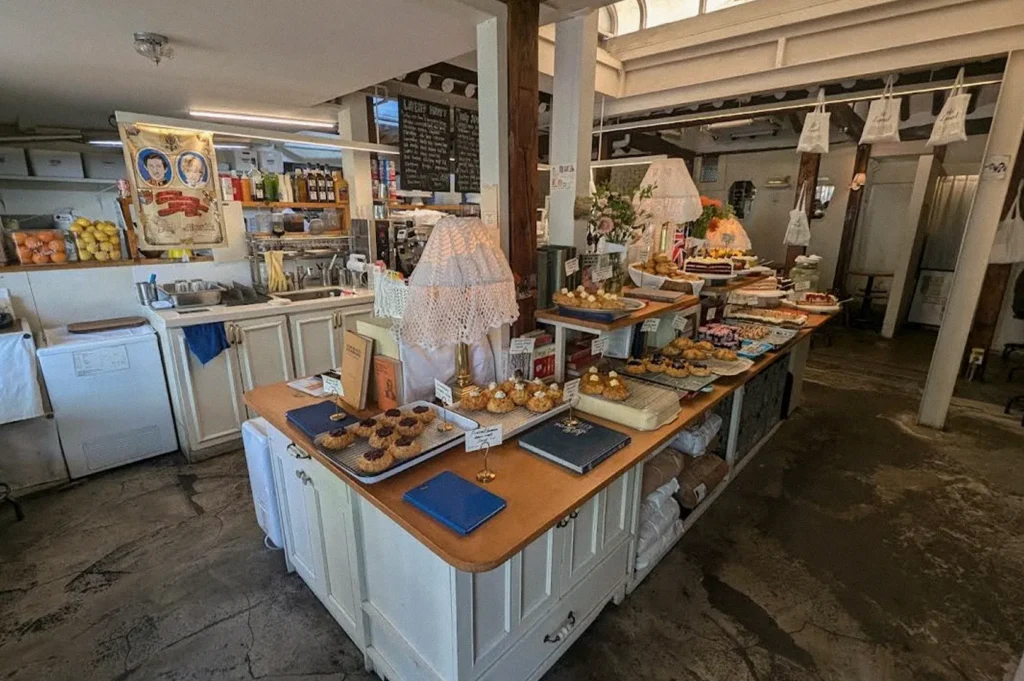
By late morning, I had walked the two minutes to Cafe Layered Anguk, just off Anguk Station, Exit 2.
It feels like stepping into a cottage kitchen somewhere in the English countryside. Floral tea sets, wooden shelves, a glass case crowded with scones and layered cakes. It opens at 8 a.m. on weekdays and 10 a.m. on weekends, and stays open until 10 p.m. I ordered a scone and the einspanner, which typically runs about KRW 6,500. Cold coffee beneath a thick lid of sweet cream. You drink it without stirring, letting the bitter come through the soft.
Upstairs, almost every table had someone working.
There is a word for them: 카공족, kagongjok. It loosely means “the tribe who study at cafés.” Students preparing for exams. Freelancers on deadline. Office workers who simply need to be somewhere other than home or the office.
This is the part of the story that pretty photos don’t show.
Seoul is a city of small apartments, long workdays, and long study hours. Space at home is often limited. Space to think is even rarer. The café becomes the third place: not home, not work, but somewhere in between where you are allowed to sit, unbothered, for the price of one drink.
That helps explain why Korea has one of the densest café scenes in the world. Cafés here are less a luxury than a piece of daily infrastructure.
The décor gets you through the door, but it’s the permission to stay that keeps people coming back.
The woman beside me had a stack of index cards and a cup of yuja tea, the citron peel glowing amber at the bottom of the glass. She had clearly been there for hours. Nobody seemed to mind.
The Craft Behind the Beauty
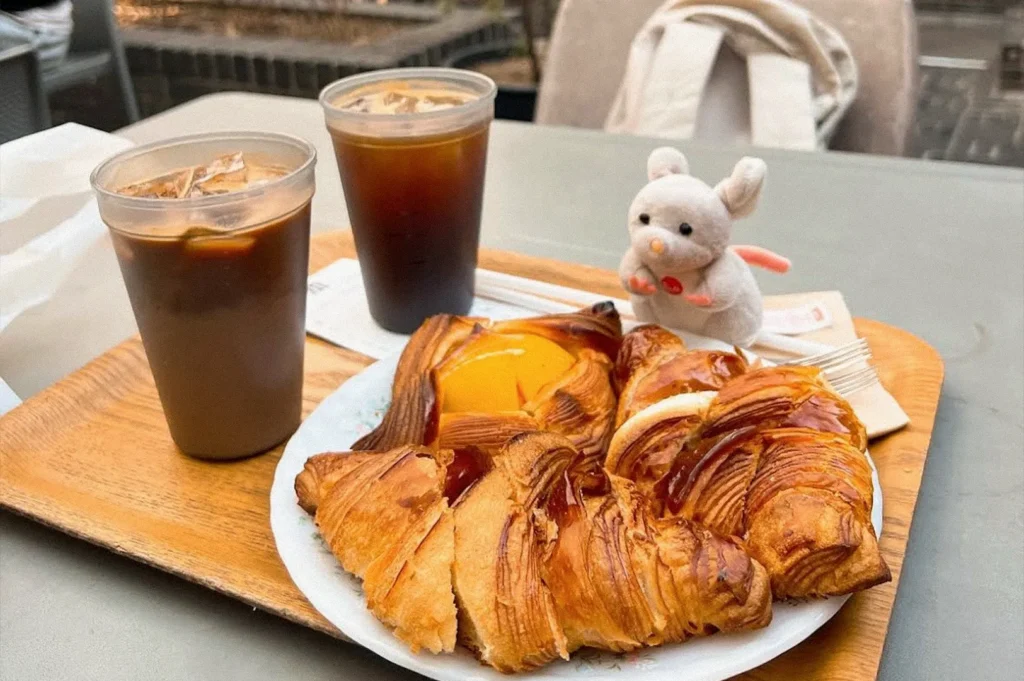
After lunch, I took the subway west toward Mapo, to Fritz Coffee Company in Dohwa-dong. It is generally reached on foot from Mapo Station, and the walk passes through a quieter, residential stretch of the city.
Fritz has a different kind of beauty. It is less dreamy and more lived-in. The branding leans retro Korean: old-fashioned lettering, a seal mascot, and the warm, slightly faded palette of something from a grandparent’s cupboard. The building feels like a converted house, with stairs that creak a little and windows that let in the afternoon.
The coffee is the point here. Fritz roasts its own beans, and the baristas move with an unhurried focus. I ordered a pour-over and watched the water bloom over the grounds, then fall in slow circles. The cup was clean and bright, with a light fruitiness that softened as it cooled.
Two older men were sharing a pastry by the window. A young couple was splitting a loaf of bread from the counter. A woman sat alone with a book she wasn’t really reading.
I noticed the stamp-like logo pressed onto the paper bags at the counter, slightly off-center on each one. It was a small, human imperfection in a place that clearly cared about details.
That, I think, is what people mean when they talk about aesthetics as craft in Korean cafés. The design isn’t decoration added at the end. It’s considered from the start, as carefully as the roast.
Golden Hour in Seongsu
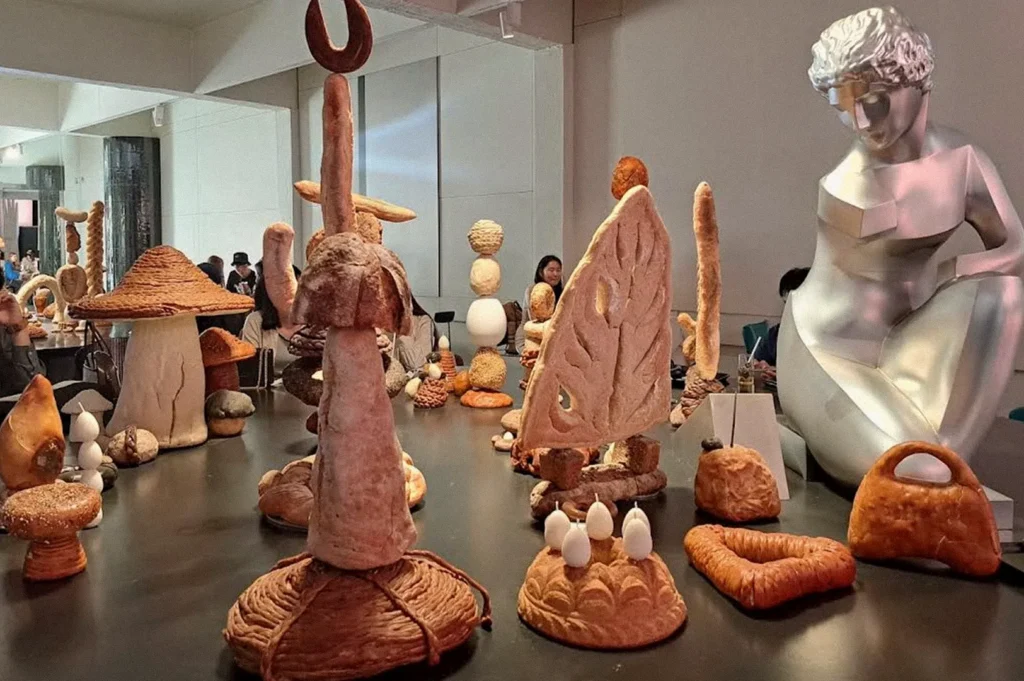
By late afternoon, the light had turned low and warm, and I headed east to Seongsu, near Seongsu Station. The neighborhood was once known for shoe factories and warehouses. Many of those buildings now hold studios, shops, and cafés, their brick and concrete left mostly as they were.
**Nudake Seongsu feels more like a gallery than a bakery.** Sculptural counters. Pastries displayed like small artworks under careful light. Some of the desserts look almost too unusual to eat: dark, folded, architectural shapes that make you tilt your head before you pick one.
This is the concept café at its fullest. It can look like spectacle from the outside. Inside, it reads more as an experiment, a question about what a dessert can be when the shape matters as much as the taste.
Seongsu is worth the visite for café-hopping, or 카페투어 (“café tour”). On weekends, friends move from one café to the next across an afternoon, a drink here, a dessert there, a long conversation carried between them. It’s less about collecting places than spending a whole day together without needing a reason.
I sat near the window as the sun dropped behind the old factory roofs. A group of friends at the next table had a notebook open, mapping out where to go next.
What to Know Before You Go
A few notes that helped my day run smoothly:
- Order one drink per person. Many Seoul cafés generally expect it, especially in busy neighborhoods.
- Arrive early for hanok cafés. Onion Anguk is calmest before noon. Afternoon lines are common, particularly on weekends.
- Expect a range of prices. Specialty drinks in Seoul often fall around KRW 5,000 to 8,000, with signature desserts typically priced separately.
- Know which spaces suit lingering. Cafe Layered and Fritz generally feel comfortable for a longer sit. Concept cafés like Nudake can be busier and better suited to a shorter visit.
- Look beyond coffee. Traditional drinks such as omija tea, yuja tea, and misugaru latte appear on many menus. In warmer months, injeolmi bingsu, shaved ice with roasted soybean powder, is a gentle way to cool down. Salt bread and croffles are common bakery staples.
- Plan by neighborhood. Anguk and Bukchon pair easily on foot. Mapo and Seongsu each deserve their own unhurried stretch of time.
If you’re planning a longer stay, our guide to Seoul’s neighborhood food streets may help fill in the rest of your days.
An Evening Reflection
By the time I left Seongsu, the street lamps were on, and the café windows glowed amber against the dark brick. After the cafe hopping, you might like our other article on what to do in Seoul after dark, this is perfect for you if you are a kpop fan like me.
I had expected to spend the day looking at beautiful rooms. What I found was a city that has made room for people to pause.
These cafés say something quiet about modern Korea. It’s proud of its past, careful enough to keep a hanok standing and open its doors again. It’s playful with its present, willing to turn a pastry into a sculpture or a factory into a place to sit with friends. And underneath both, there is a simple, shared belief that slowing down is worth making space for.
If you visit, you don’t need to see them all. One café, one drink, one unhurried hour is often enough. Let the room do the rest.
On the walk back to the station, my hands still smelled faintly of coffee and powdered sugar, and the last of the day’s warmth was fading from the pavement.