The rain has just stopped. Steam rises from a takeaway window, and the smell of hot oil and malt vinegar drifts into the street. A few doors down, a bakery’s ovens have been running all night. Somewhere south of the river, smoke curls from a drum grill, sweet with allspice.
London has always fed itself on arrivals. Some dishes grew from the city’s own kitchens and pubs under the watchful eye of the head chef, while others came with the people who made their lives here and kept cooking the food of home. Both belong to London now, equally and without argument.
What follows is a complete list of meals that carry stories, not trends. Each one is worth seeking out slowly as we explore this huge city on our London itinerary. For more
1. Roast Chicken and Classic Comforts
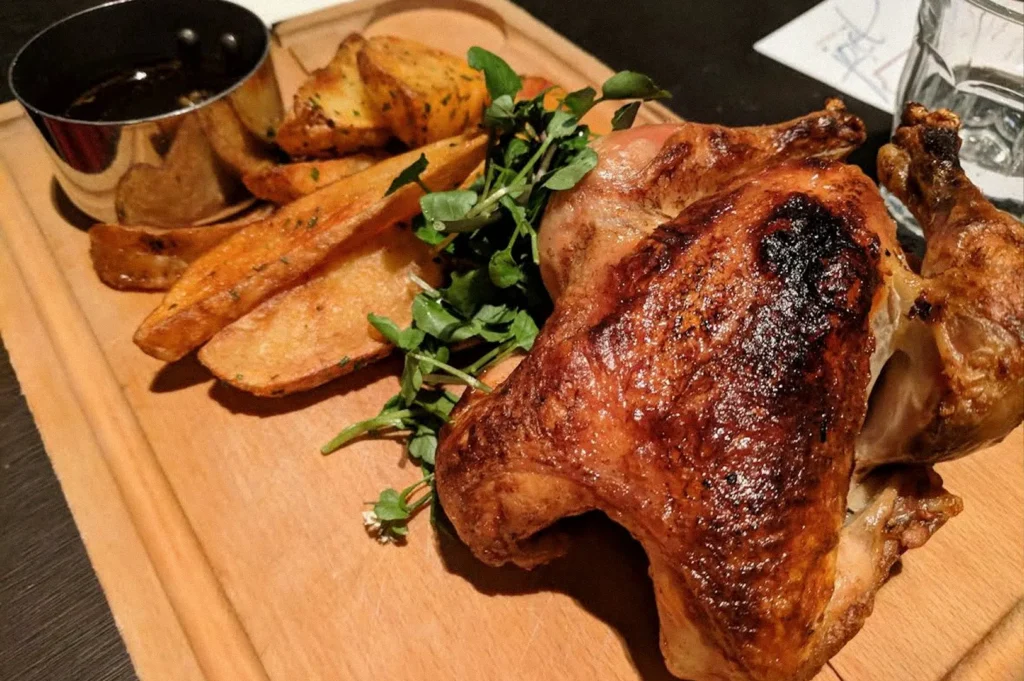
The roast chicken is a staple of Sunday roasts, a dish that brings guests together in pubs and homes across London. Families and friends gather around plates featuring roast chicken with crispy potatoes, seasonal vegetables like spinach, and Yorkshire pudding to soak up the rich gravy. The butter used in roasting adds a delicious depth of flavor that proves why this dish remains a favorite. Many pubs offer a set menu on Sundays, making it a pretty good choice for a comforting dining experience.
Flavors: Savory, buttery, and comforting.
Where to Find It: Neighborhood pubs throughout London, especially near London Bridge Station and other central London locations.
Price: Varies widely; menus usually posted online.
Best Time: Sunday afternoons, perfect for a relaxed meal after exploring.
2. Fish and Chips
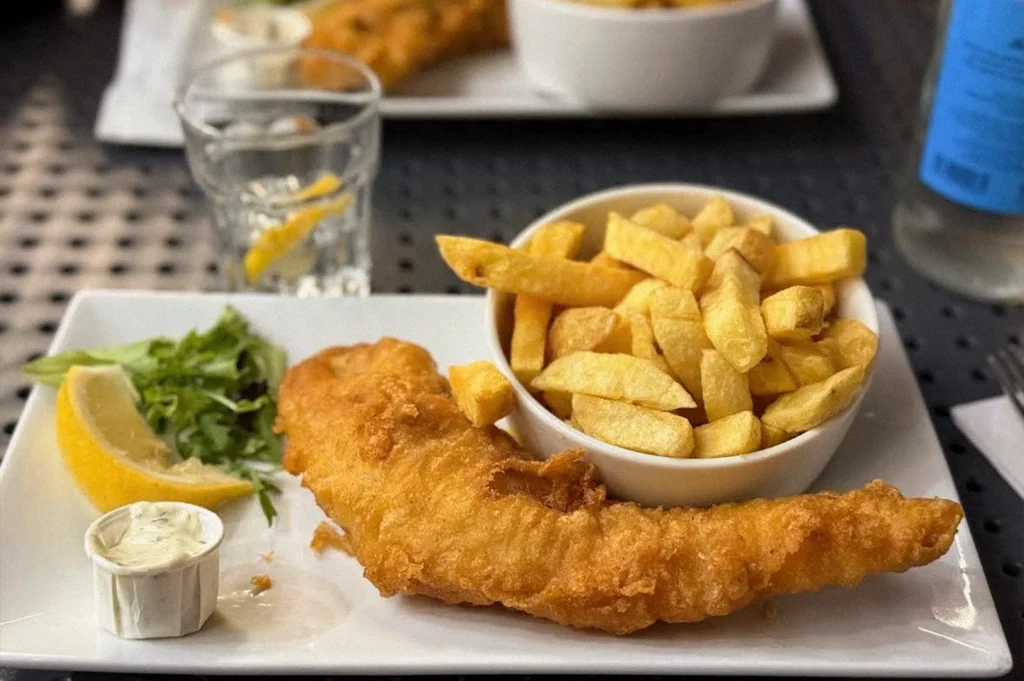
When in London, we can’t miss out on trying their fish and chips. Fish and chips came of age in working-class neighborhoods, wrapped in paper and eaten on the walk home. A good plate is simple to recognize. The batter shatters rather than bends, the fish inside is white and flaking, and the chips are thick, golden outside and soft as mashed potato within. Ask for salt and vinegar. Add mushy peas if we want the classic plate, or a pickled onion if we like a sharp edge.
Flavors: Crisp, salty, tangy, and gently rich.
Where to Find It: Neighborhood chippies across the city, especially away from the main tourist streets, plus traditional pubs.
Price: Varies by shop and portion size; check the board before ordering.
Best Time: A Friday evening, or any gray afternoon that calls for something warm in our hands.
3. Sunday Roast with Yorkshire Pudding
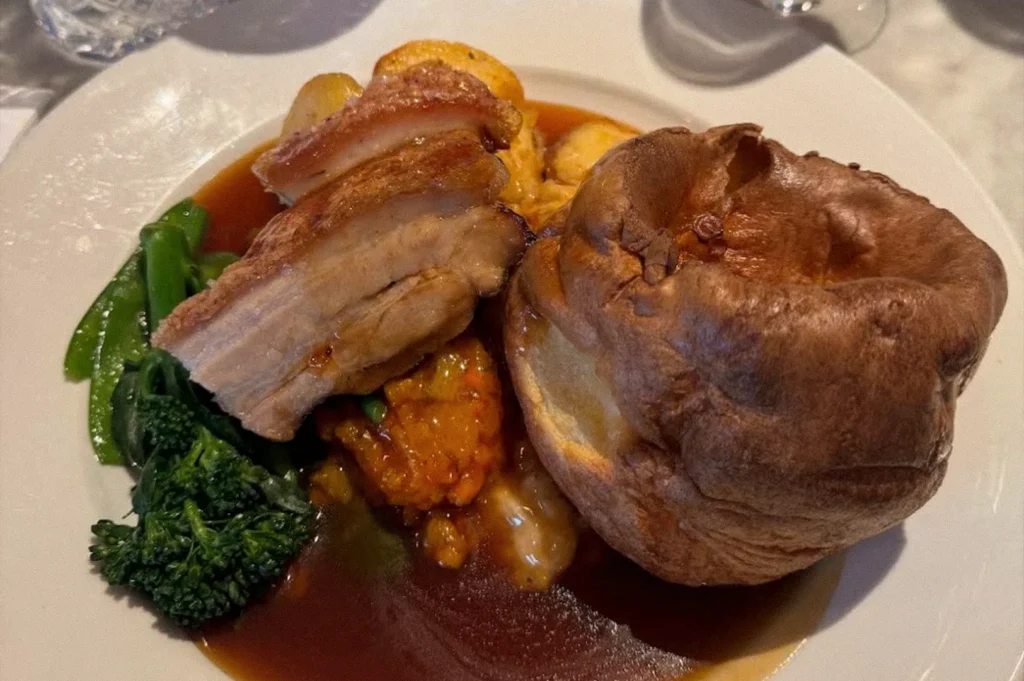
The roast is a ritual more than a meal. Families and friends gather in pubs on Sunday afternoons over plates of roast beef, lamb, chicken, or pork, with crisp potatoes, seasonal vegetables, and gravy poured generously over everything. The Yorkshire pudding is the quiet star: a puffed, golden batter cup, crisp at the rim and soft at the base, made to hold gravy. Many pubs now offer a vegetarian roast built around a nut roast or a pie. It is a different dish from the meat version, but it follows the same spirit of a slow, shared table.
Flavors: Savory, deeply roasted, buttery, and comforting.
Where to Find It: Neighborhood pubs throughout London, particularly gastropubs in residential areas.
Price: Varies widely between pubs; menus are usually posted online or at the door.
Best Time: Sunday, from early afternoon. Book ahead where possible, since popular pubs fill quickly.
4. Pie and Mash with Parsley Liquor
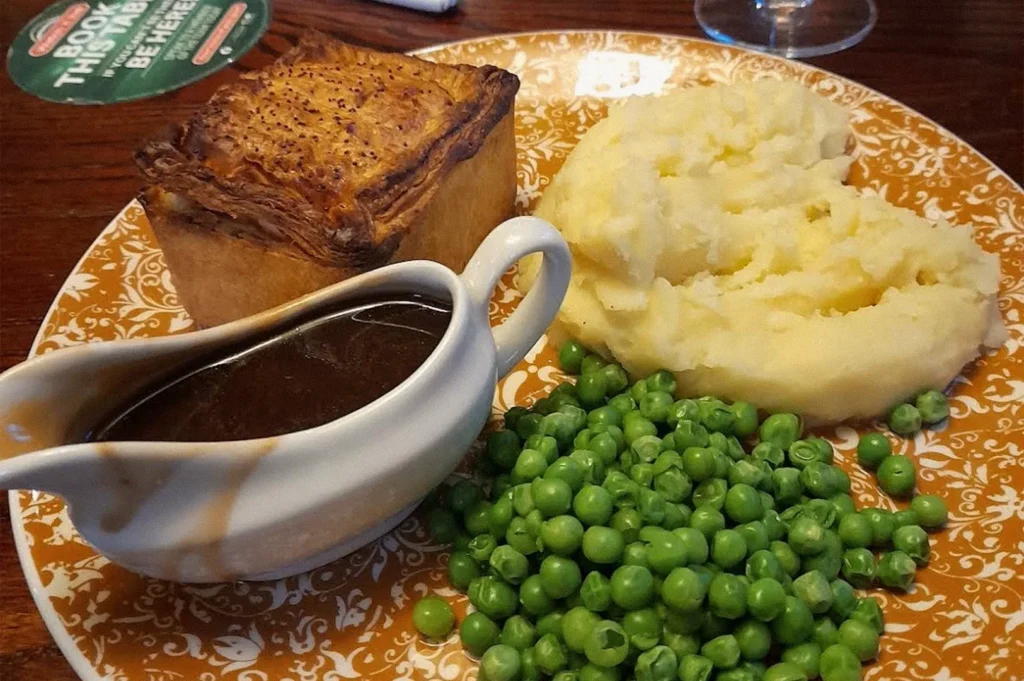
This is the East End on a plate. Pie and mash shops have served dockworkers and market traders for generations, often with tiled walls and marble tables that have barely changed. We get a minced beef pie, a scoop of smooth mashed potato, and a ladle of parsley liquor. Despite the name, the liquor has no alcohol. It is a thin, pale green sauce traditionally made with the cooking water from stewed eels, thickened and flavored with parsley. Vinegar and pepper are often added at the table. Some shops still serve jellied or stewed eels for those curious about the older tradition.
Flavors: Mild, peppery, herby, and homely.
Where to Find It: Long-running pie and mash shops in East and South London, including areas like Bethnal Green and Walthamstow.
Price: Varies by shop; traditionally one of the city’s more affordable sit-down meals.
Best Time: Lunchtime, when these shops feel most alive.
5. Full English Breakfast
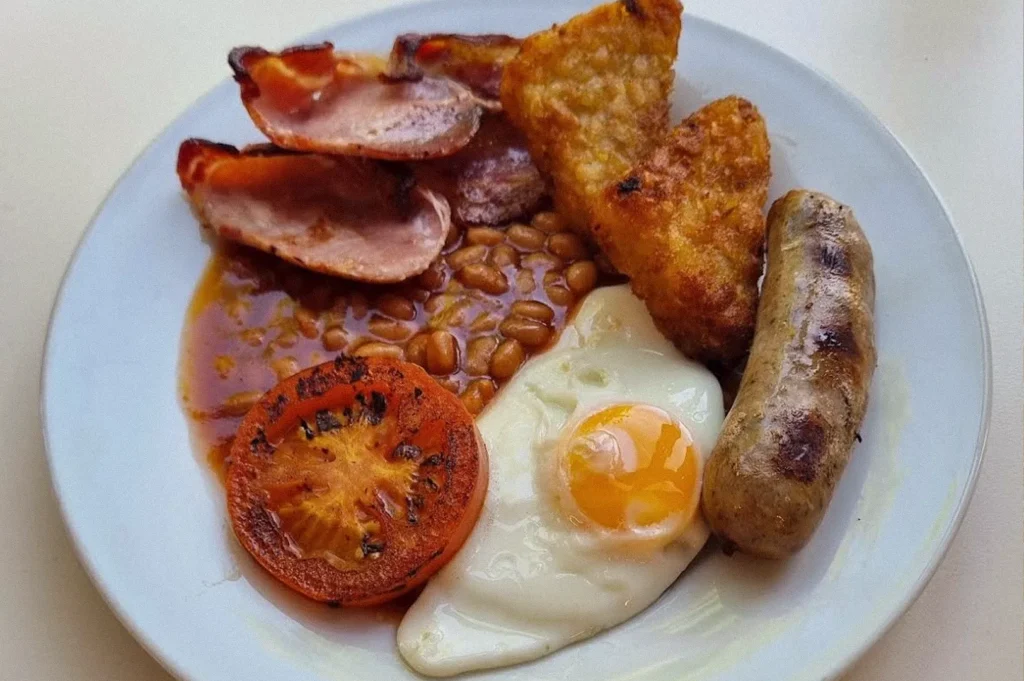
A full English is a plate meant to carry us through a long day. Expect fried or scrambled eggs, bacon, sausages, baked beans, grilled tomato, mushrooms, and toast, often with black pudding (a blood sausage) or hash browns. It tastes best in a steamy local café, the kind with laminated menus and mugs of strong tea or coffee. Most cafés offer a vegetarian version with meat-free sausages and extra vegetables, which keeps the shape of the meal while changing its core.
Flavors: Salty, smoky, savory, and hearty.
Where to Find It: Independent cafés and greasy spoons in nearly every neighborhood.
Price: Varies by café; neighborhood spots tend to cost less than hotel or central restaurants.
Best Time: Morning to late morning, ideally before a long walk.
6. Afternoon Tea
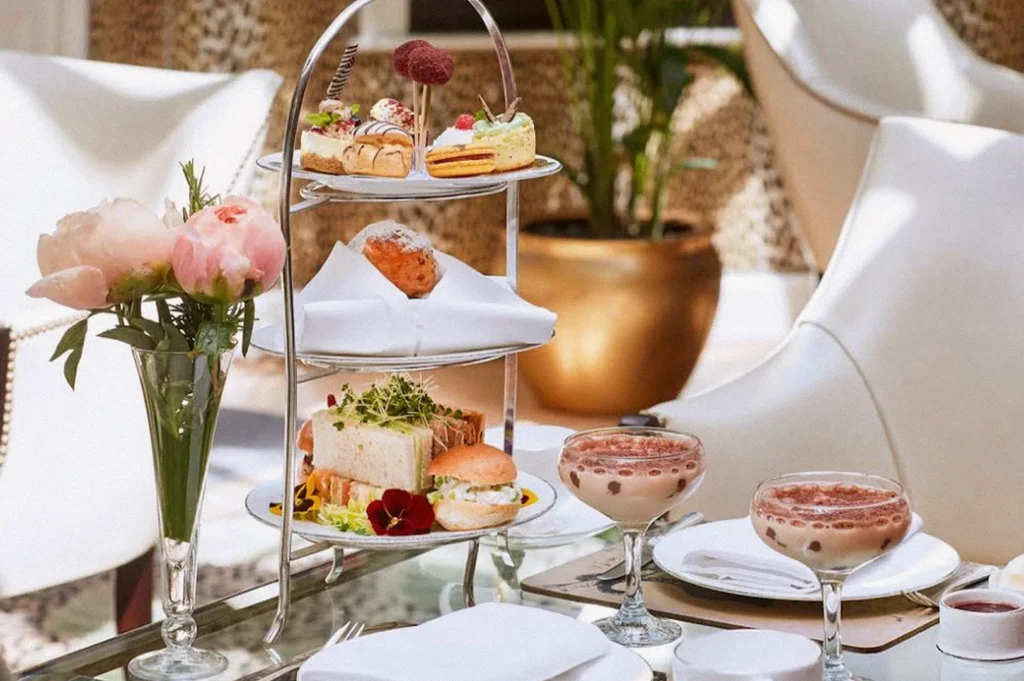
Afternoon tea is London at its most unhurried. It usually arrives on tiered stands: finger sandwiches on the bottom (cucumber, egg mayonnaise, smoked salmon), warm scones in the middle with clotted cream and jam, and small pastries and cakes on top. The pleasure is in the pace. We pour, we talk, we take our time, and we can catch up with our friends. Many venues offer vegetarian, vegan, or gluten-free versions if asked when booking.
Flavors: Delicate, creamy, sweet, and fragrant.
Where to Find It: Hotels, department stores, tearooms, and independent cafés across central London and beyond.
Price: Varies considerably, from modest café versions to formal hotel services; confirm when booking.
Best Time: Mid-afternoon. Reservations are often essential.
7. Salt Beef Bagels
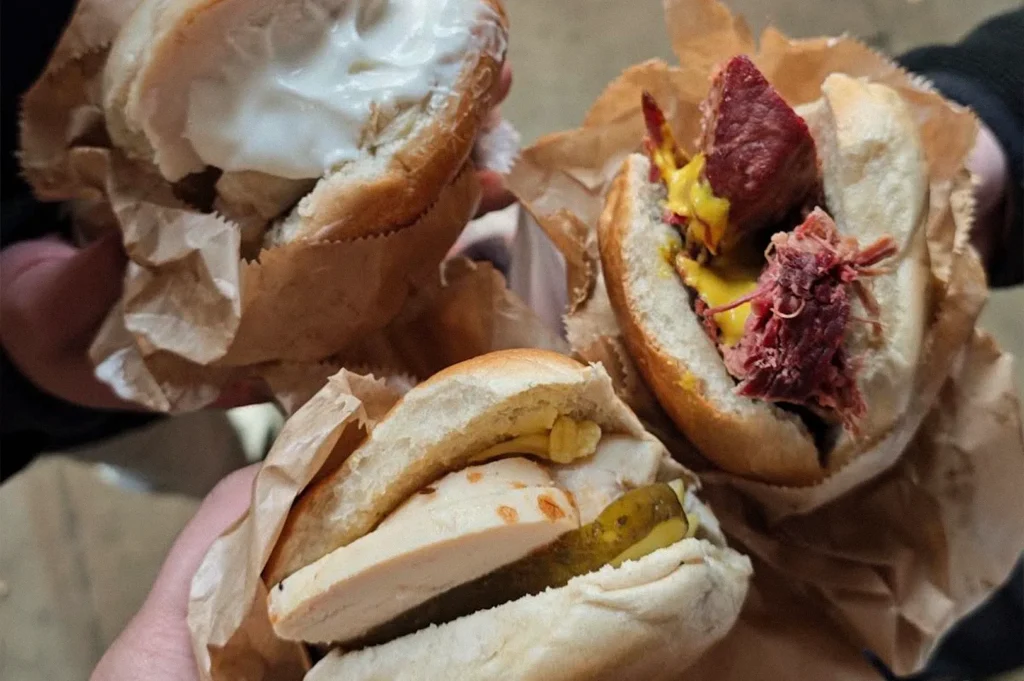
Brick Lane’s bagel shops are part of a longer story. Jewish families who settled in the East End from the late nineteenth century brought their breads and cured meats with them, and the neighborhood’s bagel bakeries carry that heritage forward. At Beigel Bake, 159 Brick Lane, which has been baking since 1979, the salt beef beigel is hand-carved, piled into a chewy bagel, and finished with sharp mustard and pickles. The shop is open 24 hours, seven days a week, so the queue might be office workers at noon or night owls at 3 a.m. For a meat-free option, the smoked salmon and cream cheese beigel is another classic of the counter.
Flavors: Salty, tender, tangy, and peppery.
Where to Find It: Beigel Bake on Brick Lane in Shoreditch.
Price: The salt beef beigel is listed at £7.50 on the shop’s website.
Best Time: Any hour, but late night has its own quiet magic.
8. Caribbean Jerk Chicken
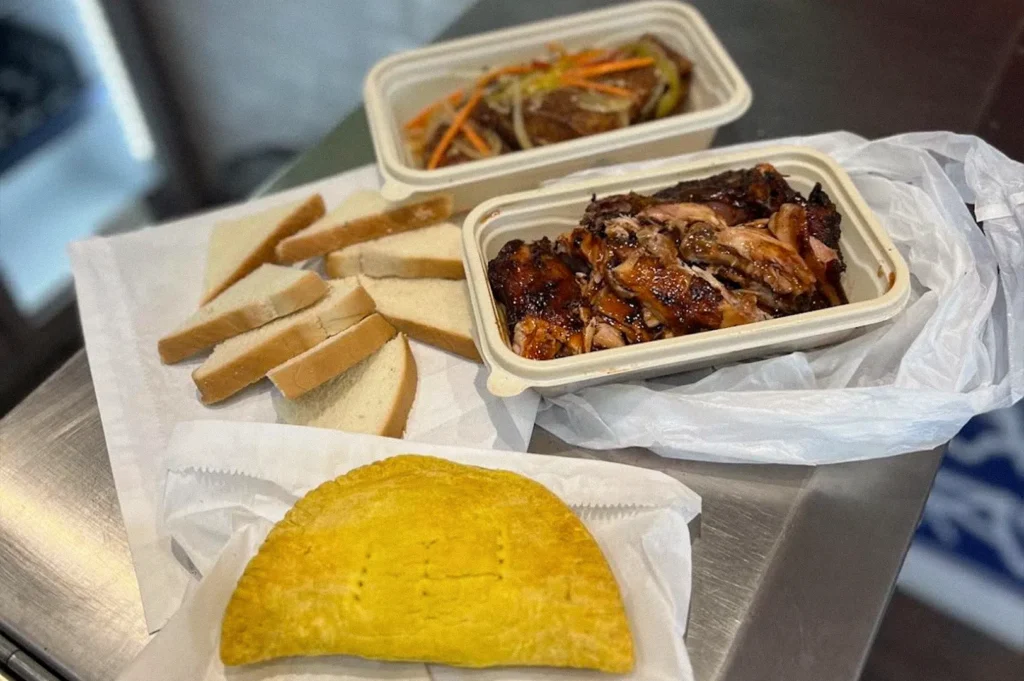
Jerk chicken carries the flavors of Jamaica and the story of the Windrush generation and their descendants, who built vibrant communities in neighborhoods like Brixton, Peckham, and Notting Hill. The chicken is marinated with Scotch bonnet peppers, allspice, thyme, and scallions, then grilled until the skin chars and blisters. It usually comes with rice and peas, fried plantain, and a side of coleslaw. Look for places with smoke rising from the grill and a steady line of regulars. Many spots also serve ackee, callaloo, or vegetable patties for those who skip meat.
Flavors: Smoky, fiery, aromatic, and slightly sweet.
Where to Find It: Caribbean takeaways and restaurants in Brixton, Peckham, Lewisham, and Tottenham, and stalls during Notting Hill Carnival weekend.
Price: Varies by portion and venue; takeaways are generally the more affordable option.
Best Time: Lunch or early evening, when the grill is busiest.
9. South Asian Chaat and Regional Curries
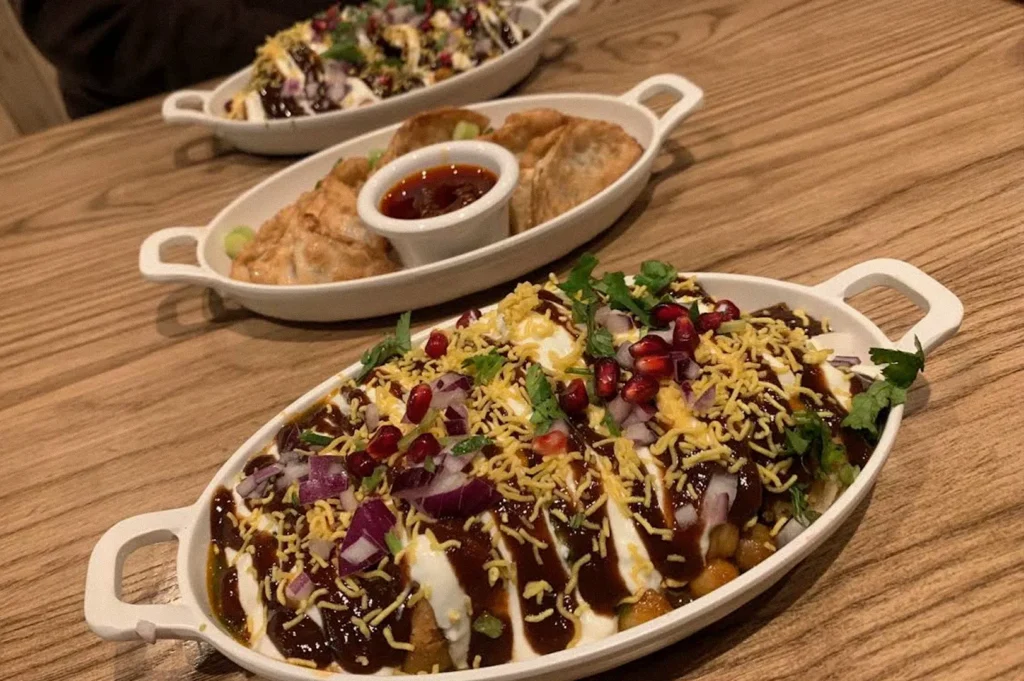
London’s South Asian communities have shaped how the city eats for generations, and the depth goes well beyond a single curry. Chaat is a world of street snacks: crisp puris, chickpeas, potatoes, yogurt, tamarind chutney, and sev, all layered into something crunchy, cool, sour, and spiced in one bite. Regional curries tell their own stories, from Gujarati vegetarian thalis to Punjabi dals to Sri Lankan and South Indian dishes. Many are naturally vegetarian, so plant-based eaters will find plenty here without needing substitutions.
Flavors: Tangy, spicy, crunchy, cooling, and layered.
Where to Find It: Tooting, Southall, Wembley, East Ham, and the streets around Brick Lane, each with its own regional character.
Price: Varies widely; family-run cafés and sweet shops are often very affordable.
Best Time: Lunch or a relaxed evening meal. Weekends bring the liveliest atmosphere.
10. Sticky Toffee Pudding
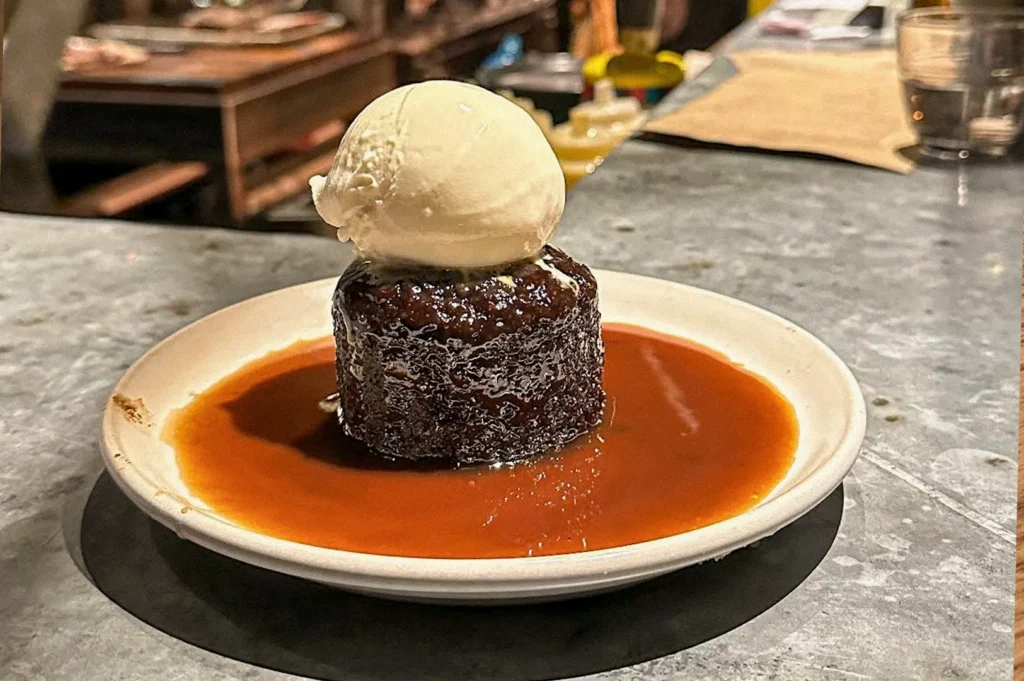
Make sure to leave room for dessert. Sticky toffee pudding is the dish that makes us stick a little longer, and a must-try when in London. It is a soft sponge made with chopped dates, soaked in warm toffee sauce, and served with custard, cream, or vanilla ice cream. The dates melt into the cake, giving it a deep, almost caramel richness. You’ll find it on many pub menus, especially in cooler months, after a roast or a pie.
Flavors: Sweet, buttery, dark, and warming.
Where to Find It: Traditional pubs and British restaurants across the city.
Price: Varies by venue; usually listed on the dessert menu.
Best Time: After dinner on a cold or rainy evening.
London Food Districts Worth Travelling To
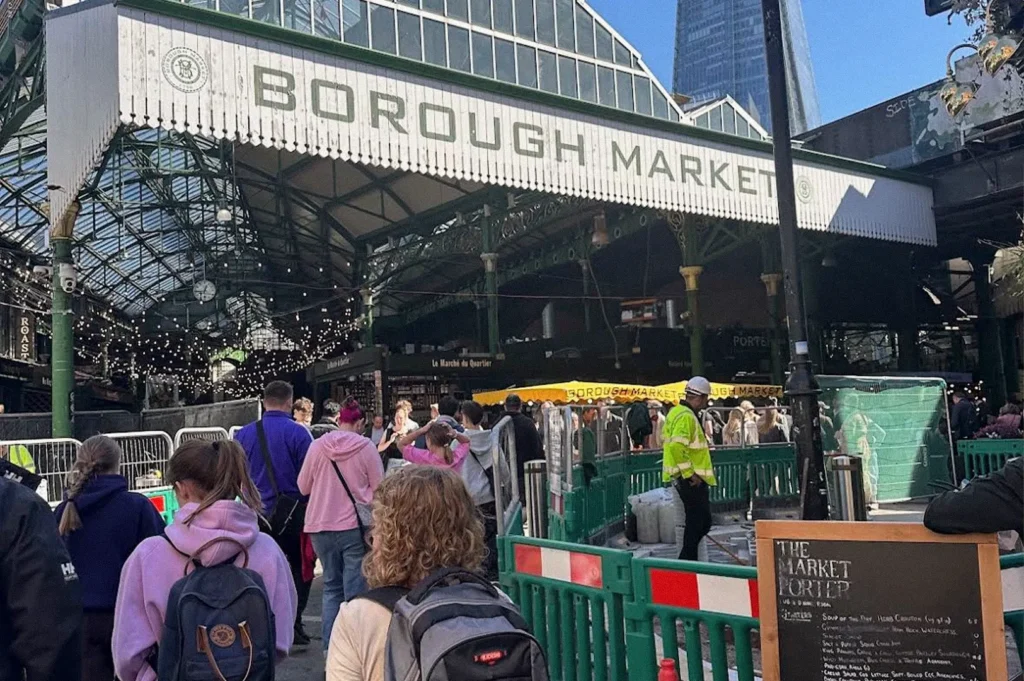
Borough Market Bites: A Food Lover’s Delight
Borough Market is one of London’s most iconic food markets and a must-visit location for any food lover like us. Here, we can spend hours wandering among stalls offering everything from freshly baked bread and pastries to sushi and pizza. The market is a hub of street art and vibrant decor, making it a fun place to grab a coffee or a bowl of something delicious.This is a perfect spot for a large group of friends who can’t decide on what food to eat. Here everyone can get whatever they like as the food stalls offer a diverse variety of food.
Flavors: Diverse, fresh, and exciting.
Where to Find It: Borough Market, near London Bridge Station.
Price: Varies by vendor.
Best Time: Weekdays or Saturdays to avoid the Christmas crowds.
Central London Classics: From Covent Garden to the West End
Central London offers a dining experience that blends traditional British dishes with modern twists. Covent Garden is home to many restaurants where chefs craft dishes like steak or a well-balanced set menu. After our meal, we can explore the West End for entertainment or share our experience via an Instagram story to capture the moment. And if we are looking for more fancy things to do in London, this is our go-to spot as this part of the city offers unique local dining experiences for tourists like us.
Flavors: Classic with modern flair.
Where to Find It: Covent Garden and the West End.
Price: Mid to high range.
Best Time: Evening, perfect for a full night out.
Street Art and Food: East London’s Flavorful Corners
East London is famous for its street art, and the food scene here is just as vibrant. Markets like Old Spitalfields and areas around Brick Lane offer a full list of street food options, from Caribbean jerk chicken to South Asian chaat and regional curries. The decor in many of these spots is modern and eclectic, providing a unique backdrop for a memorable dining experience.
Flavors: Bold, spicy, and layered.
Where to Find It: Shoreditch, Brick Lane, and Old Spitalfields Market.
Price: Affordable and varied.
Best Time: Lunch or early evening.
One Meal at a Time
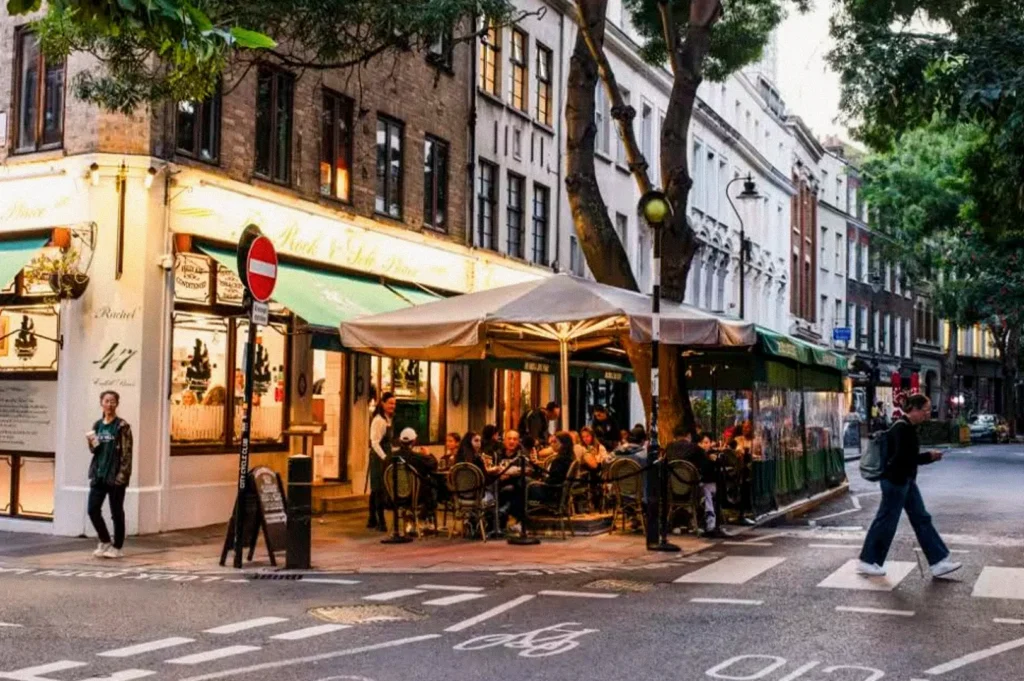
London doesn’t reveal itself all at once. It comes to us in pieces: a paper cone of chips on a damp bench, a bagel eaten under streetlights, a plate of jerk chicken shared on a warm afternoon. While we spend our days exploring the city’s street art and vibrant markets like Borough Market, let’s not miss the chance to visit two restaurants or bars that catch our eye along the way. Whether enjoying a bowl of ramen, a slice of pizza, or a glass of wine, the good thing is to savor each moment.
Let the city lead us. Choose a neighborhood, follow the smell of something cooking, and sit for a while. Capture our dining experience with an Instagram story to share the delight with friends and family.
The best way to know a place is to eat where its people eat. Slowly, and with an open plate.