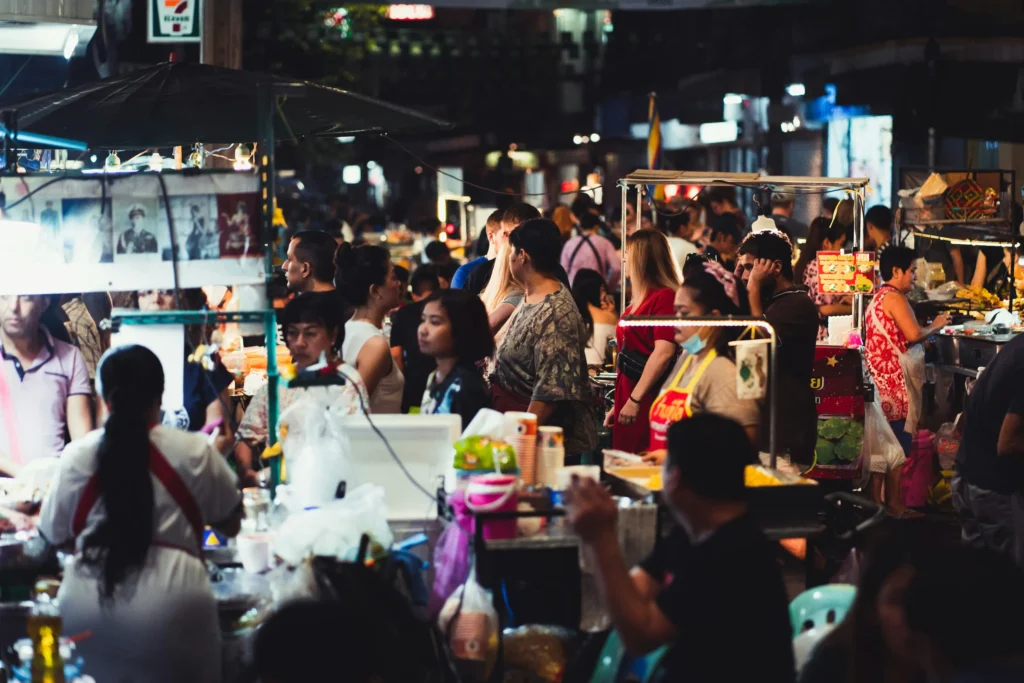
The queue moved the way Bangkok queues do: slow, patient, half-melted in the heat. I stood in it the way I always do when I’m back in the city, sweat gathering at the small of my back, waiting for the same stall I’ve waited at a dozen times before. Oil hissed on a blackened wok. Somewhere a metal ladle rang against a pot, sharp as a bell. The air smelled of garlic and charred chili, thick enough to lean against, and the plastic cups on the counter wept beads of condensation into the afternoon. Voices layered over voices. Nobody hurried. Nobody could.
I’ve never had trouble making friends. Unlike Sammie, I’ve always moved through many circles, high school cliques, university housemates, the tidy alliances of corporate life. I collect people easily, the way some people collect receipts. But there was one group, long ago, that I couldn’t hold onto no matter how tightly I tried.
They were my elementary school friends. The ones I loved with the whole uncomplicated force of a child. And slowly, without ceremony, they let me go. The invitations stopped coming. They went to lunch and forgot to mention it, or didn’t forget. They shared snacks in a circle I somehow always stood just outside of. There was no fight, no reason offered. Just a quiet subtraction. At eight years old, it felt like the ground had opened beneath me. I didn’t have the words for it then. I only knew I had been left behind.
I was thinking of nothing in particular when I heard the laugh.
I knew it before I understood I knew it. A laugh has a fingerprint, and this one had been pressed into me decades ago. I turned. And there they were… older, softer around the edges, but unmistakably them, gathered a few bodies back in the same slow line. Grown. Ordinary. Real.
One of them met my eyes.
I watched the recognition move across her face like a shadow, the small flinch, the widening, the look of someone who has seen a ghost step out of the crowd. Then, just as quickly, she looked away. She said something to the others. They arranged their faces into the practiced calm of people pretending very hard not to have seen you. Shoulders turned. A studied interest in the menu board. The performance of normalcy.
I didn’t move toward them. I didn’t need to. I just smiled, to myself, a small private thing, and turned back to face the front of the line.
Look at that, I thought. After all these years.
There’s a strange arithmetic to waiting. You stand in a line long enough and you stop resenting it; you simply arrive when you arrive. I had been standing in a different queue for most of my life without knowing it, waiting for an apology, an explanation, a door reopened. And here, in the heat and the garlic and the ringing of ladles, I understood I could finally step out of it.
Some friendships grow apart. That’s ordinary, forgivable. But some don’t leave cleanly. Some stay lodged like a small piece of glass in the heart, catching every insecurity for years, aching when the weather turns. I had carried mine a long time.
Standing there, I felt it dislodge. Not with anger, with something quieter. They couldn’t look at me without shame. I could look at them full of life. Everything that had gone wrong in that friendship had, somehow, folded into a life that turned out right.
The line shuffled forward. The oil hissed. My cup would be cold and sweating in my hand soon.
That was enough. What more could I ask.