Like you’ve probably read from Sydney First, Then the Sea: Falling Into New South Wales, we left Sydney before the city had properly woken.
The freeway was still soft with early light, coffee cooling in the cupholder, the radio turned low. There’s a particular feeling to driving out of a city you love: a loosening in the chest, a sense of the week falling away behind you mile by mile. By the time the buildings thinned into paddocks and the paddocks gave way to the first low rows of vines, I’d stopped checking my phone entirely.
The drive from Sydney to Hunter Valley takes around two hours, give or take the traffic and how often you stop. We stopped more than we planned. That’s usually how these days go.
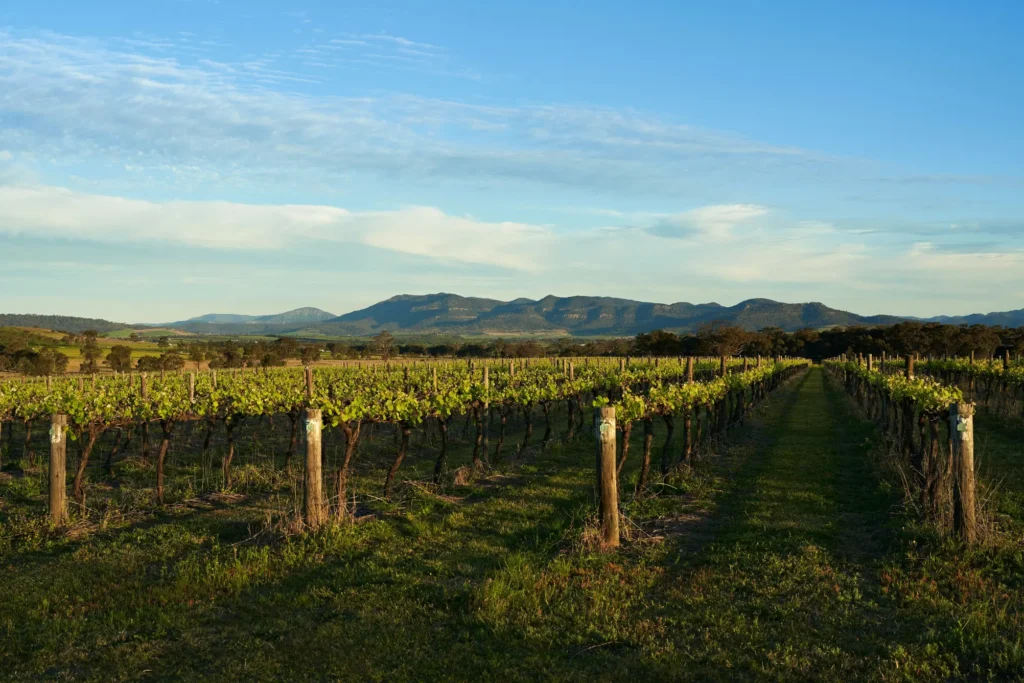
And then, there it was. Wine country opening up around us, the vines running in long green lines toward the hills, the air changing as we rolled the windows down. Warmer. Greener. Threaded with something earthy and sweet.
First Sips, Mid-Morning
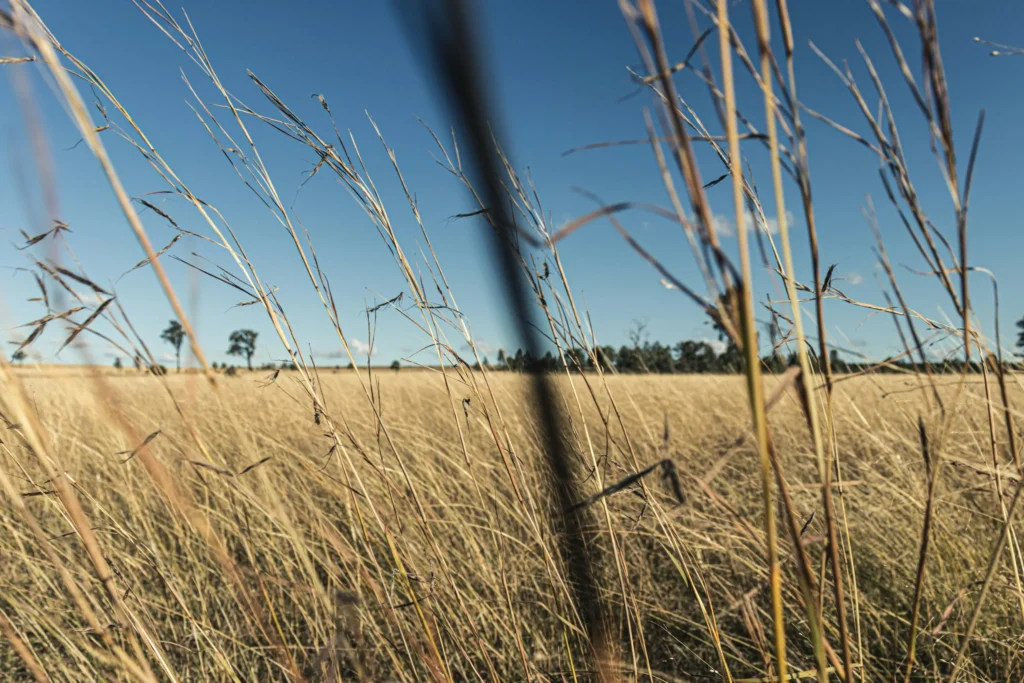
We reached our first cellar door mid-morning, when the light was still clean and the tasting room mostly empty.
A word, before we go further, on how to do this gently. The best tastings happen early, before the tour buses arrive and the rooms fill with noise. And one of you needs to be the designated driver; the roads here wind between vineyards, and it’s a long way to the next town if the day gets away from you. We took turns. It’s the only fair way.
Inside, the room smelled of cool stone and old oak. A woman behind the counter poured for us without hurry, telling us a little about each wine as she went, which block the fruit came from, how the season had run dry that year. She didn’t oversell any of it. She just talked about the wine the way you’d talk about someone you’d known a long time.
The first pour was a Semillon, pale and crisp, cold against the glass. It tasted of lemon and something greener underneath, sharp in a way that woke you up. Later there was a Shiraz, this region’s quiet pride; dark, warm, tasting faintly of pepper and dried earth. I held it in my mouth longer than I meant to.
Hunter Valley is one of the oldest wine regions in the country, and you can feel that history in how unhurried everyone is. No one here is rushing to impress you.
The Long Lunch
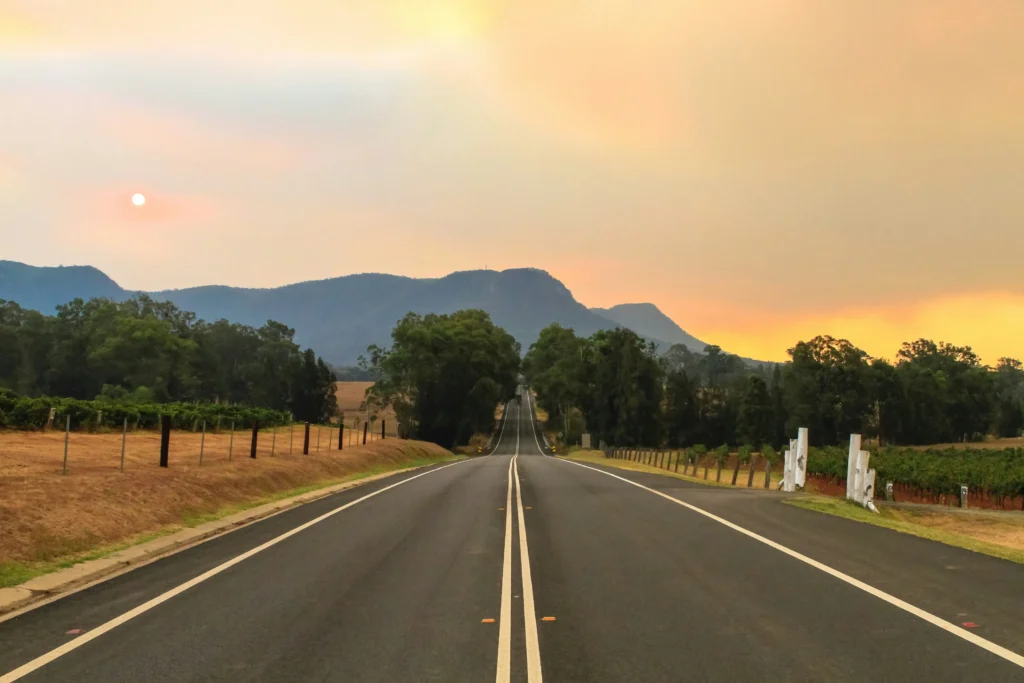
By midday, we were hungry in the honest way that mornings of tasting make you. We’d booked a table in advance (do this, always; the good lunches fill up, especially on weekends) at a farm-to-table place set among the vines. The kind with wide windows, worn timber floors, and a menu that changes with whatever’s ripe.
This was the heart of the day. The part I keep returning to.
Lunch came slowly, in courses, the way it should. Bread still warm from the oven, torn by hand, wiped through good local olive oil. A plate of tomatoes that tasted like tomatoes: sun-warm, faintly sweet, dressed with nothing but salt and a little basil. Then something with lamb, slow-cooked until it gave way at the touch of a fork, the meat raised somewhere not far from where we sat.
We ate for nearly three hours. Nobody rushed us. The waiter refilled our water, cleared plates without a word, let the conversation stretch and drift and circle back. Outside the window, the vines shimmered in the heat. Somewhere behind us, a cork was pulled and a small cheer went up from another table.
There’s a kind of luxury that has nothing to do with money. It’s this; a long table, good food, people you love, and absolutely nowhere else to be.
An Afternoon That Wandered
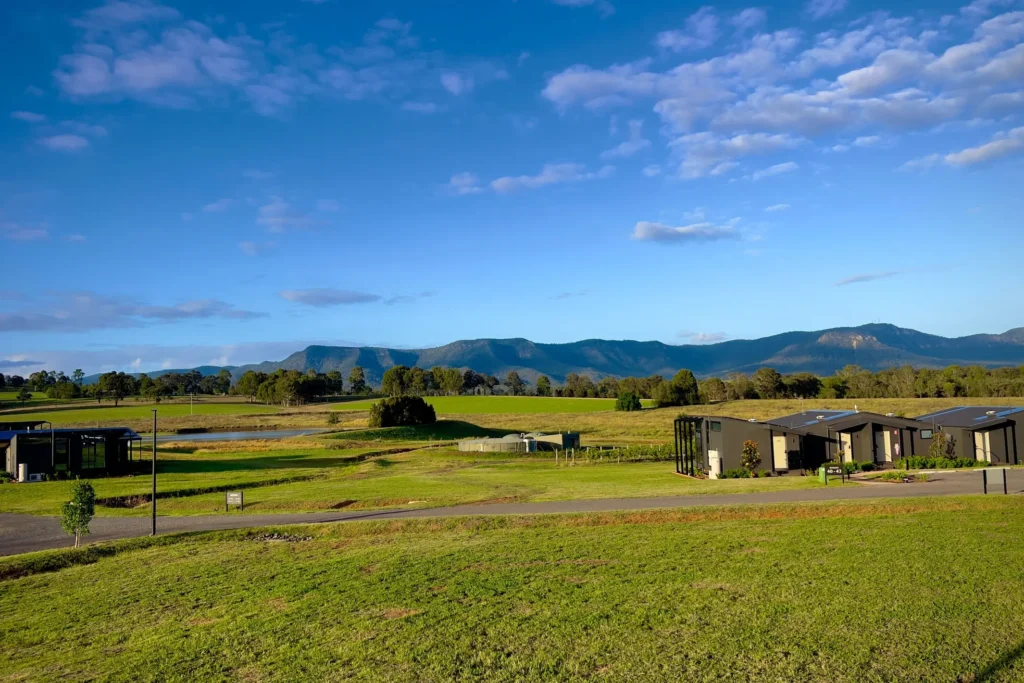
We didn’t have a plan for the afternoon, which turned out to be the whole point. Driving back through the valley, we passed a small farm shop set just off the road: a hand-painted sign, a screen door, a dog asleep in the shade. We pulled over. Of course we did.
Inside, a man was cutting cheese made just up the hill. He handed us slivers on the flat of the knife, one after another, a soft white one, tangy and cold; a hard aged one that crumbled and lingered. We bought more than we needed. A jar of local honey. A bag of olives from a grove down the road. Things to carry the day home with us.
He asked where we’d come from. Sydney, we said. He nodded like he’d heard it a hundred times. “Good to get out, isn’t it,” he said. Not really a question.
It was. It really was.
Golden Hour on the Vineyard Roads
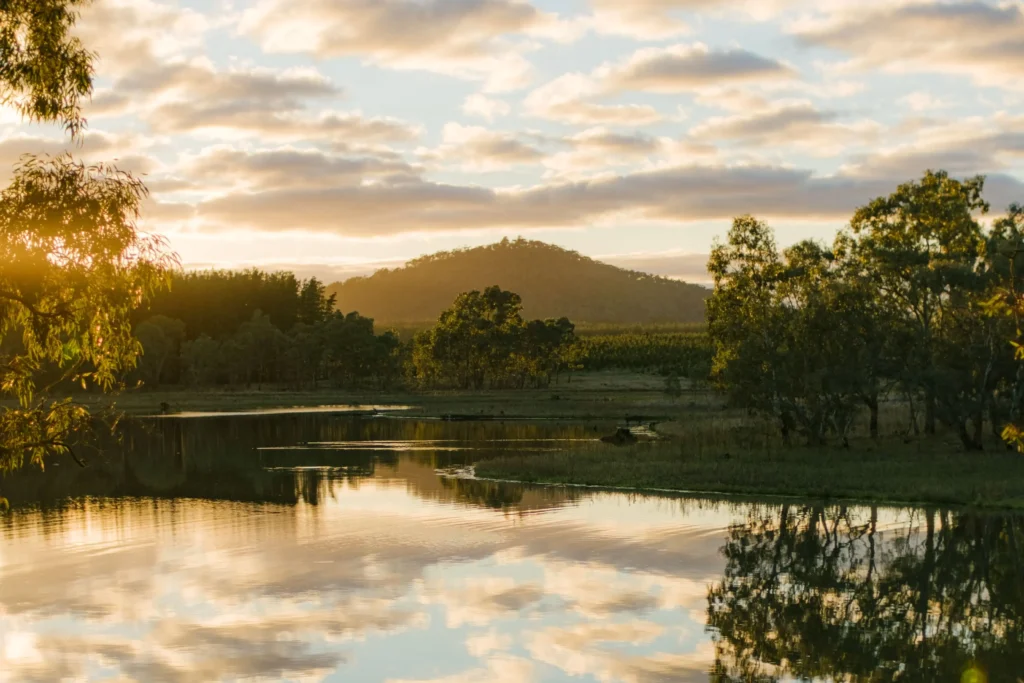
Then the light began to turn, and the whole valley softened with it. If you take one thing from this, stay for the late afternoon. The Sydney to Hunter Valley crowd tends to head home by five, and the roads empty out just as the light gets tender. We drove slowly, windows down, the vines gone gold and the hills washed in amber. The heat of the day eased into something gentler. Sunscreen and cut grass and warm earth on the breeze.
We pulled over one last time, at nothing in particular, just a bend in the road where the sun was dropping behind the ridge. Stood there in the quiet. Let the day finish the way good days should, slowly and without ceremony.
A note, if you’re planning your own escape: dress for warmth and comfort (light layers, good shoes), something for when the evening cools. Come in autumn or spring if you can, when the days are mild and the vines are at their best. And leave room in the schedule for the things you didn’t plan. Those tend to be the ones that stay.
Hunter Valley Australia doesn’t ask much of you. Only that you slow down enough to taste it.
That, in the end, is what the day gave back. Not a checklist of cellar doors or a camera roll full of vines, though there was some of that too. It gave us permission to linger. To let a lunch run long, a road unwind slowly, a stranger’s cheese become the best thing we ate all week.
So come along, next time you need to breathe. Pack light, book the table, pick your driver. Then let the valley take it from there.
We’ll save you a seat at the long table.
For more of our adventures and guides on food, travel, and filling our stomach not just with food but laughters, check our article: A Spoonful of the Sea: Singapore’s Most Beautiful Chirashi Don Bowls.