I knew this castle before I ever saw it.
Not the real one, the silhouette. The pale outline at the start of a hundred childhood afternoons, the turrets pressed flat against a glowing sky. I had loved that shape long before I knew it had a name, a country, a road you could actually drive.
So when my passport has let me on the train that let me off near the Bavarian Alps and the mountains rose up grey-blue in the distance, I felt something close to nervousness. The way you feel before meeting someone you’ve only known through a photograph.
A Night in Füssen Before the Dream
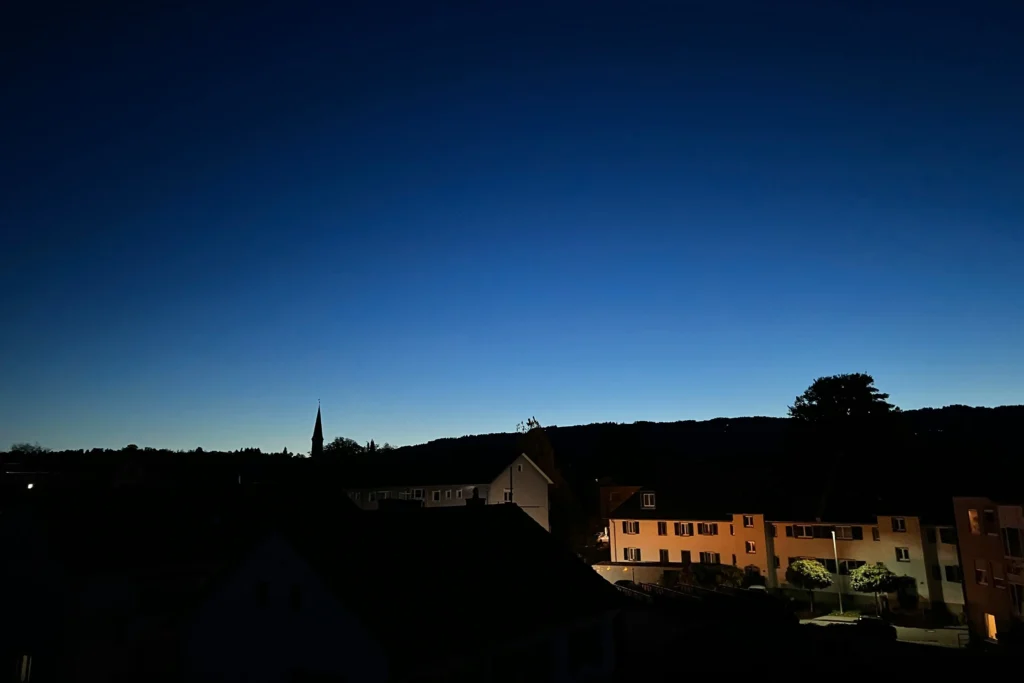
I came up the night before and stayed in Füssen, and I’d recommend it if you can. The morning light there is gentle, unhurried, and it gives you a head start before the buses arrive.
That first evening, the town was quiet. Cool air slid down from the peaks, carrying the smell of cut grass and something woody, like sap. The roads near the edge of town were empty enough to hear my own footsteps. Somewhere far off, a single cowbell knocked once, then stopped.
I ate a pretzel from a small bakery before it closed; warm, dense, the crust freckled with salt that caught on my lips. I tore it apart with my hands and ate it walking, watching the last light fade behind the mountains. No camera. Just the bread and the cold and the quiet.
The Forest Keeps Its Secret
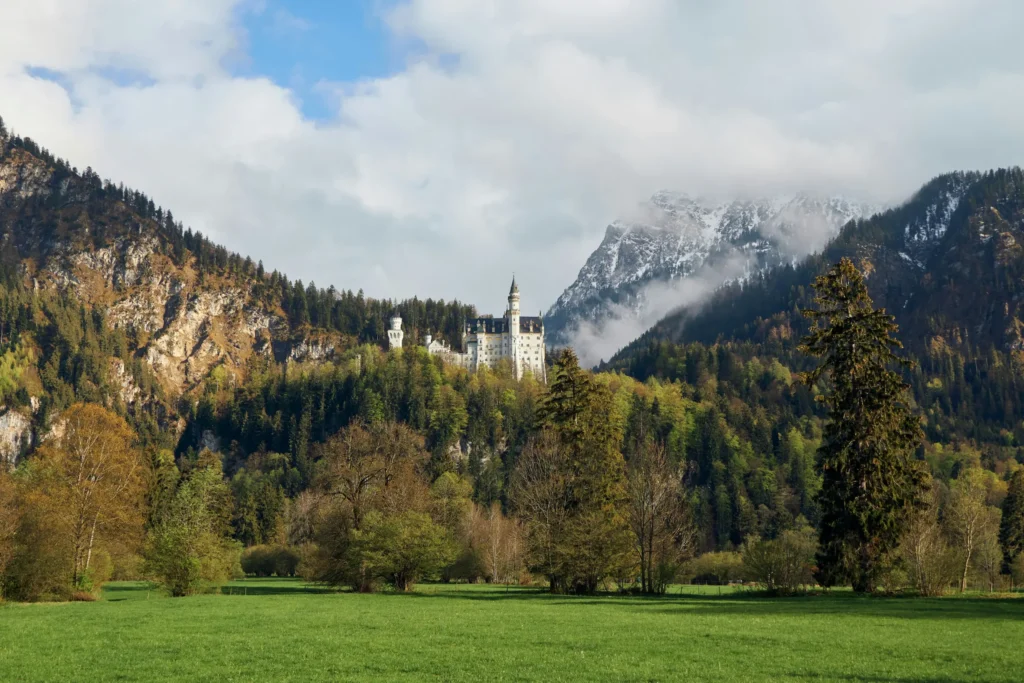
The next morning I went early, on a weekday, which is the only advice I’d press into anyone’s hands. By mid-morning the path fills. Before that, it almost belongs to you.
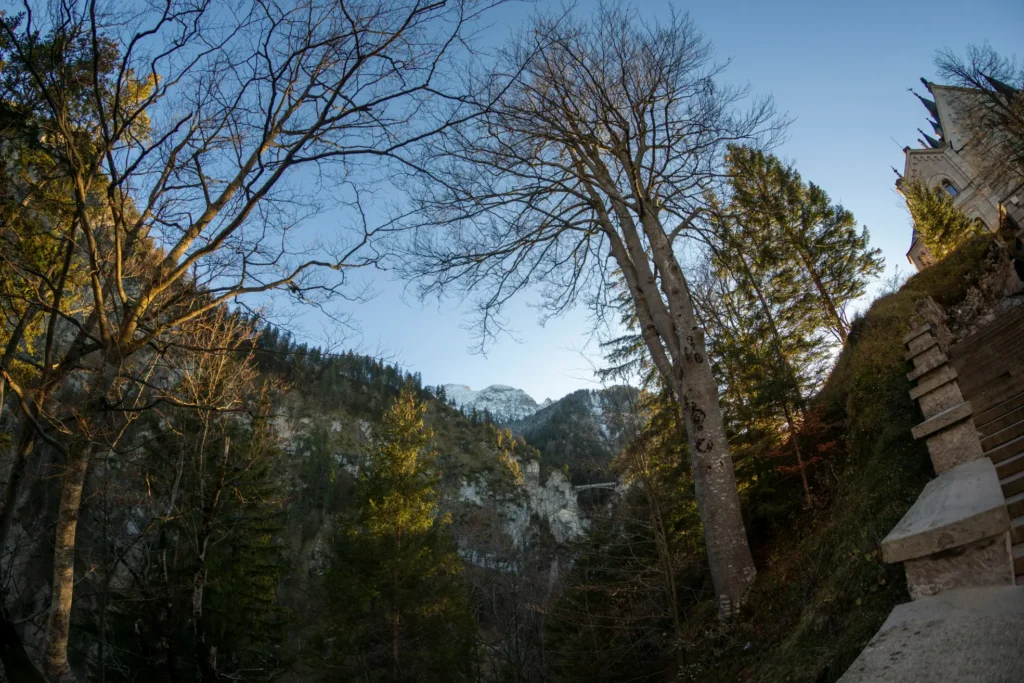
The walk up to Neuschwanstein is steeper than it looks in the photos. The road bends through forest, and the trees close in overhead. My breath came shorter. My footsteps softened on packed earth still damp from the night.
The smell was the thing I didn’t expect: pine, wet bark, cold soil. It clung to everything. A horse-drawn carriage clopped past carrying people who’d chosen not to walk, and I understood the choice, but I was glad to be on foot. The longing felt earned that way. Each turn promised the castle and didn’t deliver it. The forest kept its secret a little longer.
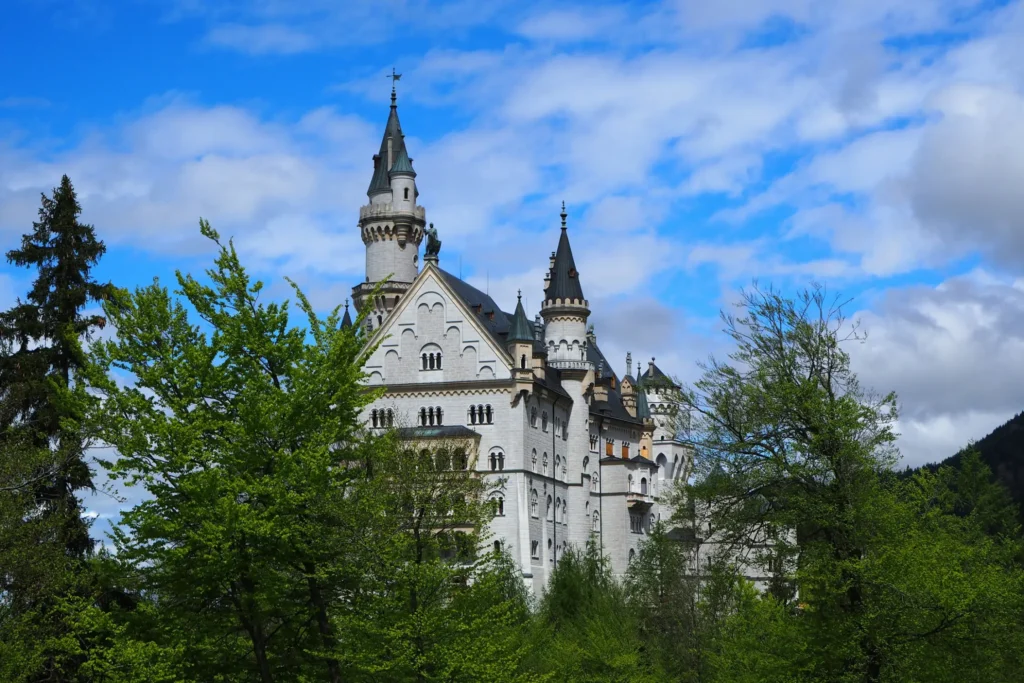
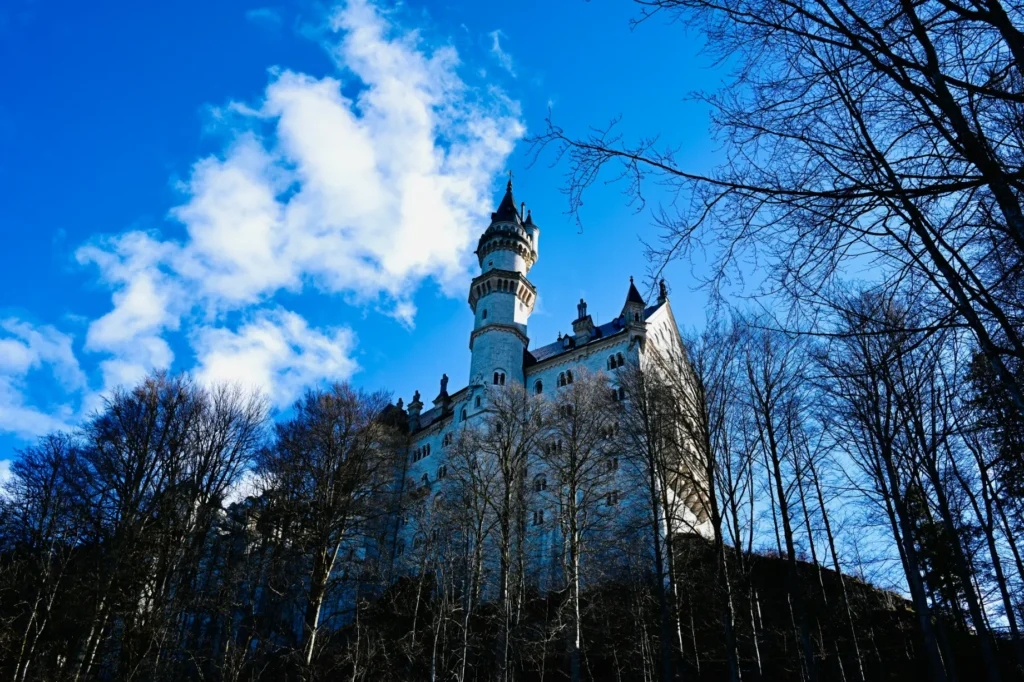
Then, between two trunks, a flash of pale stone.
The First Pale Turret
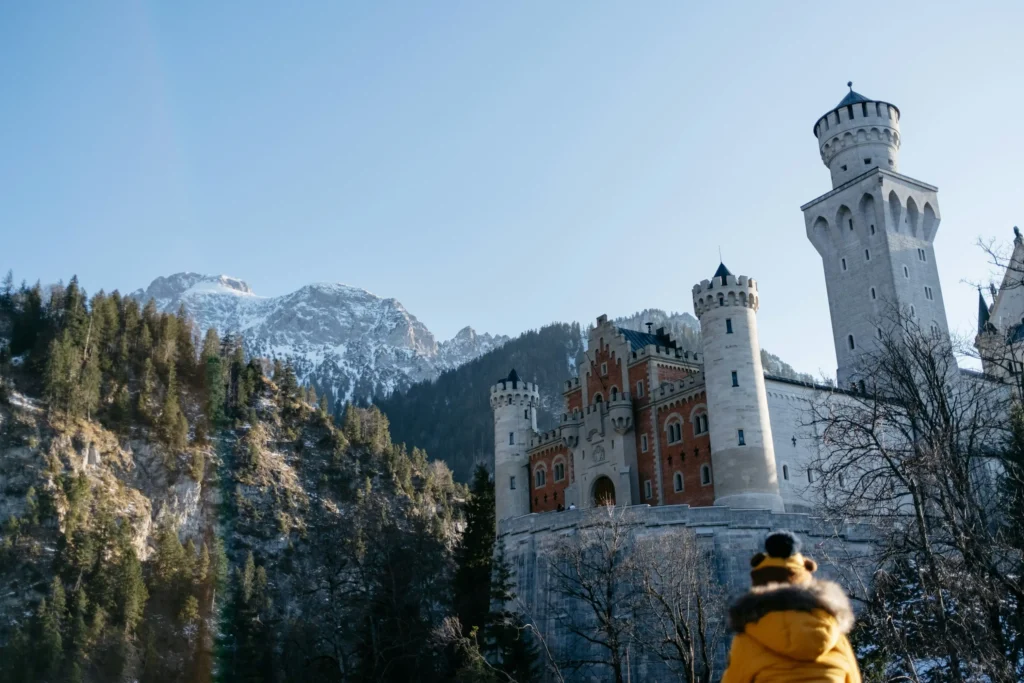
I stopped walking. There it was… a single turret rising above the treeline, white against the green, almost shy about it. And something in my chest went loose and strange. I know you. The shape I’d carried since I was small, suddenly real and made of stone, sitting on its hill exactly where it had always been, waiting the whole time.
I didn’t reach for my phone. I just stood there on the path, a little embarrassed by how much it moved me. A castle. A building I’d seen ten thousand times in flat blue ink. And yet.
It’s a humbling thing, to meet a memory in person.
The Bridge Where the Fairytale Floats
The real view comes from Marienbrücke, the bridge strung high across a gorge behind the castle. I won’t pretend it was a private moment. It wasn’t.
The bridge was crowded, shoulder to shoulder, phones held overhead, a low murmur of a dozen languages. It sways a little underfoot, and the gorge drops away beneath the planks in a way that pulls at your stomach. Wind funnels through the ravine and tugs at your jacket. I gripped the rail.
But then I looked up, and the noise sort of fell away.
From there, Neuschwanstein floats. The towers stack against the dark forest and the far Alps, and a thin waterfall threads down the rock below. It’s theatrical in the truest sense; built to be seen, framed like a stage set. For a moment I forgot the crowd pressing at my back. Then someone’s elbow found my ribs, and I remembered. Both things were true at once. The wonder and the jostling. I let them be.
The Man Behind the Walls: Ludwig’s Lonely Dream
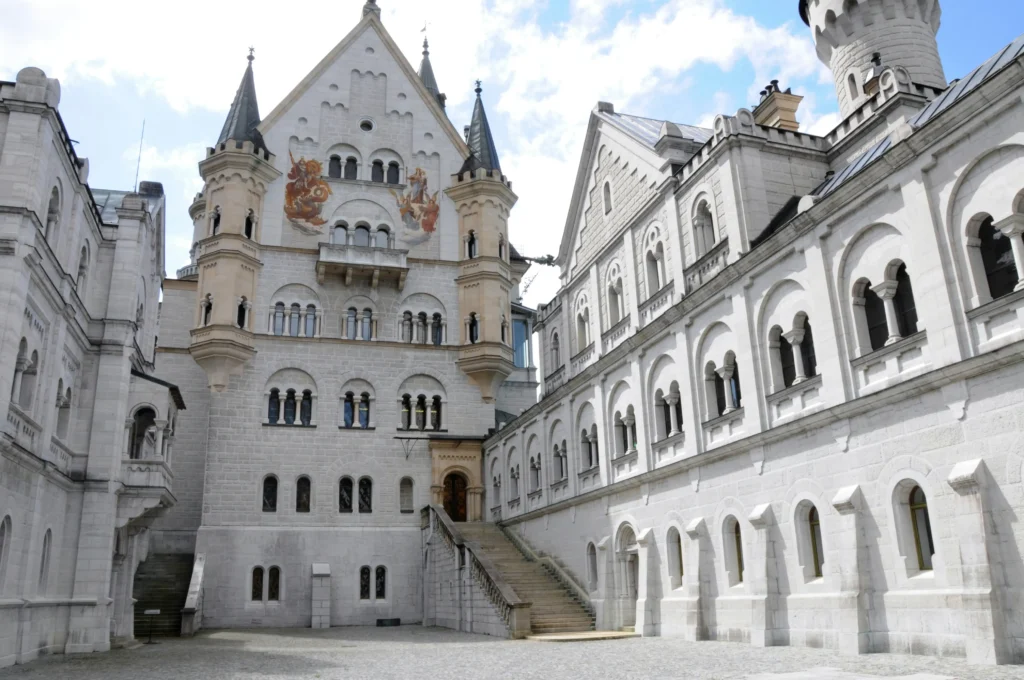
What I didn’t expect was the sadness. Neuschwanstein was built by King Ludwig II; a man who loved music and myth and built castles like other people write diaries. He poured himself into this place, designed it like a dream he couldn’t stop having. But he was lonely here. Misunderstood by a court that found him strange. He lived in only a handful of finished rooms, and he died before the castle was done.
He barely got to live inside the thing he’d longed for.
Standing in those grand, half-real rooms during the tour (and you do need a timed ticket, booked ahead, to go inside) I felt the ache of it. This wasn’t a fairytale castle. It was the fortress of a man trying to build a world soft enough to hold him. The fantasy I’d loved as a child was made from someone’s very real longing. That changed the whole shape of the place for me.
Down to the Castle of His Childhood
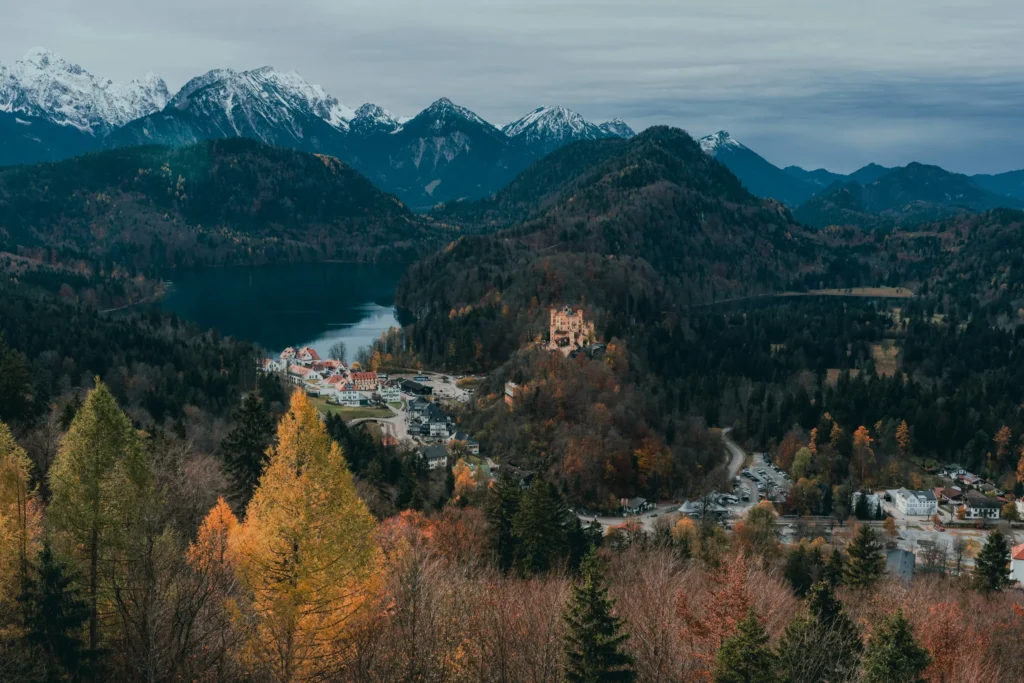
Afterward, I walked down to Hohenschwangau, the warmer, yellow castle below where Ludwig spent his boyhood. It’s worth pairing the two: one the dream, the other the dreamer’s beginning. Smaller, gentler, more lived-in.
I ended the day with apple strudel at a café near the base. The pastry came apart in soft, buttery layers, the apples inside warm and spiced, a little tart. Steam rose off the plate into the cool air. I ate slowly. I wasn’t in a hurry anymore.
What the Fairytale Left Behind
I came chasing a silhouette. I left thinking about a person. That’s the thing about meeting a childhood image in real life, it never stays flat. It gains weight, history, a human story you didn’t ask for but can’t unlearn. The castle was as beautiful as I’d hoped. It was also crowded, and steep, and quietly heartbreaking.
Some fairytales aren’t born from happiness. They’re born from longing, from someone wanting a world more beautiful than the one they were given.
If you go, walk up slowly. Let the forest keep its secret as long as it can. And when that first pale turret appears between the trees, give it a moment. Some things are worth meeting in person.
If this Bavarian dream left you wanting more places where the real world feels enchanted, follow the trail through our guide to Once Upon a Passport: Real Places That Feel Like Disney.