The city was loud when I left it: horns, heat, the smell of grilling somewhere I couldn’t see. Then the taxi turned onto Charoenkrung Road, past the old shophouses of Bang Rak, and the noise began to thin.
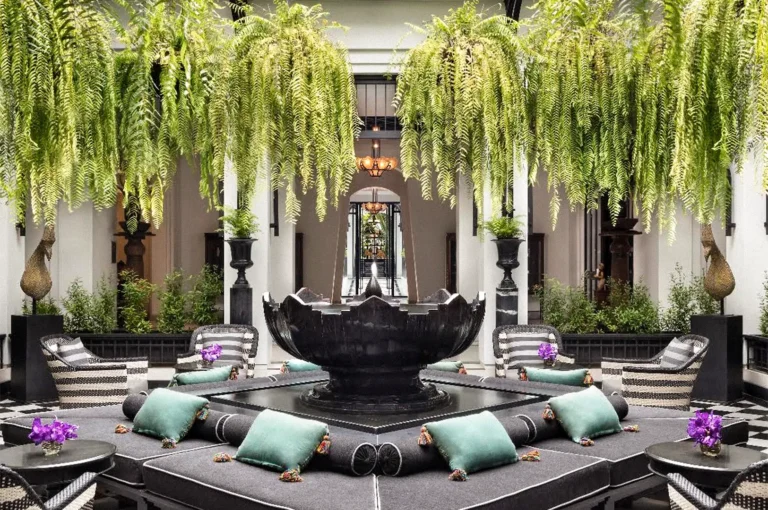
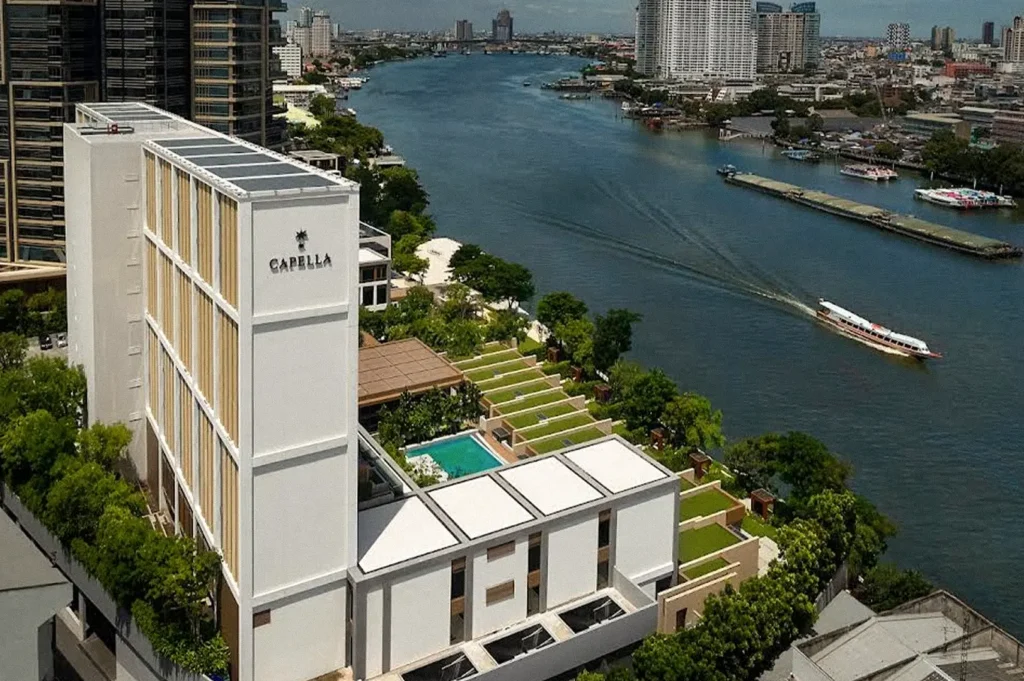
By the time I reached the water, Bangkok had gone quiet. Capella Bangkok sits low along the majestic Chao Phraya River, in Yannawa, Sathorn. It doesn’t reach for the sky the way most Bangkok hotel do. It stays close to the ground, close to the river, a low-rise riverside gateway that feels less like a tower and more like a house someone built for stillness.
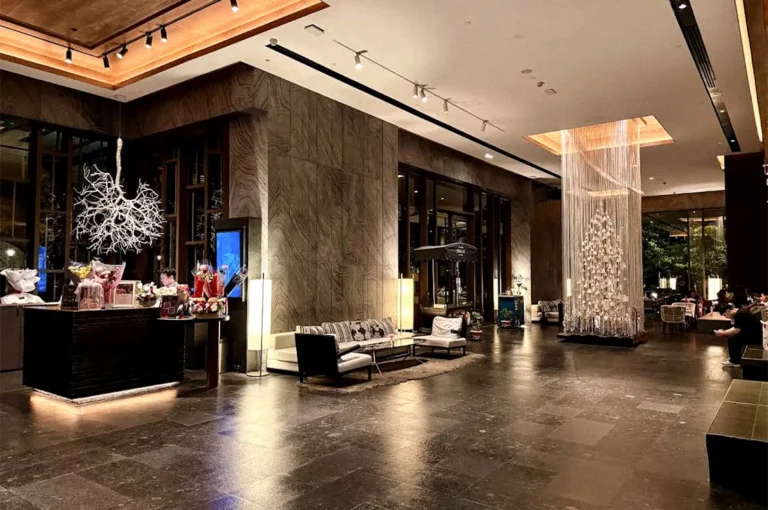
There was no busy front desk. A quiet arrival instead, someone who knew my name, a private check-in, a glass of something cold pressed into my hand. The personal touch can run a little slower than a standard hotel counter. I didn’t mind. I’d come here to slow down.
In a city known for luxury five star hotels, Capella Bangkok feels different. It isn’t trying to compete through size alone. Instead, it creates an atmosphere built around the river, service, and the simple luxury of time.
Capella Bangkok Thailand as an Urban Oasis
Only 101 rooms, suites, and villas fill this place. That number matters. It’s why the halls feel hushed, why the pool stays uncrowded, why the whole property reads as an intimate sanctuary rather than a machine for moving guests.
This is the privileged setting people talk about: a genuine urban oasis, with private gardens and the river always somewhere in view. The design leans into nature and light. It earned two Michelin keys in the Michelin guide hotel selection, and standing in the lobby, watching the water move, you understand why.
Capella carries its own philosophy. That philosophy extends past the architecture: into the service, the wellness, the riverfront life that shapes each day.
Among the best hotels in Bangkok, Capella stands apart because it feels less like a traditional city property and more like one of the world’s most carefully designed riverside resorts. It captures the eternal beauty of the Chao Phraya: a place where history, water, and modern luxury continue to meet.
Rooms, Suites, and the Art of Quiet Luxury
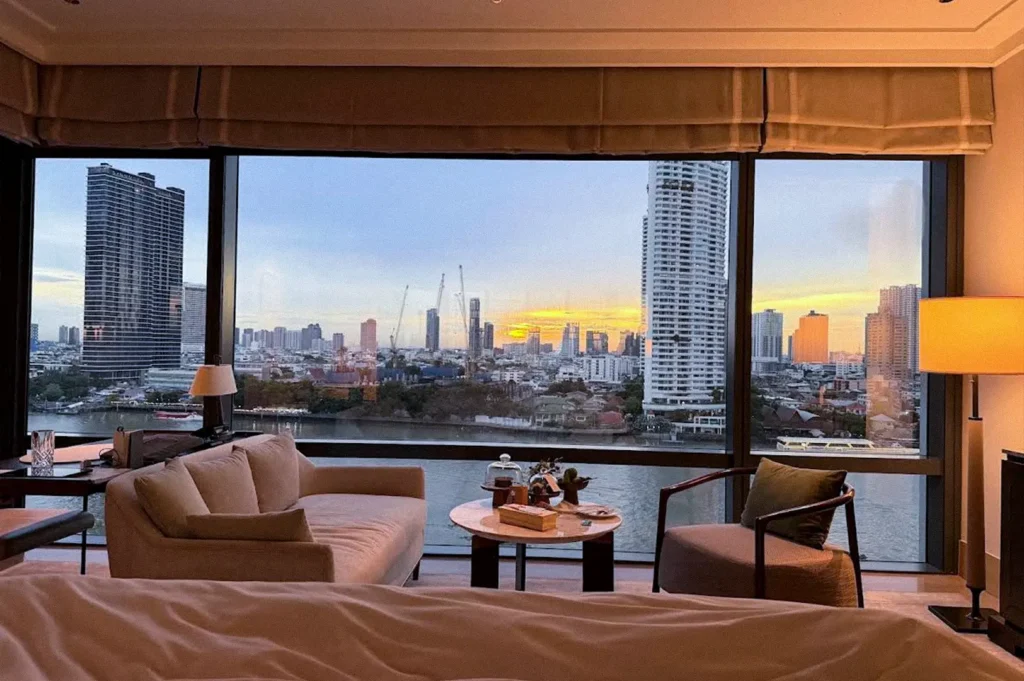
My room began at around 61 square metres, already larger than most luxury rooms in the city. It felt less like a hotel room and more like a private riverside apartment: a boutique pied à terre overlooking Bangkok Thailand’s most famous waterway.
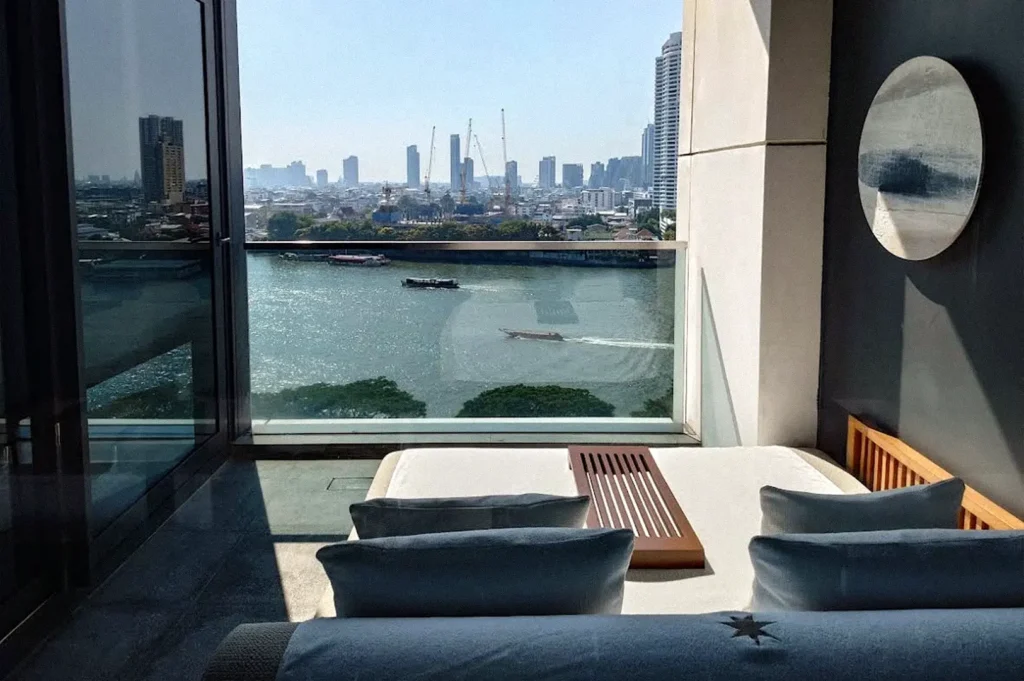
Floor-to-ceiling windows carried the views of the river straight to the bed. There was a separate seating area, a balcony, high ceilings, and a calm that residential space rarely manages. Some suites and villas come with a private plunge pool; plunge pools set right where the light falls best.
The panoramic views are part of the experience. Watching boats move through the river’s heart meander below becomes a quiet ritual, especially in the early morning when Bangkok feels almost suspended.
The bed was plush, not firm, dressed in fine linen. I slept the way you sleep when a room is truly quiet. Guests rate comfort and cleanliness at a perfect 10 on reviews site, and after one night I stopped doubting the number.
The bathroom was spacious, spotless, with a walk-in shower and strong water pressure. The room controls take a moment to learn (a small learning curve for first-time guests) but everything felt intentionally placed. Blackout curtains, air conditioning, good coffee, free WiFi that held steady for both work and streaming.
The amenities are thoughtful rather than excessive. Every detail seems designed to create a sense of ease.
Cost of Two Michelin Keys: River Views and the Ritual of Slow Mornings
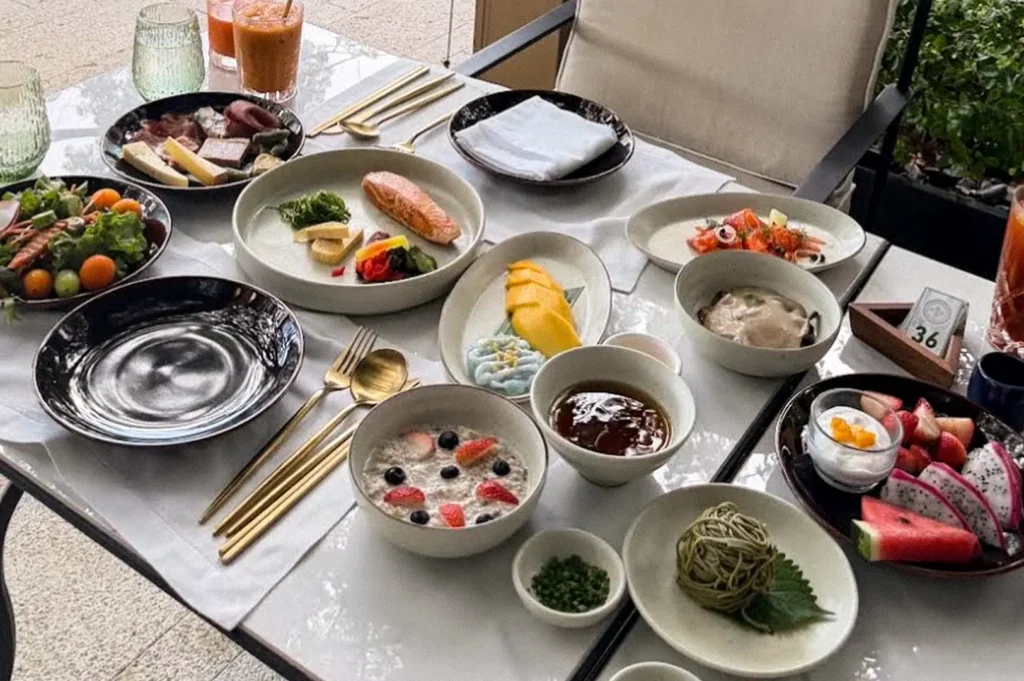
Breakfast is where the stay becomes a story. It’s served at Phra Nakhon, the riverside Thai restaurant, and it doesn’t feel like a buffet. It feels like a restaurant that happens to open in the morning. Made-to-order dishes. Fresh pastries. Thai plates beside international ones. There was mango sticky rice waiting where I didn’t expect it, and I ate it slowly, watching boats slide past on the river.
This is the slow travel angle made real, I’d like to think that this was the reason why they were awarded those michelin keys. Time stretches here. You linger over coffee. You let the morning take as long as it wants. Because breakfast is such a highlight, packages that include it are worth booking, they change the whole shape of the stay.
Capella’s approach feels responsible too, encouraging guests to connect with local culture, food, and neighbourhood experiences rather than simply stay behind hotel walls.
Contemporary Dining by Mauro Colagreco: Where the Night Softens
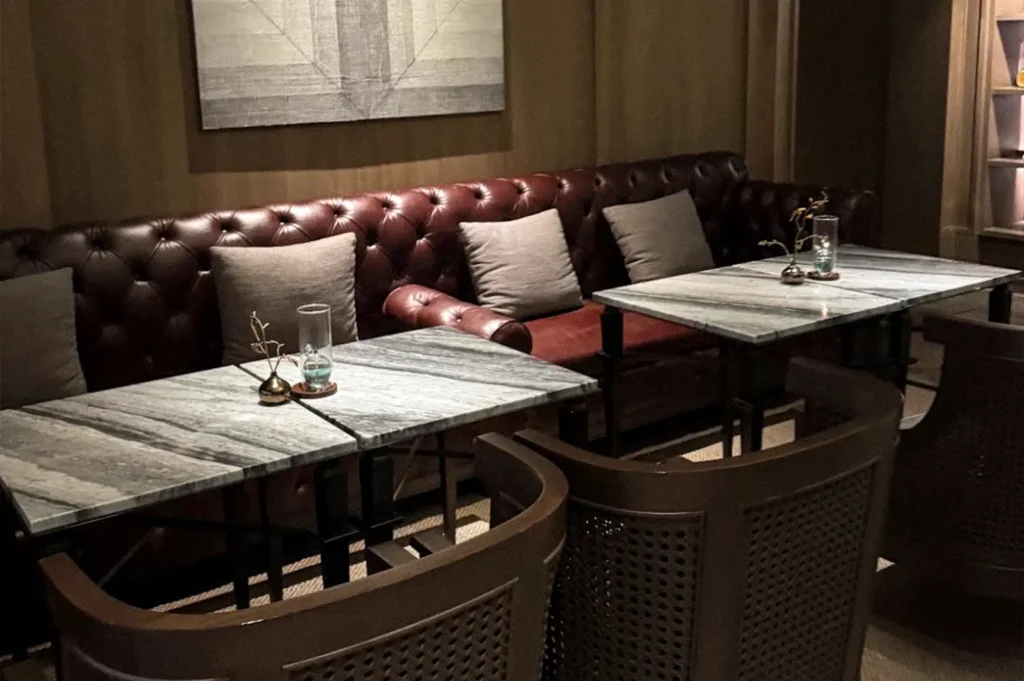
By night, the property turns to Côte by Mauro Colagreco. This is the signature restaurant, Mediterranean-inspired, holding two Michelin stars. The cooking is precise without being cold; contemporary dining that lets each element speak. It’s the kind of meal you slow down for, not because the guide tells you to, but because it earns the pause.
For a drink before or after, Stella waits nearby, a bar built for the quiet hours. And Phra Nakhon returns at dinner with Thai flavours rooted in place. Between the three, the food tells a Bangkok story, one that moves between France and Thailand without losing its footing.
The dining experiences reflect Capella’s personality: refined but never distant, luxurious but still connected to place.
Auriga Wellness and the Body’s Exhale
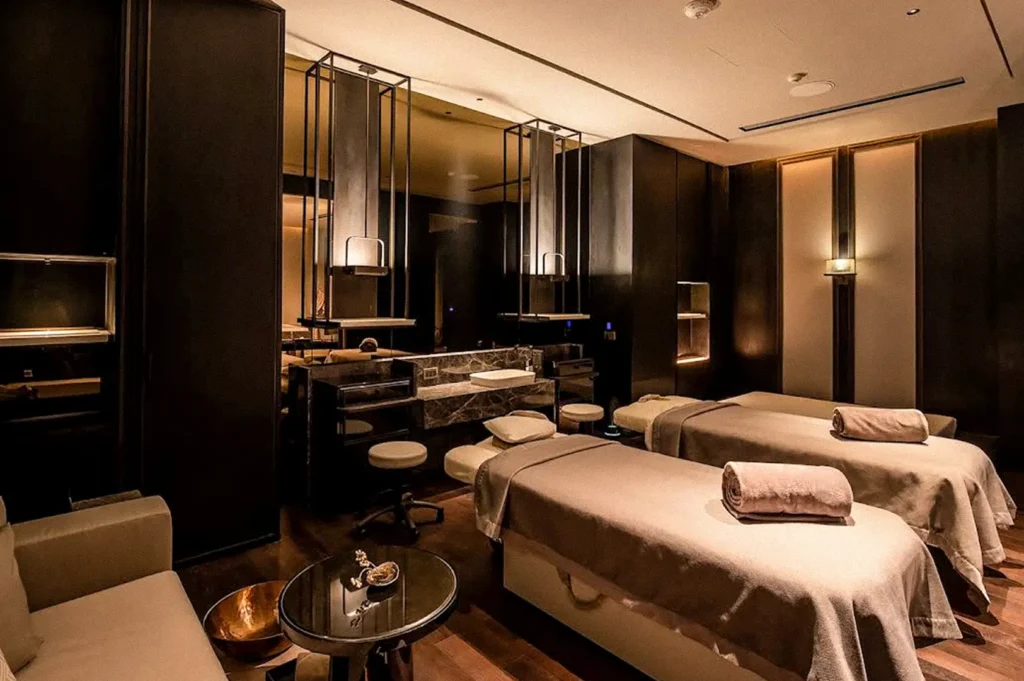
The renowned Auriga Wellness spa is where the stay grounds itself.
The treatments are unhurried, the rooms calm, the whole space designed for exhaling. There’s a fitness centre too, and the outdoor infinity pool, which looks out over the Chao Phraya and rarely fills up. I spent an afternoon there doing nothing, and it felt like the point.
The wellness philosophy feels less about transformation and more about returning to yourself; a calming pause in the middle of Bangkok’s energy.
The Capella Culturist and a More Local Bangkok
Every guest can turn to a Capella Culturist: a dedicated person who helps you seek the city on your own terms. Restaurant bookings, cultural activities, a route through the neighbourhood you’d never find alone.
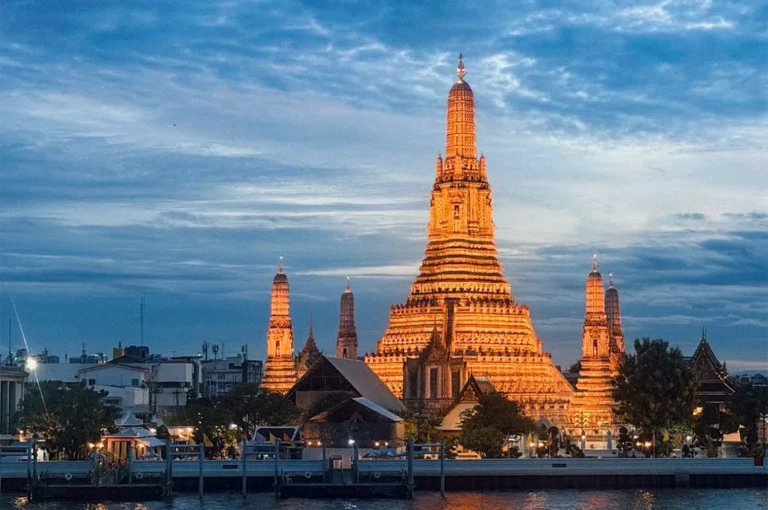
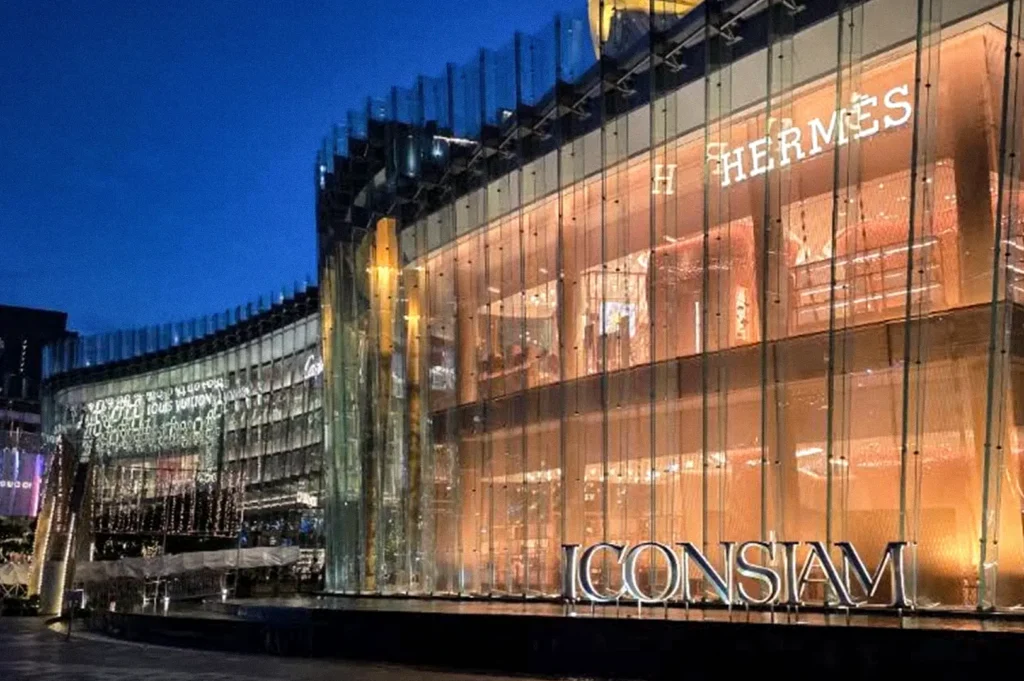
The riverside setting means the temples come by boat: Wat Arun, Wat Pho, the Grand Palace, and ICONSIAM for shopping, all a short transfer away from Saphan Taksin BTS. The hotel runs boat connections too.
What it doesn’t offer is instant access to Siam’s malls or Sukhumvit’s nightlife. That’s the trade. Capella works best when the hotel itself is the destination. The experience encourages a deeper immersion into Bangkok; not just seeing the city, but allowing yourself to join its rhythm.
Booking Notes for the Best Hotels: Availability, Reservations, and Upgrades
Rates sit firmly in the five-star, ultra-luxury range: roughly US$800 to $1,500-plus a night depending on room type and season. Check availability early, since only 101 rooms means space goes fast.
A few honest notes before you book. Longer stays and seasonal promotions bring the best value. Breakfast packages are worth the upgrade. Families travelling with a child will find the space and the quiet welcoming. And the cooler months make the riverside evenings gentler.
Since opening its doors, Capella Bangkok has quickly become a leading name among the world’s luxury hotel experiences, proving that a smaller property can sometimes create a bigger impression than larger resorts.
Check-Out: What Lingers After the River
Check-out was as calm as arrival: private, unhurried, no queue. What lingers isn’t the plating or the price. It’s the quiet. The way the river replaced the traffic. The mango sticky rice at breakfast. The uncle at the boat dock who nodded and said nothing and somehow said enough.
Capella Bangkok isn’t the hotel you choose because you need a bed. It’s the one you choose when you want the stay to become part of the journey.
I came to slow down. I left slower, and glad of it.
There are hotels that impress you. There are hotels that entertain you. And then there are places like Capella Bangkok, where the details lead you back to yourself.
A stay here is not just about where you sleep. It is about the feeling you carry home: a little quieter, a little lighter, and a little closer to the heart of the city.
For more guides from us for the calm and quiet, check this article!