The first thing I noticed was the sound of water.
It wasn’t rain or a river. It was a steady pour from a tap in front of the main brewery, running clear and cold into a container held low by the person ahead of me. I waited my turn. When I reached out, the water ran over my fingers so cold it made me hold my breath for a moment.
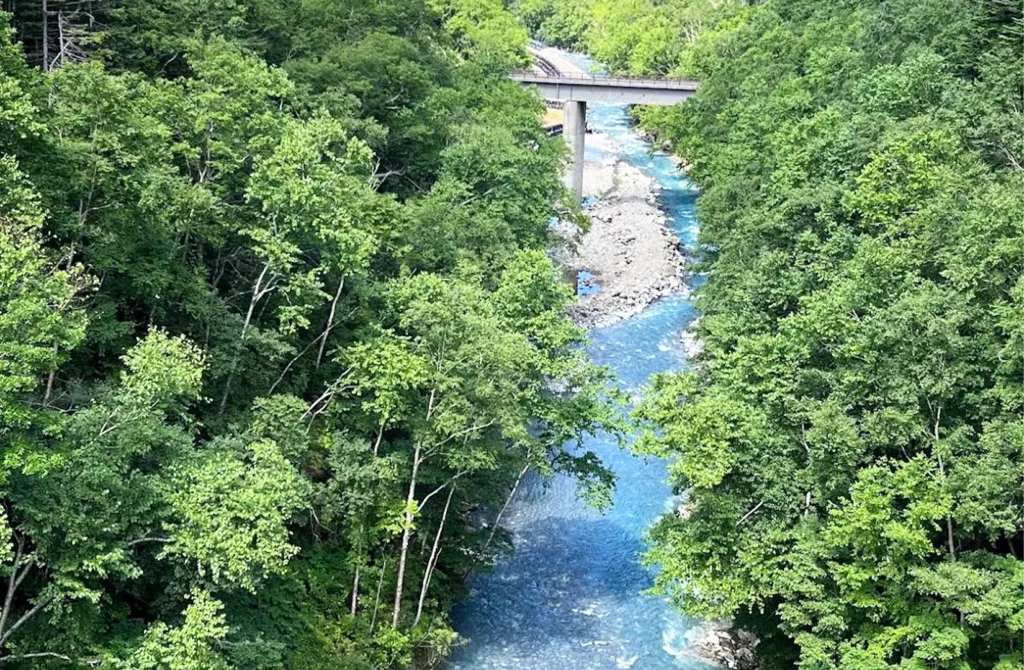
This is the Water of Longevity. Otokoyama uses it to brew sake, and it reaches the brewery through the underground flows from Daisetsuzan, the mountains that rise above this part of Hokkaido.
I stood there with wet hands and thought how unusual it was to be welcomed by a brewery’s water before its sake.
Arriving at Otokoyama Sake Brewery Museum in Asahikawa
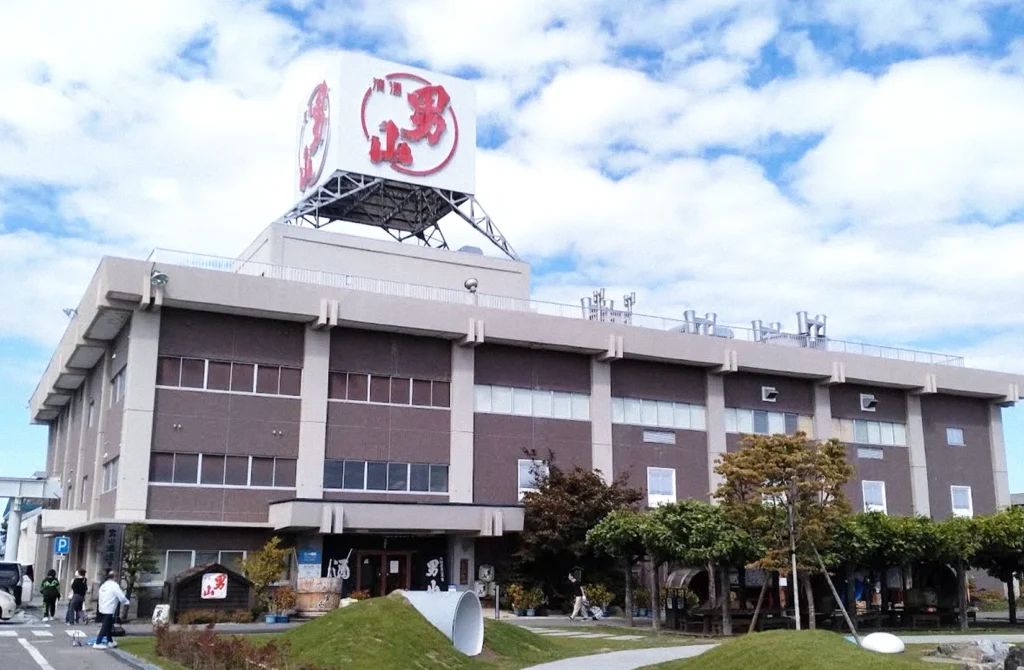
The Otokoyama Sake Brewery Museum sits at 7-1-33 Nagayama 2-jo, in Asahikawa, central Hokkaido. It isn’t in the middle of the city, but it isn’t hard to reach. From JR Asahikawa Station, the bus takes about 20 minutes. If you’re driving, it’s about 15 minutes from the Asahikawa-Takasu IC on the Hokkaido Expressway, and the free car park has around 50 spaces.
Admission is free. The museum is open from 9:00 AM to 5:00 PM and closes over the New Year’s holidays. These details can change, so check the brewery’s official site before you go.
I liked that there was no ticket booth and nothing to scan. You just walk in, perfect for a last-minute trip when you are in Hokkaido.
According to the brewery, about 200,000 people visit every year. In Hokkaido sightseeing plans, it often sits alongside Furano, Biei, and Asahiyama Zoo. If you’re planning to explore more of the island, our Hokkaido guide can help you discover other places worth visiting, from scenic landscapes to cultural attractions. Otokoyama traces its story back around 350 years, and the museum was built to tell both that history and the wider story of sake brewing as a traditional Japanese craft.
The Third Floor: Tools Shaped by Their Purpose
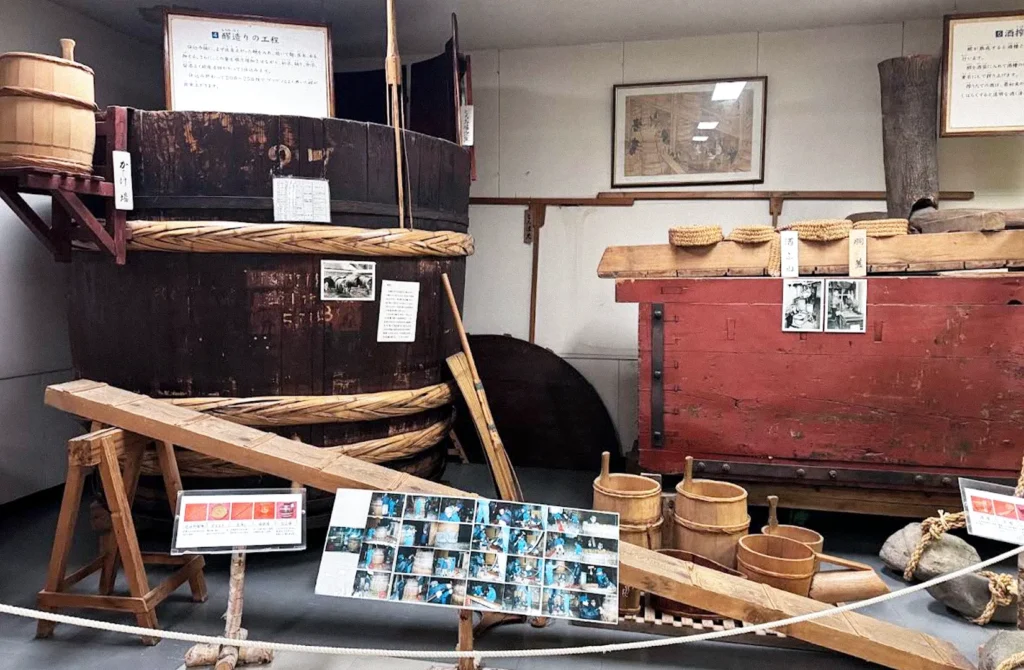
I started at the top.
The third floor holds old brewing tools, including tubs and other vessels used in sake making long before stainless steel. The brewery describes them as showing the “functional beauty” of Japanese culture, the idea that a tool’s form grows from the job it was made to do.
That phrase stayed with me as I walked between them. Nothing here was made for display. Every curve and joint had a purpose. Someone, a long time ago, had decided exactly how big a tub should be to do its work.
This floor also plays a short video about how sake is made and how Otokoyama’s history unfolded. It’s available in five languages: Japanese, English, Chinese, Korean, and Thai. If you know as little about brewing as I did when I arrived, start here. It gives the rest of the building a framework.
One more thing worth knowing: during brewing season, visitors can see part of the actual brewing process. If that matters to you, check timing ahead of your visit.
The Second Floor: Sake in Ink and Paper
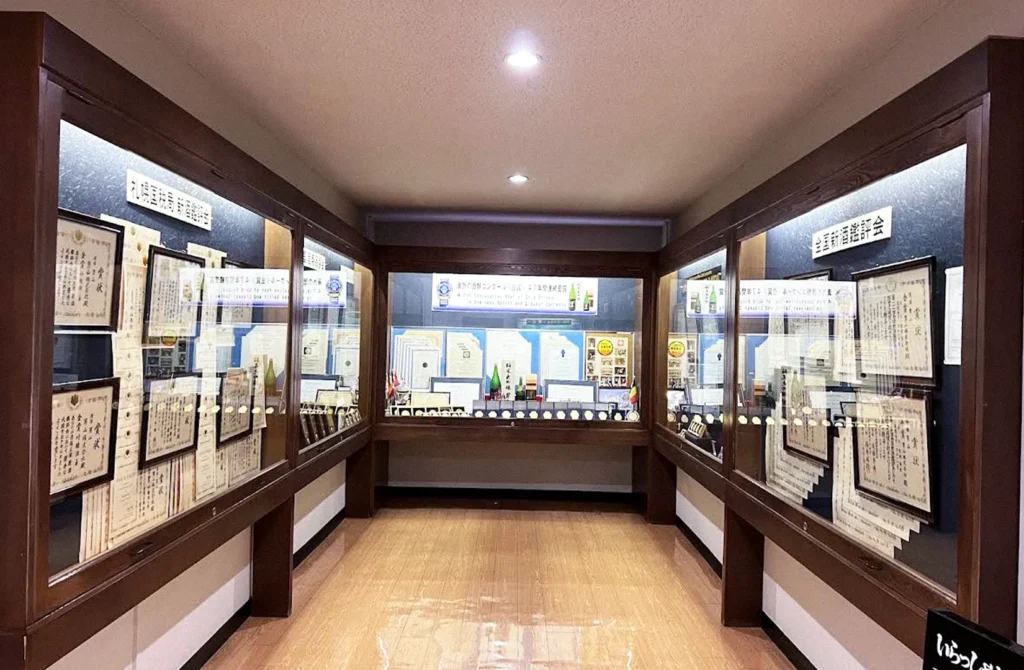
I didn’t expect to find famous art in a brewery.
The second floor traces Otokoyama’s origins through historical documents and ukiyo-e, the woodblock prints of the Edo period. The collection includes Kitagawa Utamaro’s Natorisake Rokkasen, Utagawa Kuniyoshi’s Seichu gishin meimei kagami, and a hanging scroll by Katsushika Hokusai. There is also an old document of brewing secrets, said to have been passed down from Otokoyama’s founder.
There are Edo-period sake sets too, small and careful objects made for pouring and sharing.
I moved more slowly here. The room asked for it. Sake in these pieces isn’t a product. It’s part of daily life and celebration, and part of the stories people told about themselves. Seeing it pictured beside the people who drank it made the drink feel less like a label on a bottle and more like a thread running through centuries of ordinary evenings.
The First Floor, and the Shop Next Door
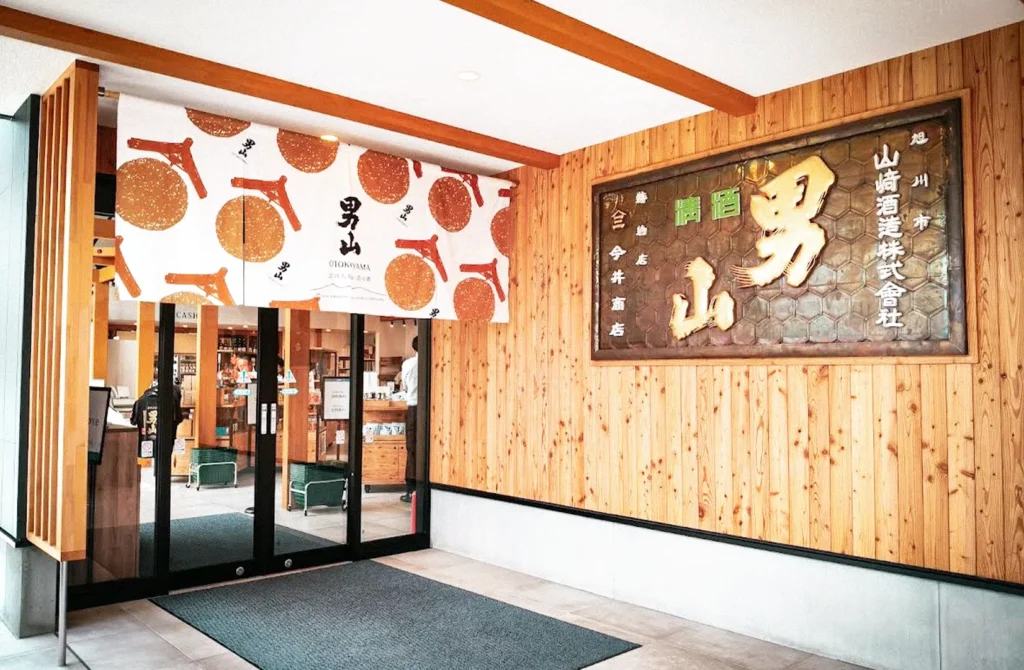
The first floor once held the tasting corner and shop. The brewery notes that both have moved to a new store next door, part of what it now calls Otokoyama Sake Park.
That’s where you can sample Otokoyama sake and browse bottles you’ll only find at this location, including seasonal releases and museum-limited editions. There are sake sets, aprons, and T-shirts too, for anyone who wants to carry a little of the brewery home.
A respectful note: tasting isn’t offered to anyone driving or under the legal drinking age. If you plan to sip, the bus from Asahikawa Station makes more sense than a rental car.
I’ll leave the cup’s flavor to you. Taste is personal, and sake shows up differently for every palate, every season, every mood. What I can say is that holding a small cup after an afternoon with the tools, the prints, and the cold water outside felt different from ordering sake in a restaurant. By then I knew a little of where it came from.
For those back in Singapore who want to continue exploring Japanese flavors, there are plenty of Japanese food spots around Singapore where you can experience another side of Japan’s food culture.
The Garden, Changing With the Times
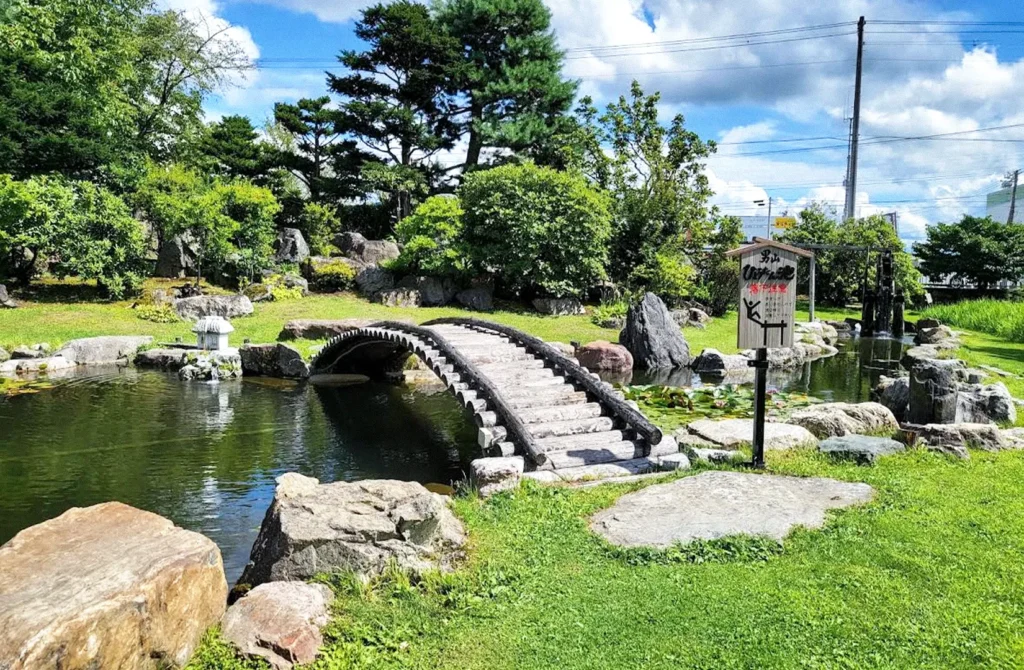
The brewery describes its front yard as a former Japanese garden with seasonal flowers from spring to autumn, including cherry blossom, rhododendron, wisteria, and hydrangea. In summer, visitors could feed the carp in the gourd-shaped pond. In winter, it all disappeared under snow.
That space has since become Ochoco Square, an area where children can play. I found something honest in that. A place that has lasted centuries doesn’t stay frozen. It makes room for whoever comes next.
What I Carried Home
I didn’t leave with a list of facts. I left with cold hands.
That’s what I remember first. The pour of mountain water in front of the brewery, the same water that becomes sake inside. Then the wooden tubs upstairs. Then Hokusai’s brushwork, hanging quietly in a building most people visit for a drink.
Otokoyama doesn’t ask you to be an expert. It lets you begin wherever you are, with water or history or a small cup, and follow the thread as far as you like.
If you’ve been to a brewery that changed how you think about what’s in your glass, I’d love to hear about it. And if you find yourself in Asahikawa, bring a bottle for the water. Mine is already empty, and I keep thinking about how cold it was.