
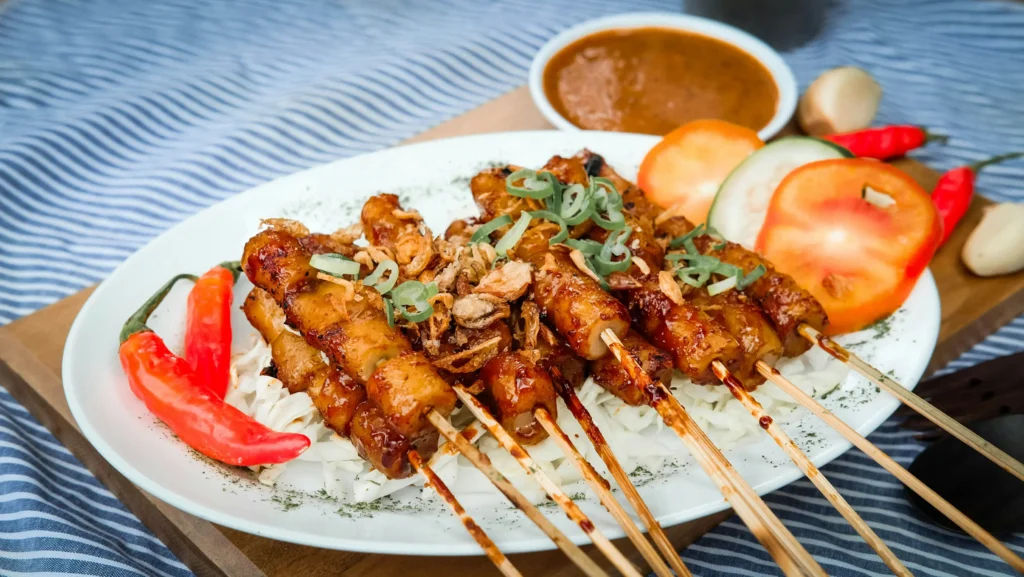
The smoke reached me before the satay did.
It drifted through the night air, carried by the kind of breeze that makes you slow down without realising it. There was the unmistakable smell of charcoal, the sweetness of caramelising meat, and that faint smokiness that clung to everything nearby.
I followed it almost instinctively.
That is the thing about certain foods. They do not need to introduce themselves. They announce their presence long before you see them.
I had eaten satay before, of course. I knew what it was supposed to be. Skewered meat, grilled over charcoal, served with peanut sauce and cucumber. Simple enough.
But that night, sitting at a crowded table with plates slowly filling up, I realised I had never really understood why people loved it so much.
It was not just the taste.
It was the feeling around it.
The first thing I noticed was that satay was never meant to be eaten alone. The skewers arrived in batches, placed in the middle of the table. Someone counted them. Someone reached over to take one. Someone else pushed the plate closer without being asked.
The food became a reason for people to gather.
There was something comforting about the unspoken rhythm of it all. Nobody was carefully arranging their own portion. Nobody was rushing through the meal. Everyone simply took what they wanted and made sure there was enough left for everyone else.
That small act of sharing felt strangely familiar.
It reminded me that some foods are remembered not only because of how they taste, but because of the moments they create. Satay belongs to that category. It carries the sounds of conversations, the warmth of late evenings, and the feeling of sitting around a table where nobody is in a hurry to leave.
I found myself thinking about this while reading more about the history and culture behind satay through this guide: Check this.
What stood out was how satay has always been more than a dish. It reflects movement, exchange, and the way food travels between communities while still keeping its own identity. That same connection between food, place, and shared experience is explored by Bites and Travel.
Perhaps that is why satay feels so familiar even when we experience it in different places.
The flavours may change slightly. The setting may be different. But the idea remains the same.
People gathering around something simple.