
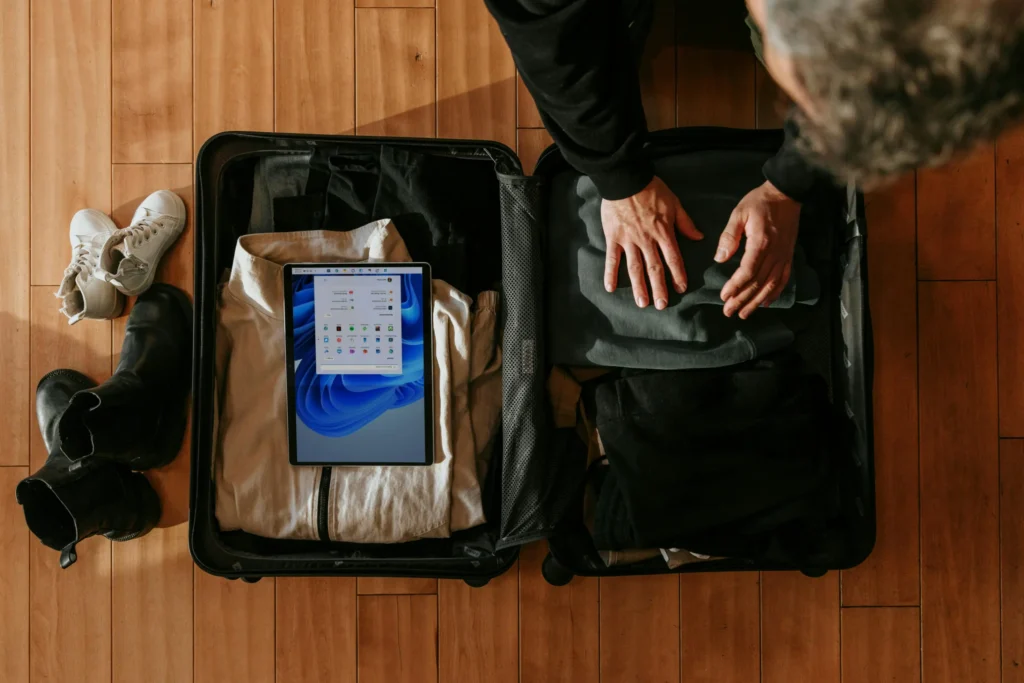
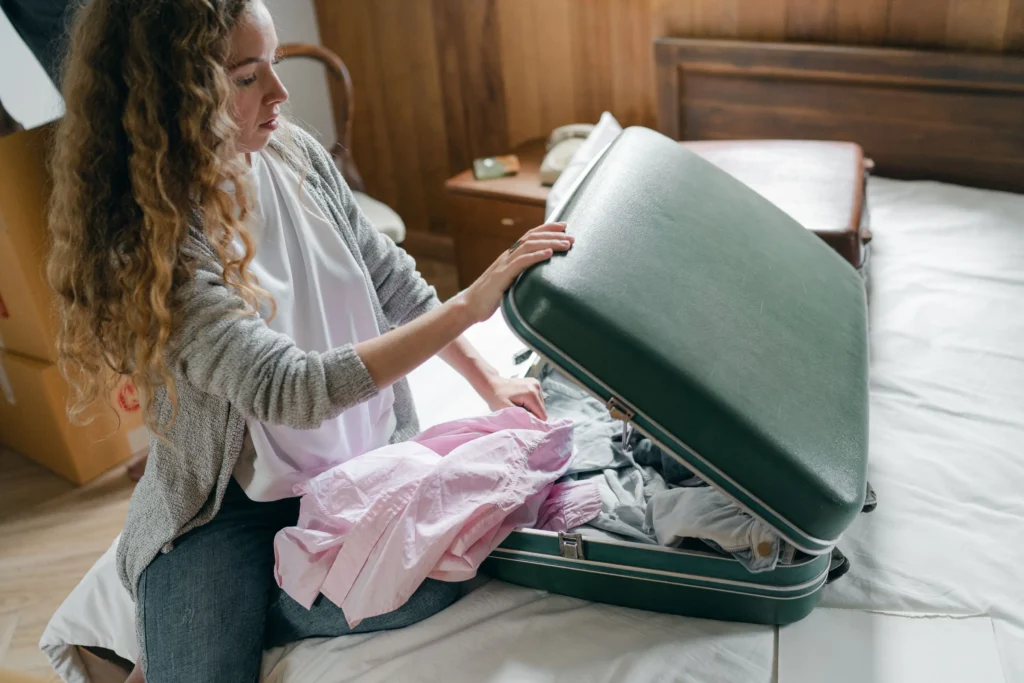
The morning before a trip has its own kind of light. Soft and slanting, it falls across the open suitcase on my bed, catching the fold of a linen shirt, the curve of a rolled scarf. The apartment is quiet. Coffee cooling somewhere. And for a few minutes, before the world wakes up, packing travel essentials feels less like a chore and more like a small ceremony: laying out the pieces of a life I’m about to carry somewhere new.
I love this part. The quiet thrill of it. The sense that the trip has already begun. But I’ll be honest with you. I didn’t always pack like this.
When the Zipper Gave Up
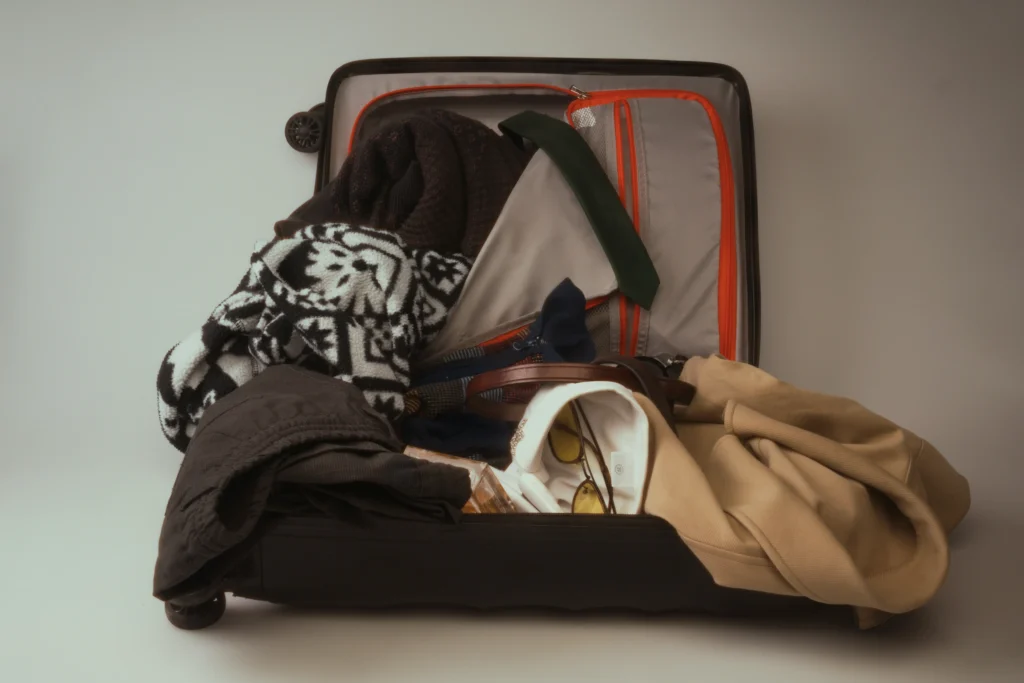
There was a trip (Lisbon, years ago) where I sat on my suitcase like it owed me money. I’d packed “just in case.” Just in case it rained. Just in case it turned cold. Just in case I somehow needed three pairs of jeans for four days.
The zipper burst near the toiletry pouch. I remember the sound.
I ended up on an airport floor in Porto, kneeling over an exploded bag, re-folding everything while strangers stepped around me. That’s the day I learned what I want to share with you now.
Fitting more isn’t about cramming. It’s about choosing well.
We call it Suitcase Tetris. Not because we’re stacking blindly, but because every piece has a place, and the goal is a clean, satisfying fit, not a bursting one.
The Suitcase Tetris Framework
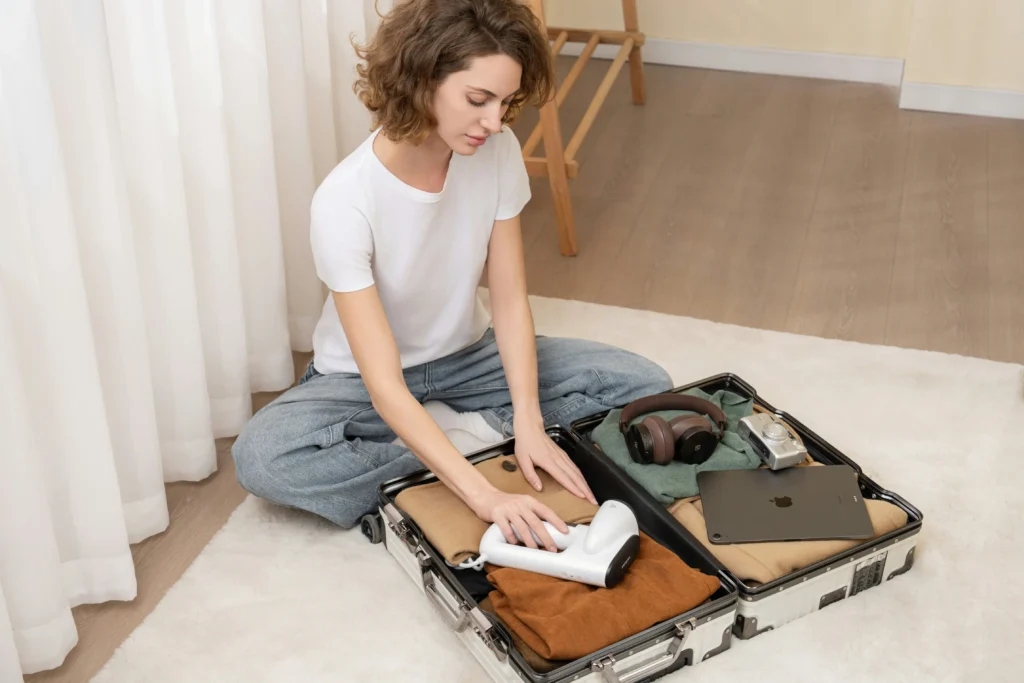
Seven steps. Follow them in order, and, I assure you with everything that I have (that you have to trust me on this) your carry-on or your travel pack will hold more while carrying less.
Step 1: Start With a Capsule
Before anything goes in the bag, build a capsule: a small set of clothes that all talk to each other.
Pick a palette of two or three colors that mix freely. One pair of trousers should work with three tops. One dress should wear as easily to dinner as it does over a swimsuit. When everything coordinates, you pack fewer pieces and still get more outfits.
Tip: Choose fabrics that forgive you. Linen, merino, and knits breathe, resist wrinkles, and air-dry overnight. A linen set that’s soft by morning is worth more than three cotton shirts.
Step 2: Wear Your Bulky Wins
The heaviest, bulkiest things shouldn’t live in your suitcase at all. They should live on your body.
Travel in your boots, not around them. Wear the chunky sweater and the heavier jacket to the airport. A jacket with deep pockets becomes free storage: a book, your charger, a snack all tuck away without touching your bag.
Surprising tip: A structured coat can be worn and used as a pillow on the plane. You’re not just wearing it. You’re saving space and buying comfort in one move.
Step 3: Build a Base Layer
Think of your suitcase like a garden bed. You want flat, dense things on the bottom.
Lay down jeans, books, and your flattest items first, filling the base evenly so nothing shifts. This creates a stable foundation and keeps the bag balanced when you carry it. Uneven packing is what makes a suitcase feel heavier than it is.
Step 4: The Cube System
Packing cubes only save space when you actually compress them. Loosely filled, they waste room. Filled and zipped tight, they turn soft chaos into neat, stackable bricks.
Here’s a layout I trust:
- Cube A (tops): rolled shirts and tees, packed snugly side by side
- Cube B (bottoms + layers): trousers, a light knit, sleepwear
- Cube C (underthings + swim): socks, underwear, swimsuit, one packable tote
Three cubes. Three categories. When you land, you unpack in seconds and know exactly where everything lives.
Surprising tip: Roll for tees and casual wear, but fold structured pieces like blazers or button-downs. Rolling everything is a myth. Some fabrics crease more when rolled.
Step 5: Fill the Micro-Spaces
This is where the real magic hides. The small gaps.
Stuff socks and chargers inside your shoes, it saves space and helps the shoes keep their shape. Slip a rolled belt inside a hat to hold its form. Tuck a tech pouch into the corner gaps the cubes leave behind. Sunglasses go inside a shoe, wrapped in a sock, safe from being crushed.
Nothing empty. Every corner earning its keep.
Step 6: Toiletries Without the Chaos
Toiletries are where trips go wrong. A leaking bottle can ruin a whole cube.
Decant into small refillable containers, you rarely need a full bottle for a week. Better yet, go solid: shampoo bars, solid perfume, a bar of soap in a tin. Solids don’t spill, don’t count against liquid limits, and last far longer than you’d expect.
Tip: Lay plastic wrap over an open bottle before screwing the cap back on. It’s a quiet little trick against cabin-pressure leaks.
Step 7: The Remove 20% Rule
Once you think you’re done, take everything out and remove a fifth of it.
Yes, really. That’s the anti-overpacking rule. Nearly every time, the things you pull out are the “just in case” items: the duplicates, the maybe-outfit, the shoes you’d wear once. Pack for re-wear, not for every imagined scenario. You can do laundry on the road. A sink and a travel clothesline cost almost nothing and free you completely.
And leave that 20% empty. That’s the space where the trip lives: the market ceramics, the bottle of local olive oil, the postcard you didn’t plan to buy.
A Sample 5-Day Carry-On Capsule
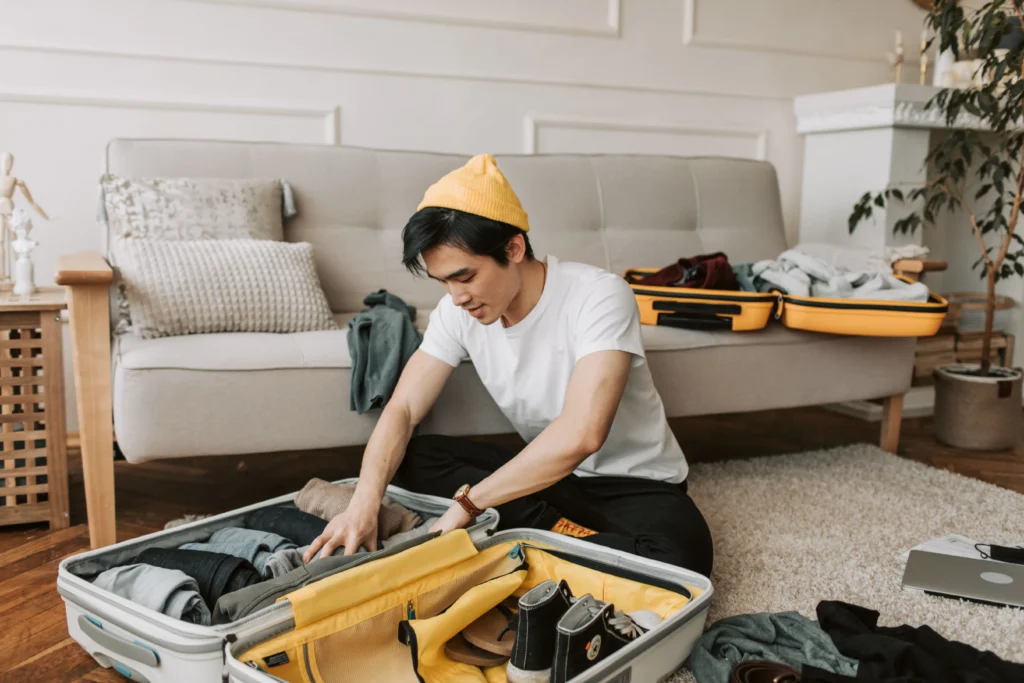
- 3 tops (mix of casual and slightly dressier)
- 1 pair trousers + 1 pair shorts or a skirt
- 1 dress or one versatile “nice” piece
- 1 light knit or cardigan
- 1 jacket (worn, not packed)
- 1 pair walking shoes (worn) + 1 pair sandals
- Sleepwear, swimsuit, underthings, socks
- 1 scarf that doubles as a wrap, blanket, or picnic cloth
Mix these, and five days become effortless. Add a laundry wash midweek, and they’d carry you through ten.
Light Luggage, Lighter Mind
Here’s what I’ve learned since that airport floor in Porto.
The lighter I pack, the more present I am. I move faster through stations. I don’t guard a heavy bag. I say yes to the longer walk, the earlier train, the detour I didn’t plan for.
Packing well isn’t about fitting your whole life into a carry-on. It’s about trusting that you need less than you think; and leaving room for what you’ll find.
So pour the coffee. Let the morning light in. Lay your pieces out slowly.
The trip has already begun.