You could walk past it and never know. Millenia Walk hums the way malls do: footsteps, air-conditioning, the soft roar of a Tuesday finding its rhythm. Then, tucked into a corner near #01-09, there’s a passageway. A discreet threshold. You step through it, and the mall falls away behind you like a held breath finally let go.
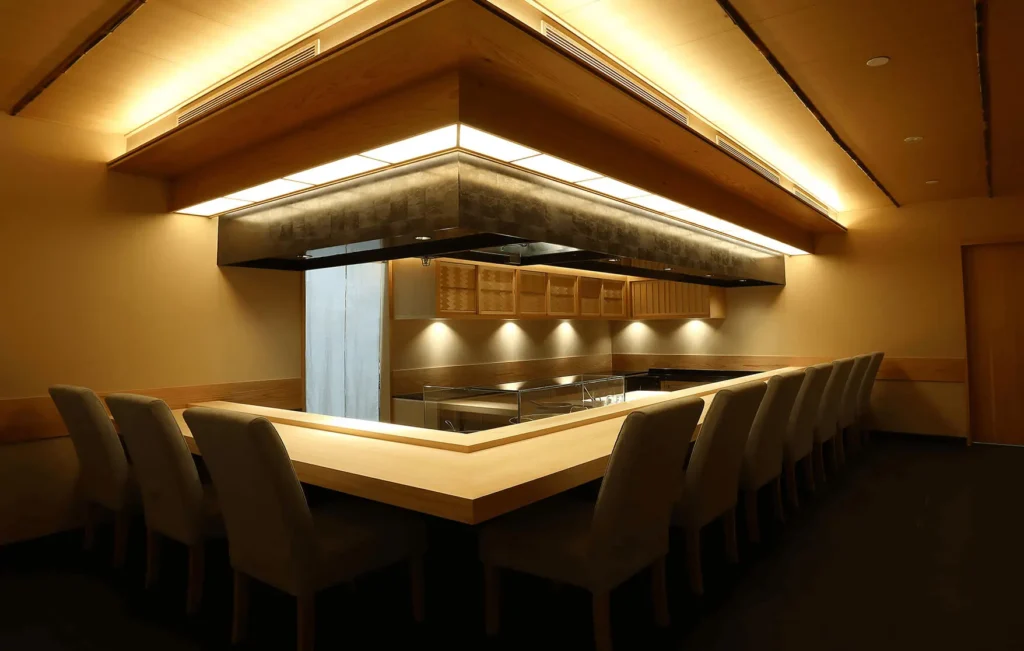
Inside, the light softens. Hinoki wood and granite. Washi paper catching the glow. Ten stools face a counter, and behind that counter, a fryer sits at the center of everything, steady as a heartbeat. There’s a sound before there’s a taste here: the gentle sizzle of something being lowered into oil. Not the aggressive spit of a busy kitchen. Something quieter. Patient.
And the smell. Or rather, the absence of the smell you expect. No heavy blanket of frying oil. Just something clean, almost sweet, the way good oil smells when it’s kept honest and the temperature is treated with respect.
Come sit with us. There are only ten seats. Tonight, one of them is yours.
The Batter That Vanishes
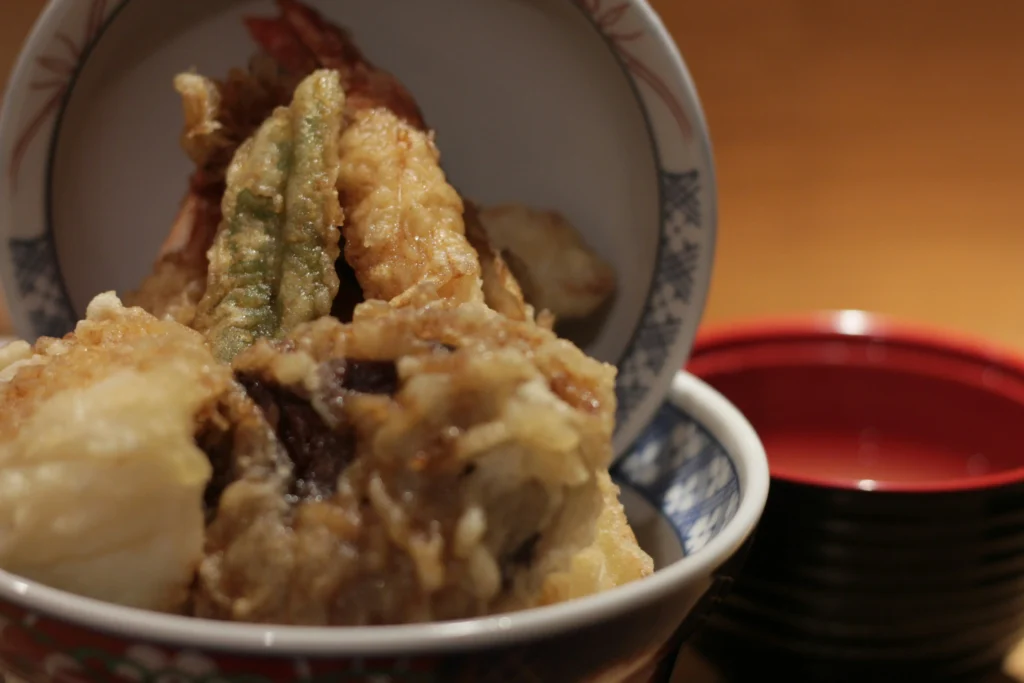
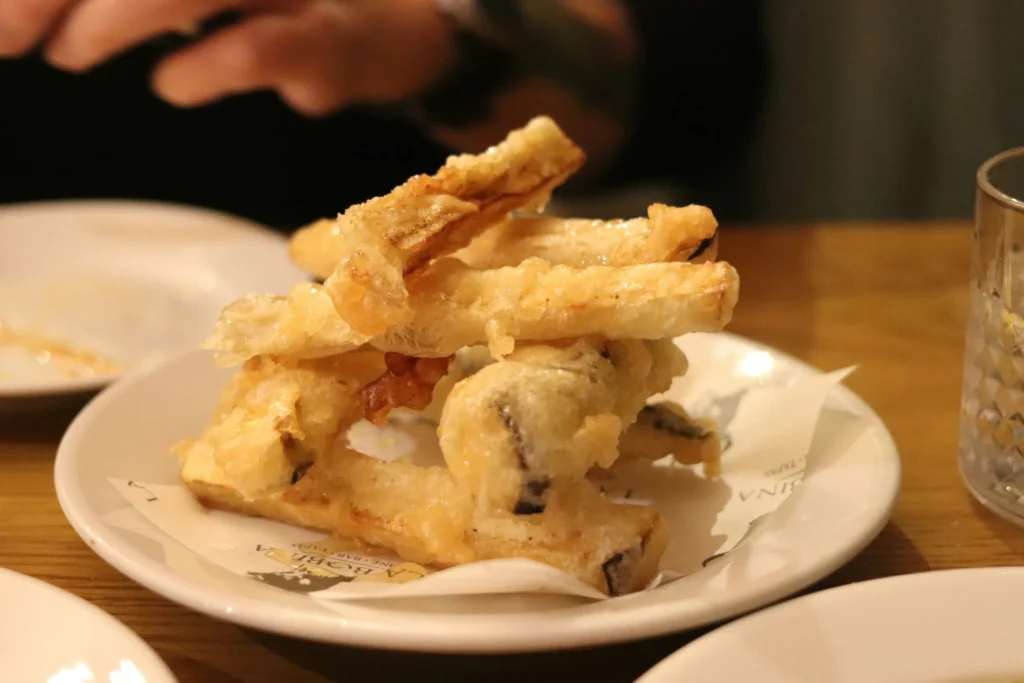
Tempura, done this way, is not about the batter. It’s about what the batter protects. Chef Shima works with a coating so thin it seems almost theoretical. When a piece arrives (fried and set before you in the same breath, still crackling) you bite through it, and it shatters like thin glass. So light it feels less like a crust and more like a crisped whisper. Then it vanishes. What’s left is the thing itself: the seafood, the vegetable, the pure sweetness of an ingredient that was never buried in the first place.
This is the Japanese philosophy of tempura at its most disciplined. The batter isn’t a disguise. It’s a lens. Every piece asks for a different thickness, a different oil temperature, because a scallop is not a prawn and a prawn in spring is not a prawn in autumn. The chef calibrates all of it (moisture, heat, timing) so that the ingredient arrives at its own particular peak, and nothing more is added than needs to be.
There is a kind of confidence in cooking this way. You cannot hide behind heavy sauce or dramatic flourish. The skill lives in the small differences. Between crisp and brittle. Between cooked and precisely cooked.
The Bites That Stay: What Lingers After the Sizzle
The tiger prawn comes first among the ones you’ll remember. Kuruma ebi, presented in successive preparations, the batter weight shifting from piece to piece. You notice it, the way one bite reads sweeter, another crisper, the same prawn revealing different faces. It’s succulent, distinctly of the sea, and it arrives hot enough that the fragile shell is still cracking as it reaches you.
Then the scallop. Hotate, plump, a single piece served with a sweet plum paste that lifts rather than covers. The contrast is the whole point: a weightless, crackling exterior giving way to a center still moist, still tender, still tasting like the ocean it came from. Nothing about it is loud. Everything about it is exact.
There’s uni, too, spooned onto seaweed and fried: creamy and sweet at the core, the nori gone crisp around it. A meeting of soft and sharp that lingers longer than you’d think a single bite could.
The Last Warm Notes
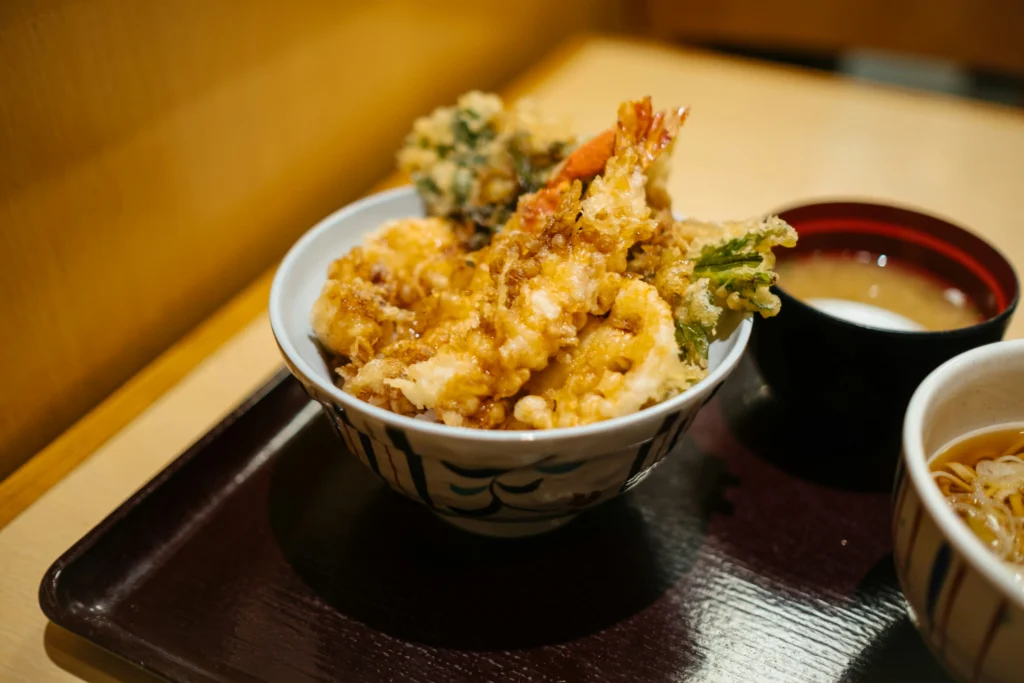
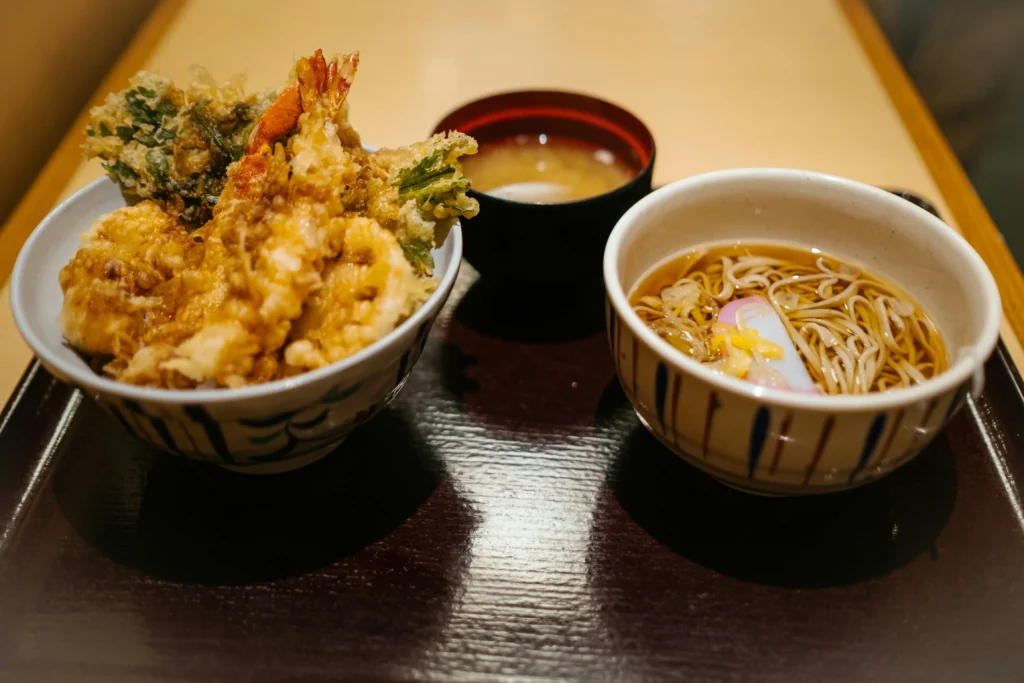
And near the end, the choice: tendon or tencha. Both built on a kakiage, a disc of chopped prawn and vegetable. The tendon comes richer, dressed in a house sauce made from prawn-head stock, dashi, sake, and brown sugar; deep and warming. The tencha is gentler, more restorative, the kakiage resting over rice in a clear ichiban dashi with shoyu. After a procession of individual fried pieces, this is the course that makes the meal feel whole. Choose the tencha if you want to leave feeling calm rather than full.
If there’s dessert to remember, it’s the sweet-potato tempura with milk ice cream. The potato is steamed for hours, rested, then fried; so instead of dry or fibrous, it turns soft and creamy inside its crisp shell. Cold dairy against warm potato. Simple. It works because it’s simple.
The People, The Pace: Service at the Speed of Attention
The room is quiet enough to hear yourself think. The most prominent sound is still the fryer, working away. There’s no music competing for your attention, no clatter, no theater. The chef pours his focus into the oil, and the pace follows your eating, not a clock. A plate is cleared before you notice it was empty. Tea is refilled quietly. When a seasonal ingredient appears, someone explains where it came from (which region of Japan, why it’s here now) without turning it into a lecture. The chef’s wife helps with the hospitality, with translation, with the sense that you’re a guest in someone’s careful world rather than a customer being processed.
Attentive, but almost invisible. That’s the best way to describe it.
You should know the meal is slow. That’s not a flaw; it’s the design. Lunch runs an hour and a half to two hours. Dinner can stretch to three. If you’re the sort who eats in a hurry, this may test you. If you can settle into it, the rhythm becomes part of the pleasure. A small tip: the air-conditioning runs cold, so bring a light layer if you feel the chill easily.
Finding Your Way to Ten Seats
A few honest notes, so the evening unfolds the way it should.
Lunch is S$180++ per person; roughly S$216 once service charge and GST are counted. Dinner is S$400++, landing near S$480 before drinks. A wagyu supplement runs S$70++, and sake will lift the bill further. This is degustation dining, not abundance. The portions are restrained by intention. Come understanding that you’re paying for precision, not volume, and the value makes sense. Come expecting a hearty feast, and you may leave puzzled.
Lunch seatings run Tuesday, Wednesday, and Friday through Sunday, 12:30 to 3pm. Dinner is Tuesday through Sunday, 6:30 to 10pm. With only ten seats per service, a reservation isn’t a suggestion; it’s essential. Book through TableCheck, and do it early for weekends or anything you’re celebrating. Mention allergies ahead of time, because a tempura omakase leans hard on seafood and a chef-chosen seasonal sequence.
Getting there is easiest from Promenade MRT, a short walk into the Marina Centre district. Millenia Walk has parking if you’re driving. And once you’re inside the mall, allow a few extra minutes to find that quiet entrance. Half the pleasure is the passage from noise into stillness.
A Lesson in Doing Less: What the Batter Teaches
There’s a truth hidden in cooking this light.
To let an ingredient speak for itself, you have to trust it completely. No heavy sauce to fall back on. No crowd of flavors to hide the flaws. Just heat, timing, and the patience to do very little, very well.
Travel, at its best, asks the same of us. To stop adding. To stop performing. To sit at a counter for three unhurried hours and pay attention to small differences, a batter that shatters instead of clings, a prawn caught at the exact moment of its sweetness, until the small things start to feel like the only things that matter.
You leave Tenshima lighter than you arrived. Not because you ate little, but because something quiet stayed with you.
Come when you’re ready to slow down. The oil is warm, the seat is waiting, and the batter has nothing to hide.
For more options on the wonders of Japanese cuisine in Singapore, have a look at our article: A Passport Through Japan: Flavors from the Best Japanese Restaurants Singapore and be introduced to more restaurants that will fit your everyday taste!