I smelled the trail before I understood it.
Sulfur, faint at first, then less faint. The kind of smell that makes you check the bottom of your shoe, then glance at the nearest stranger, then accept that the earth itself is responsible.
Trees closed in on both sides. Somewhere below, water was moving. I couldn’t see it yet, but I could hear it, a low, steady running that kept going under everything else.
I had been narrating the walk in my head the whole way. Left foot. Mind the root. Is that steam or is that my imagination? Did I pack the small towel? Then the sound of the water got louder, and for once I let something else do the talking.
The Trail Into Oyunuma
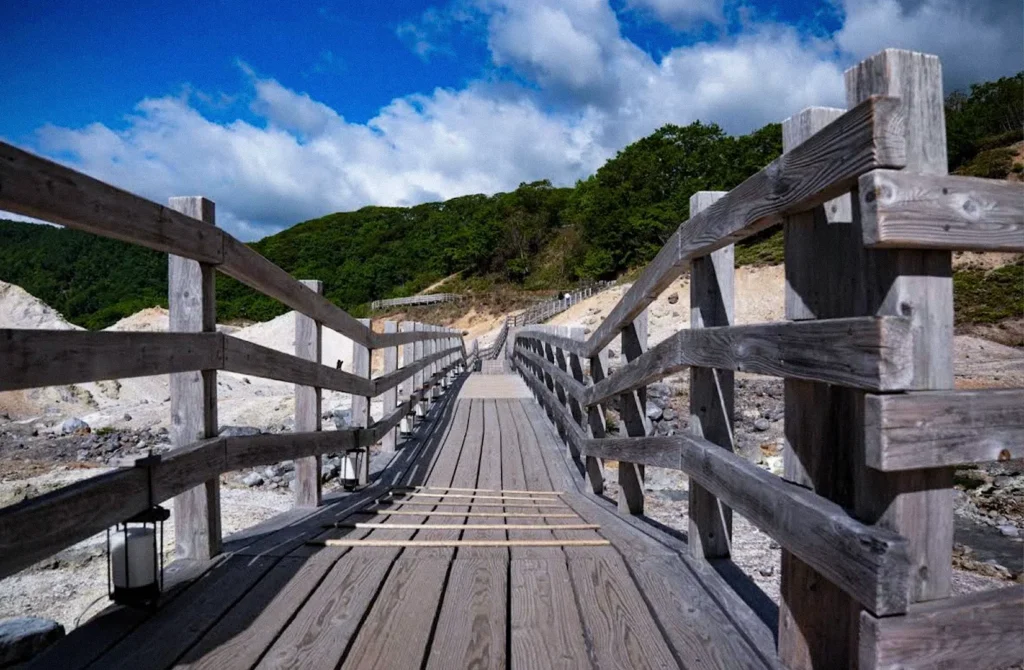
This was a single afternoon in Noboribetsu, and I had given it one job: walk the Oyunuma trail, find the river footbath, and sit down.
The forest path in this part of Noboribetsu Onsen connects to a network of walking trails that link Oyunuma with Jigokudani, the steaming valley most visitors come to see first. I took my time. That is a polite way of saying I stopped often, partly to look and partly to breathe.
The sulfur came and went with the breeze. Underfoot, the ground felt ordinary. It was only the air that reminded me I was walking across something very much alive, since the Jigokudani also known as the hell valley is an active geothermal crater in Hokkaido.
A Pond Too Hot to Touch
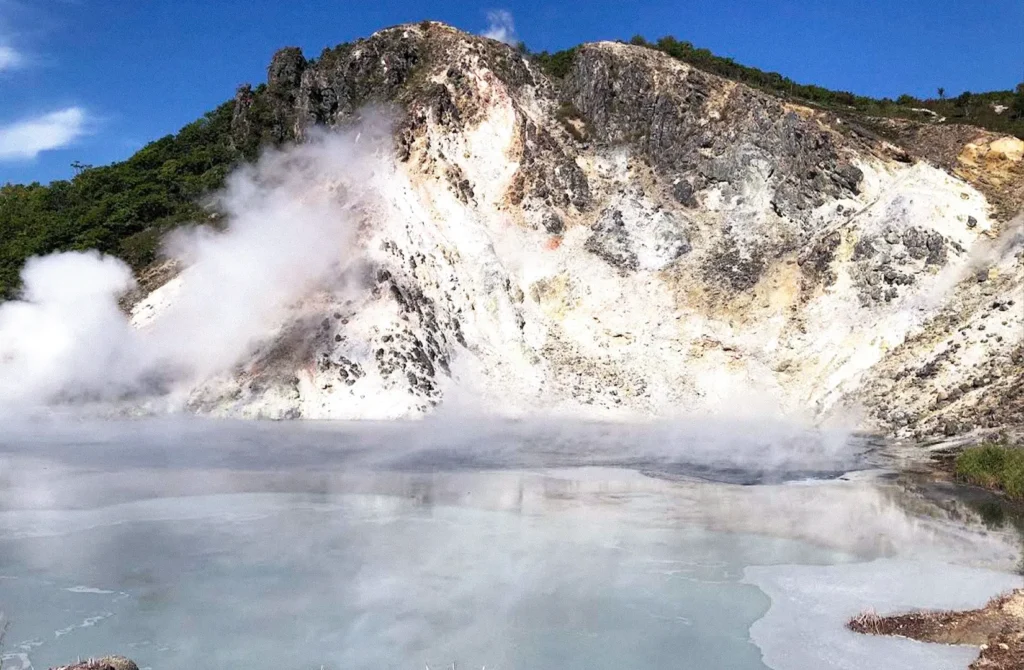
Then the trees opened, and there was Oyunuma.
I had read about it before I came, and the facts kept running through my head as I stood there. Oyunuma is a gourd-shaped geothermal pond, formed within the remains of the Kuttara volcano’s caldera. It measures roughly a kilometre around. At the bottom, sulfur springs gush at about 130°C. Even the surface sits at around 40 to 50°C.
So this is not a place for bathing. Not a toe, not a fingertip, not a brave little test. I stayed on the path and kept my hands in my pockets, which, for a person who touches everything, felt like an accomplishment.
What struck me was how still it seemed for something so hot. I kept waiting for drama. The pond did not oblige. It simply sat there, quietly being far more powerful than me.
I took one photo, looked at it, and put my phone away. It didn’t hold the smell, or the strange feeling of standing beside heat that comes from that far down.
Following the Warm Water
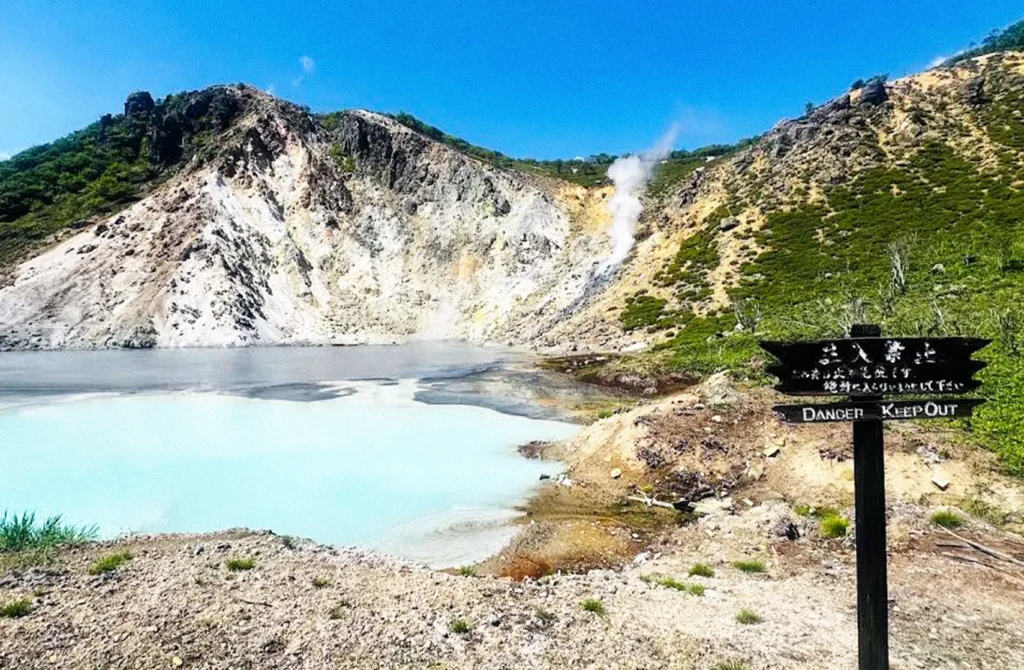
The water that leaves Oyunuma runs downstream as the Oyunuma River. That flow is what makes the footbath possible. The pond itself stays off-limits. The river, further along the Oyunuma River exploration trail and near Taisho Jigoku, is where you’re allowed to sit.
For more travel inspiration and destination guides beyond Hokkaido, explore Bites and Travel for ideas on where to go and what to experience next.
I followed the sound.
The path carried on through the trees, and the running water grew louder until it was the only thing I could hear clearly. My calves had started to complain, politely at first, then with real conviction. I told them we were nearly there. I had no idea if that was true.
Then I saw the river, and the place set aside for people like me.
The Slow Business of Taking Off My Shoes
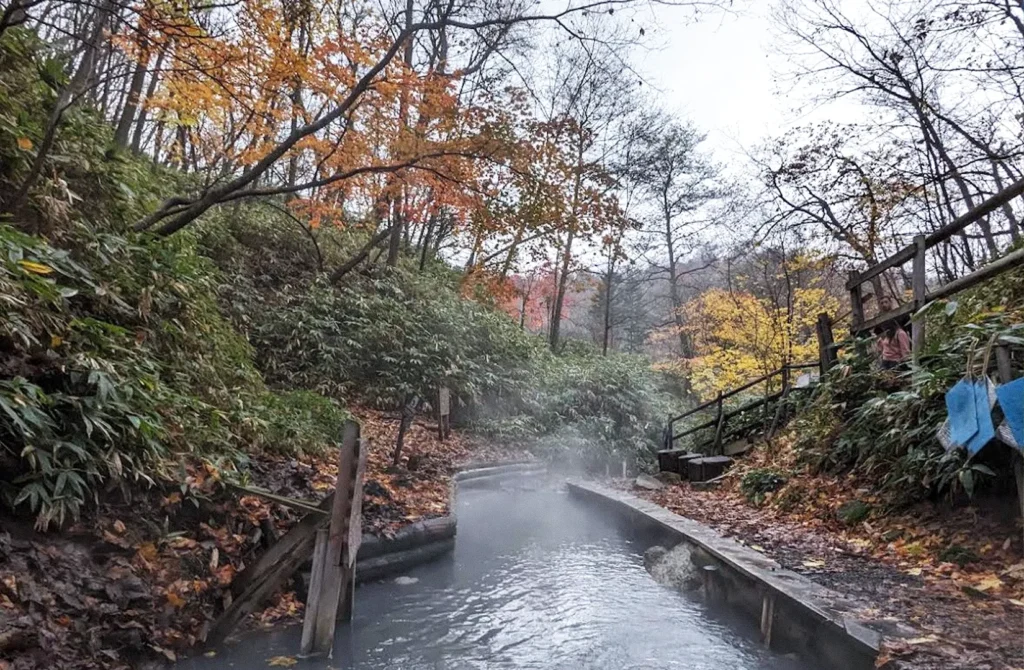
I sat down on the edge and looked at my shoes for a moment, as if they might take themselves off.
They didn’t. I untied the laces slowly. The left one had knotted itself during the walk, the way laces do when you’re tired and in a hurry to stop being tired. I worked it loose with my fingernails.
Shoes off. Then socks, peeled down and folded, then unfolded and refolded more neatly, because apparently I needed to stall.
The air hit the soles of my feet. They looked pale and slightly offended.
I checked the edges of the designated bathing area. I read the signs posted nearby. Only then did I lower my right foot, slowly, toes first.
Warm.
Not the warmth of a bath drawn at home, where you’ve decided exactly how hot it will be. This was the river’s warmth, and the river hadn’t asked my opinion. I waited. My foot adjusted. I lowered the other one.
Both feet in. Then my ankles. The water moved past them, steady and unbothered, carrying the faint smell of sulfur from somewhere upstream.
My shoulders dropped before I had decided to relax. Apparently my feet had made the decision for both of us.
When I Finally Stopped Keeping Score
I had a list in my head for the rest of the day. I always do. What to see next, how long to stay, whether there was time for one more viewpoint before it got late.
I noticed that I’d stopped reviewing it.
My attention had settled on a small swirl in the water near my left ankle, where the current curled around a stone and came back on itself. I watched it for a long time. Long enough that I can’t tell you how long.
There is a voice in me that likes to keep score. It wants to know whether I have walked far enough, seen enough, done enough to deserve a sit-down. I have listened to that voice through a lot of airports.
At the river, it went quiet. Not because I had earned anything. I had walked a forest trail at a gentle pace and stopped to take one photo. The rest simply happened, the way the water simply ran. Nobody was checking.
My hands, which had been gripping the edge, opened in my lap. My breathing slowed down to match nothing in particular. The forest went on making its small sounds. A leaf turned somewhere above me. The water kept moving.
I thought about getting up. Then I didn’t.
A Few Things to Know Before You Go
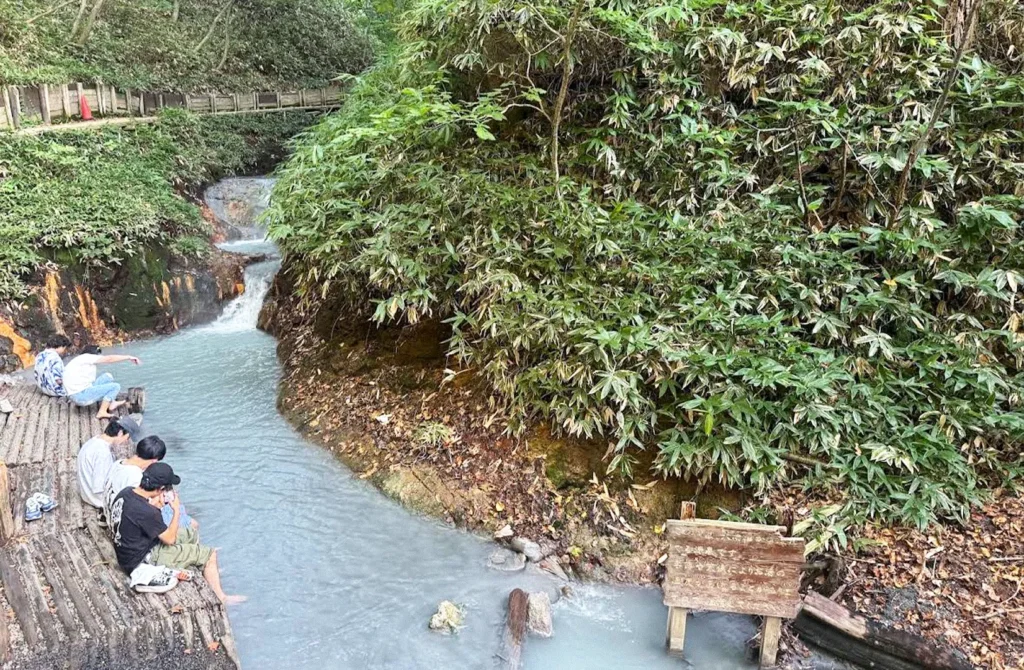
If you’d like to walk this way yourself, the footbath sits along the Oyunuma River exploration trail in the Noboribetsu Onsen area, near Taisho Jigoku. It works well as a slow add-on after Jigokudani and Oyunuma, since the trails connect.
A few things I’d tell a friend. Wear shoes you can walk in and take off easily. Bring a small towel, because your feet will want one and your socks will not thank you otherwise. Check the latest trail and access information from Noboribetsu’s local tourism sources before you set out, since conditions can change.
Most of all, stay on the paths and use only the designated footbath area. The pond and the ground around it are geothermal, and the water is far too hot to touch. Follow the posted signs, every time.
Carrying the Warmth Home
Eventually I lifted my feet out. They were pink and heavy, and the air felt cooler on them than it had before.
I dried them badly with my towel and pulled my socks back on. The sulfur smell came with me, folded into the cotton.
Experiences like this make me miss Japan even more when I’m back in Singapore. Thankfully, exploring Japanese food spots closer to home is one way to revisit a little of the country’s culture.
On the walk out, I could still hear the river behind me for a while. Then just the trees.
And with every step, a little warmth, still held in the soles of my feet.