The road out to Sentosa quiets the closer you get.
By the time our car turned onto Bukit Manis Road, the noise of the city had fallen away entirely; replaced by the hush of greenery, the low hum of insects somewhere in the dark, and the soft glow of Raffles Sentosa gathering the last of the evening light. It felt less like arriving at a restaurant and more like being let in on something.
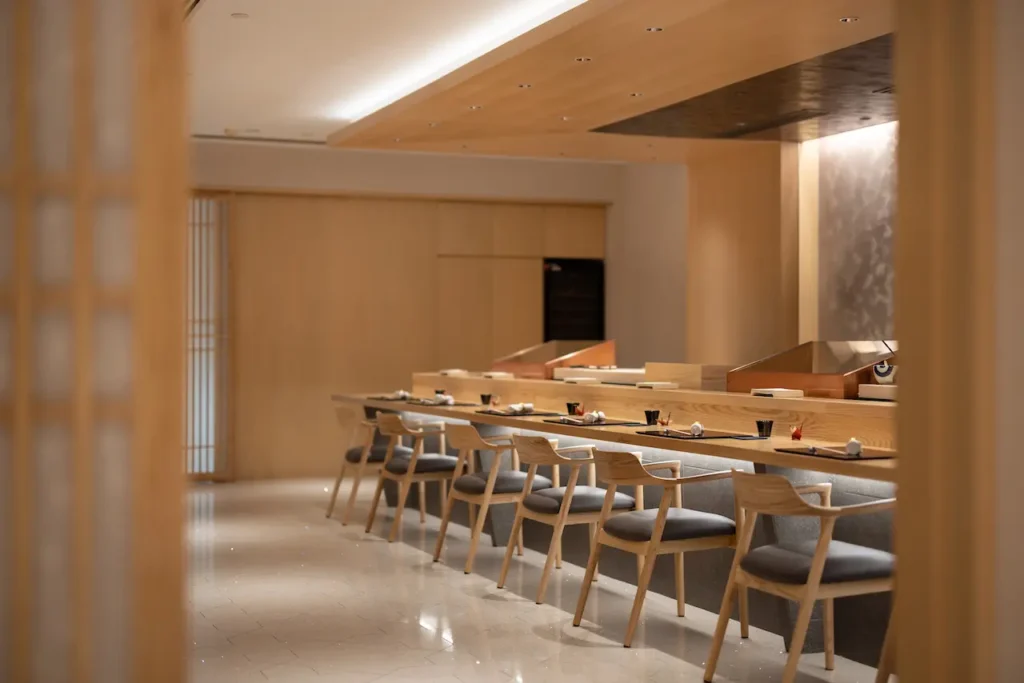
Iyasaka by Hashida waits at the end of that stillness. Twelve seats. A counter. A room that seems to exhale slowly.
We came in from the warm night air, and the door closed behind us on the noise of everything else. A greeting, quiet and unhurried. A gesture toward the counter. And then the sense (before a single plate arrived) that the evening ahead would ask us to pay attention.
Where the Evening Finds Its Ritual
There is a particular kind of silence in a room built for only twelve people. Not empty. Not awkward. The opposite, really, a silence that feels held, the way a good conversation has pauses in it. We took our stools at the counter, close enough to see the chefs’ hands, close enough to hear the faint sound of a knife meeting the board and the whisper of rice being shaped.
The counter is the whole point here. You don’t sit at Iyasaka to be served from a distance. You sit to watch. The chefs work with a focus that borders on the surgical; one account we’d read mentioned tweezers for the final placement of a garnish, and we understood why once we saw the care with which each plate was assembled. Nothing is rushed. Nothing is careless.
Precision, at Iyasaka, isn’t a marketing word. It’s the temperature of the rice. It’s the timing between courses, each one arriving at the exact moment the last had settled. It’s the way a chef pauses, considers a piece of fish, and adjusts something invisible to us before sliding it across the counter.
We settled in. We let the room set the pace.
A Sequence Measured in Moments
Omakase means you surrender. You hand the evening to the kitchen and trust it to know better than you do.
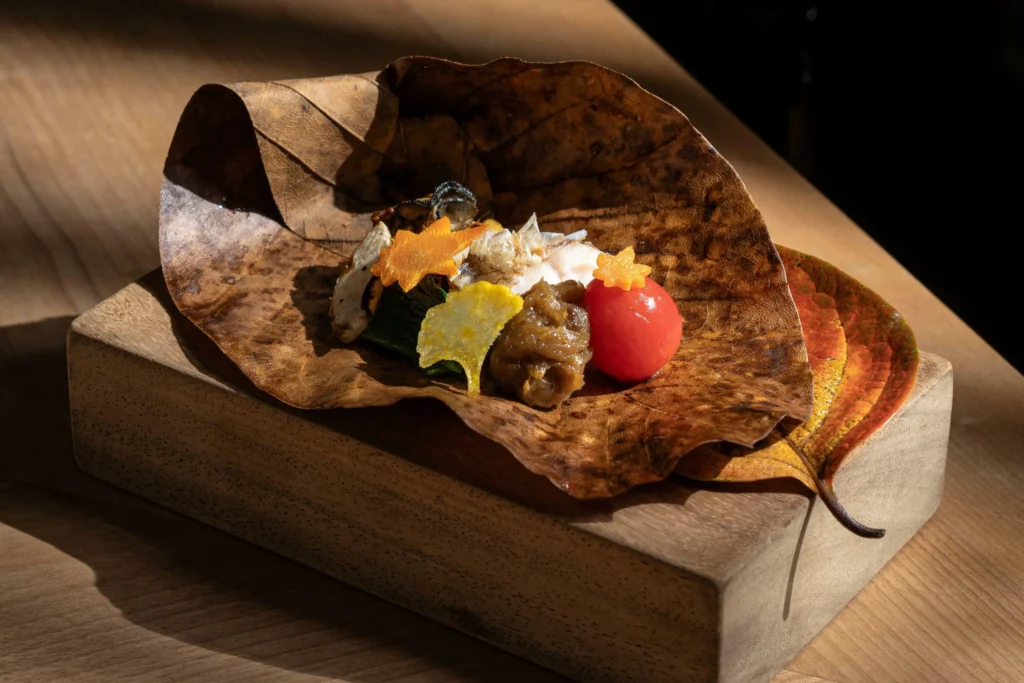
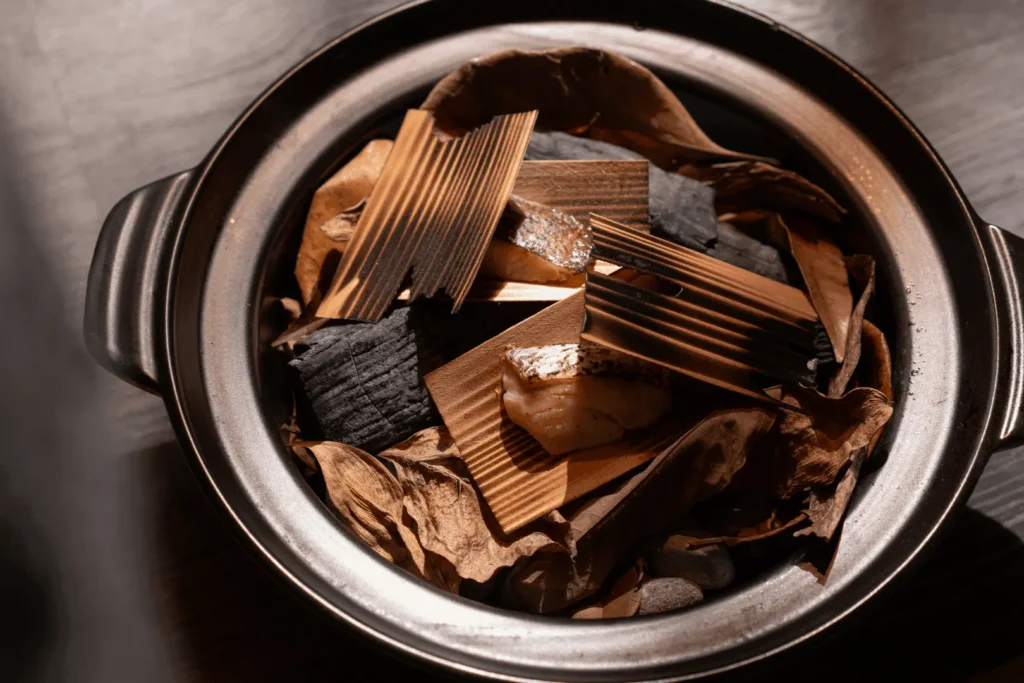
What arrived was a parade of small, seasonal dishes: restrained portions, each one a complete thought rather than a mouthful of many. The menu shifts with what the sea and the season offer, so we won’t pretend to give you a fixed list. We went there during dinner and I would say that it really is curated perfectly for us. But the rhythm was clear from the first plate: variety over volume, clarity over spectacle.
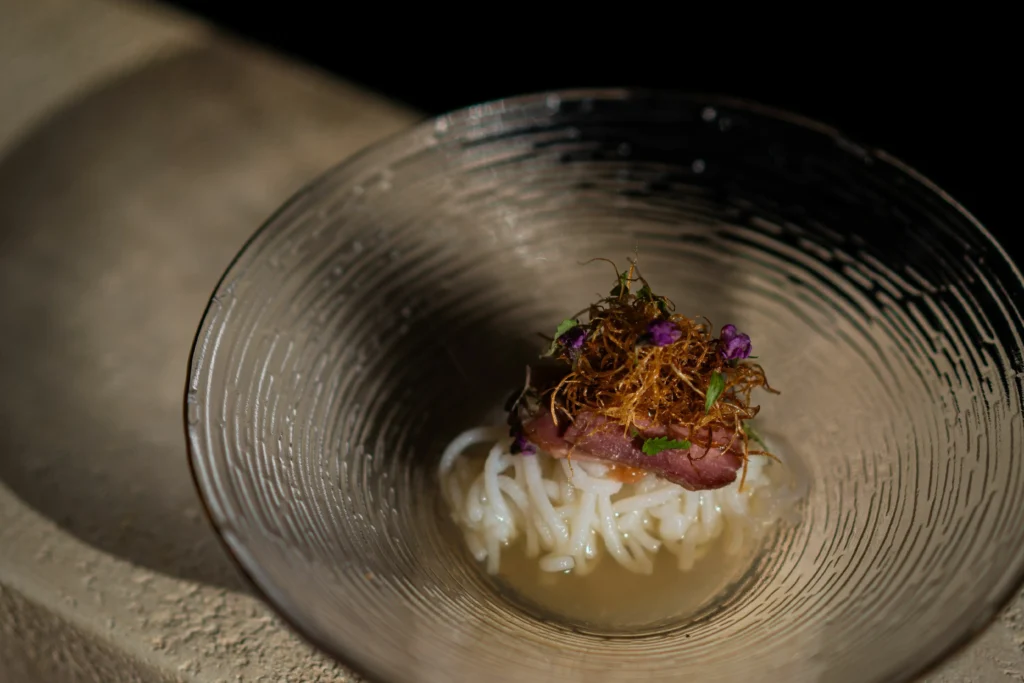
Early courses came delicate and cool, bite-sized, plated with a minimalism that left nowhere to hide. When a dish is this pared back, every element has to earn its place. The knife work showed itself here; clean edges, exact cuts, fish handled as though it were something borrowed and precious.
From Sea to Counter
Then the counter turned to sushi.
This is where sitting close pays you back. We watched each piece take shape: the rice pressed just enough and no more, the fish laid over it, a brush of something, a finishing touch placed with tweezers. The fish felt cool and clean on the tongue, the rice still warm beneath it: two temperatures meeting in the same breath. There’s a quiet drama in receiving a piece of sushi directly from the hands that made it, seconds old, and eating it before the warmth of the rice fades.
The Language of Seasoning
What lingered, beyond the food itself, was the attention paid to seasoning and provenance. Iyasaka offers QR-linked information on its ingredients (the salt, the wasabi, the sudachi lime, the botanicals) so you can trace where each came from. It’s a thoughtful gesture, and a telling one. This is a kitchen that seasons with acidity and subtlety rather than heavy sauces, that wants you to notice the difference a particular salt makes, or the bright, sharp lift of sudachi over something richer.
We grated our attention onto those small details the way the chefs grated fresh wasabi: slowly, deliberately. A chef explained the origin of one ingredient in a few unhurried words, then stepped back. No performance. No narration over every plate. Just enough to let you understand what you were tasting, and then silence again, so the food could say the rest.
By the end, the small dishes had added up to something larger than any single course. That’s the trick of omakase, and Iyasaka understands it well: satisfaction arrives cumulatively, in the sequence, not in the size of any one plate.
The Luxury of Less
Plenty of restaurants call themselves intimate. Twelve stools at a counter is a different thing entirely.
There’s no hiding at Iyasaka, and no distraction. No large dining room’s chatter, no theatre of flames and flourish. The theatre here is smaller and more honest, a pair of hands, a piece of fish, a garnish placed just so. You are near enough to see it all, and the nearness changes the meal.
What separates this from other omakase evenings we’ve spent isn’t luxury for its own sake. It’s the restraint. The willingness to serve you less, more carefully, and trust that you’ll understand why. For diners who measure a meal by abundance, that restraint may frustrate. For those who find pleasure in craft (in noticing the temperature, the timing, the seasoning held back on purpose) it’s the whole reason to come.
A Few Details Before the First Course
A few honest, practical notes. Reserve well ahead. Twelve seats leave almost no room for spontaneity, and an omakase kitchen buys and prepares for confirmed diners. A weekday will feel calmer and easier to book than a weekend. Treat it as luxury-hotel omakase and budget generously; pairings and premium supplements will lift the bill further.
Iyasaka sits inside Raffles Sentosa Singapore at 4 Bukit Manis Road. The resort is secluded rather than near an MRT stop, so a taxi or ride-hail is the simplest way in. Confirm the drop-off point and entrance when you book. And speak to the restaurant about any dietary needs (raw fish, shellfish, gluten) ahead of time, which actually is reminded during your reservation online, not on the night. A kitchen this precise will want to plan for you properly.
What Remains After the Counter
Some Japanese meals fill you up and fade by morning.
This one stayed with us, not for its extravagance, but for its quiet. The clean sound of a knife. The warmth of rice under cool fish. The chef’s small nod as a plate slid across the counter**. Details you only catch when a room asks you to slow down and pay attention.
Iyasaka by Hashida isn’t for every evening, or every mood. It asks you to give up control, accept smaller portions, and pay for craftsmanship rather than plenty. But if you love food that reveals itself through care, if you’re marking an anniversary, or simply want to sit close to people doing one thing beautifully, come sit at this counter.
Bring your attention. The rest is taken care of.
For more on Japanese cuisine in Singapore, come take a taste with A Passport Through Japan: Flavors from the Best Japanese Restaurants Singapore. Until our next adventure!