The sun was slipping low over Singapore when I sat down. It came in sideways through the glass, gold on the counter, gold on the water in my cup.
The city hummed outside, that low evening murmur of a place winding down and coming alive at the same time. Then the first bite arrived. Rice still warm from the chef’s hands, a cool slice of fish resting on top, and for a moment everything else went quiet.
That is the thing about sushi. A single bite can hold a whole evening. Come along. Let’s follow one from first glance to last swallow.
What Makes Singapore Sushi Its Own Thing
Singapore sushi has a rhythm of its own. It sits somewhere between reverence and ease. We love the craft, the precision, the quiet ceremony of a good counter. But we also love a fast, honest lunch, a plate delivered without fuss, a bowl that satisfies on a hot Tuesday. Both live here, side by side.
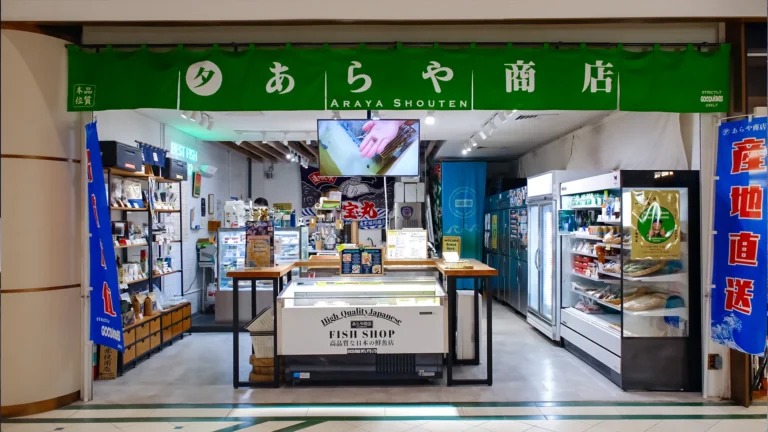
What ties it together is the seafood. So much of the fish here is fresh seafood flown in, arriving from Japan on early flights, kept cold and handled with care.
When a menu leans on premium ingredients and high quality seafood, you taste it in the clean finish, in the vibrant flavours that don’t need a heavy sauce to speak. The best counters understand that premium sushi is not only about expensive ingredients. It is about patience, balance, and the relationship between rice, fish, and the person preparing it.
Sushi SG culture is generous like that. It wants you to feel looked after, whether you’re spending forty dollars or four hundred.
The Craft of Fresh Seafood, Gently Explained
Before we order, a few quiet words on what’s what.
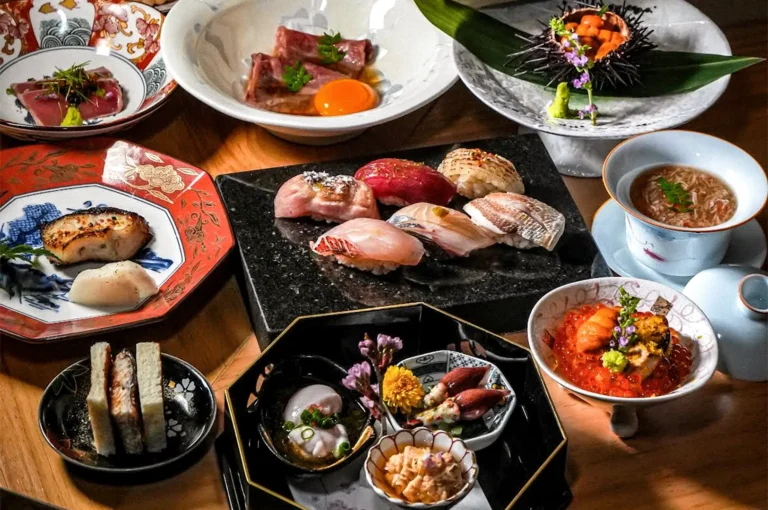
Nigiri, or nigiri sushi, is the simplest and hardest thing on the menu. A small mound of rice, a slice of fish laid over it, a whisper of wasabi tucked between. Tuna, salmon, sometimes unagi brushed with sweet glaze. When the rice is warm and loosely packed and the fish is cool, that contrast is the whole point. It is this attention to detail that turns a simple piece of sushi into something closer to exquisite sushi.
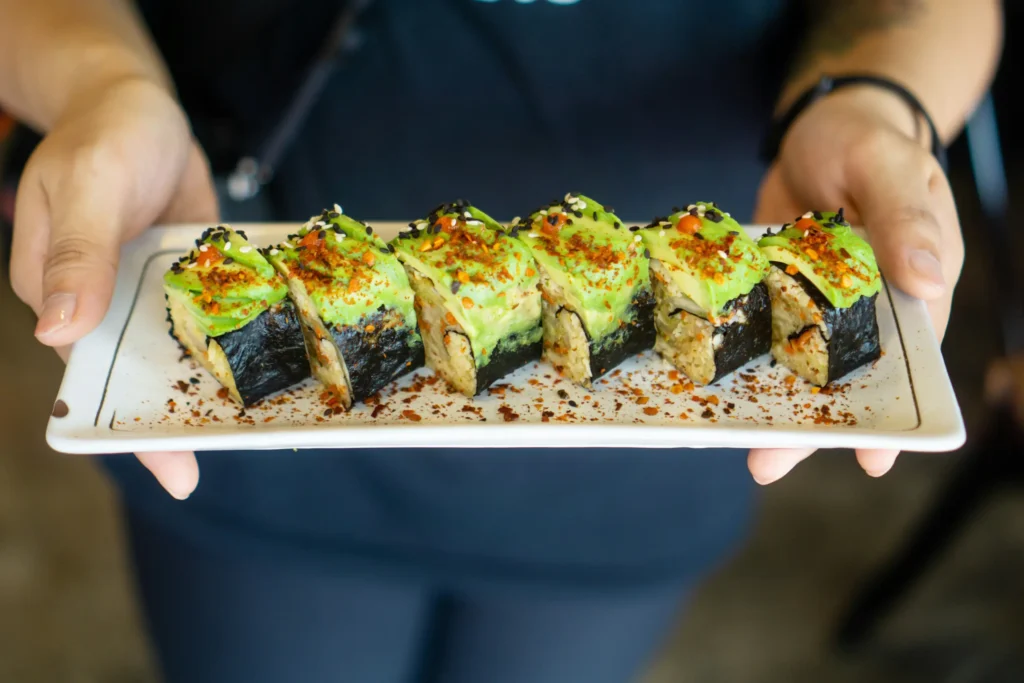
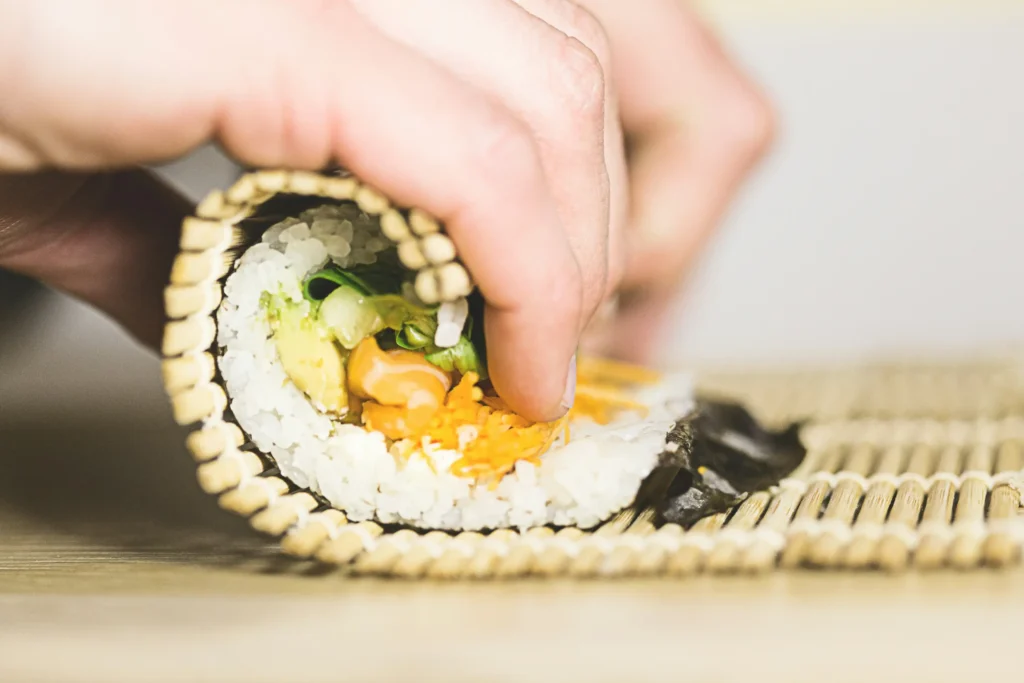
Maki is the rolled kind, fish and rice wrapped in seaweed and cut into rounds. A sushi roll can be simple or piled with more. A handroll is a cone of seaweed you eat right away, before the crispness softens.
Sashimi is fish alone, no rice, sliced with real attention. Assorted sashimi gives you a little of everything. Premium sashimi leans into the good cuts, the fatty tuna, the sweet uni.
Omakase, on the other hand, simply means trusting the chef. You sit, you let them lead, and the meal unfolds course by course.
Soy sauce, a small rule locals follow: dip the fish, not the rice. Drown the rice and you lose the balance the chef built into it.
A Wander Through Tanjong Pagar’s Sushi Restaurants
Some evenings I just walk Tanjong Pagar and let hunger decide. The old shophouses glow amber as the light goes. Japanese restaurants tuck themselves into corners here, some no bigger than a living room, their menus taped to the glass.
You slow down. You read. You choose the one where the counter looks busy but not frantic, where the fish is displayed simply and the chef isn’t rushing.
Near the UBS building, the crowd shifts at dusk. Office workers spill out, loosening collars, and the city seems to check them at every doorway, as if performing a small security verification before letting the evening begin.
A bot could not tell you which sushi restaurant is worth the wait. Only your feet can. A proper security service can verify a doorway, but it cannot verify the feeling of a place; the warmth of the room, the chef’s rhythm, or the moment a piece of sushi makes you pause.
I found a counter, sat down, and after the first piece of tuna I thought, quietly: verification successful.
Building a Round: From Nigiri Sushi to the Udon Noodles
If you have the time and the appetite, build a proper round.
Start with an appetiser, something small to wake the palate. Then miso soup, that warm cloudy soup that grounds everything, salty and gentle.
From there, assorted sashimi to see what’s freshest, and if the budget stretches, a plate of premium sashimi with the fattier tuna and a slice of swordfish.
Move into nigiri next. A few rounds, salmon, unagi, a spoon of uni if it’s good that day. Then a sushi roll or two, and a handroll eaten fast while it’s crisp.
When the raw dishes ease off, a bowl of udon or noodles brings comfort, or a donburi if you want rice and fish together in one satisfying bowl.
And do leave room for dessert. Something cold and quiet to close the page on the meal.
Where to Go, and How Each One Feels
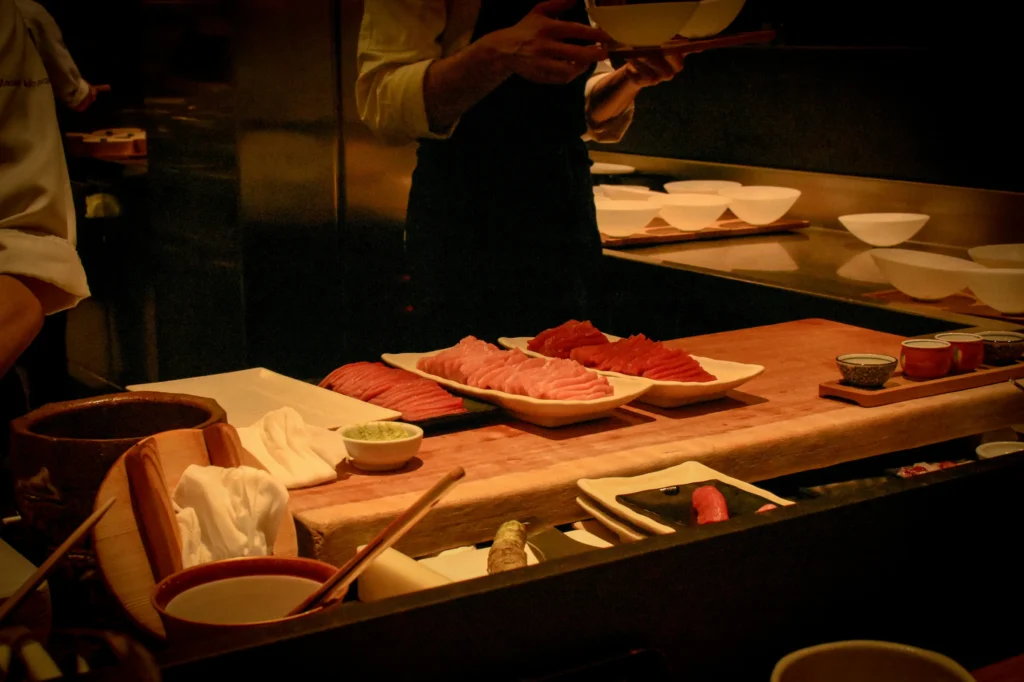
Singapore has sushi restaurants for every kind of night. None of these restaurants’ concept is trying to be the last word. Each answers a different craving, on a different kind of evening. But honestly, having a list of options (somehow) can always make everything easier.
Genki Sushi
Genki Sushi is the bright, easy one, plates arriving on little tracks, good for a quick solo lunch or a fidgety kid at the table. No ceremony. Just fish, rice, and a fast, happy meal.
Tomi Sushi
Tomi Sushi feels older and warmer, with roots reaching back to Niigata in Japan.
This is the place for traditional plates, honest sets, a bowl of miso soup and properly made nigiri. Sit at the counter if you can.
Ganko Sushi
Ganko Sushi leans generous and casual, a comfortable spot for a group to share a spread of Japanese dishes without overthinking it.
Itacho Sushi
Itacho Sushi is the reliable mall favourite, affordable and consistent, the kind of place you return to without planning.
Order the salmon, the assorted sashimi, and don’t be shy about a second round.
A Few Practical Notes
Lunch tends to be the kinder deal. Sets are cheaper, the room is calmer, and the fish is just as fresh.
Dinner is for lingering, for a special occasion, for the slow unfolding of an omakase menu.
If you’re choosing a restaurant, look at the counter. Look at how the fish is displayed, how the chef moves, whether the place feels cared for. That tells you more than any website ever could. A review can verify information, a location can be saved, and a website can guide you, but only being there lets you understand what makes a place special.
When the counter is full and the night is late, sushi delivery has its place too. A box delivered to your door, still cool, still good, waiting for you after a long day. Not the same as the counter, but honest in its own way. It will protect a tired evening from ending badly, keep the malicious bots of a bad mood at bay, and satisfy quietly.
The Last Bite

The sun was almost gone by the time we finished. The plate in front of me held one last piece, and I ate it slowly. Around the table, someone was laughing, someone was reaching for the soy, someone was already planning the next visit.
That is what sushi does here. It gathers people. Family, friends, a shared plate, a round of dishes passed hand to hand.
We didn’t come for anything grand. We came to sit together, to eat well, to let a meal turn an ordinary evening into a small celebration. Because at the heart of sushi is not only the fish. It is the connection between one person and another, between the chef and diner, between a place and the memories created there.
And when the last bite is gone, that’s the thing that stays. Not the fish, exactly. The table. The people. The quiet delight of discovering it all again, one bite at a time.